YURUSEN MEDIA
File the unforgivable in your ledger.
Pent-up anger, swallowed unfairness, an 'unforgivable' you can't let go of. Yurusen Media is a place to read about facing those feelings — from a slightly darker angle.
MOUJA ZUKAN
Wraith Codex — All 100
Every 'type' of unforgivable person, cast as a wraith fallen into hell. Find the one who got to you.



CATEGORY
Browse by category
LATEST
Latest articles

 Enma & Hell
What the Six Coins Mean — the Toll for the Sanzu River and the Sanada Crest
The six coins are the toll placed with the dead for crossing the Sanzu River. This piece covers why the number is six (one for each of the six realms), the burial custom and its paper form today, and what the Sanada clan meant by putting the coins on their crest.
 Enma & Hell
What Chikushodo Means — the Realm of Beasts, and the Weight of the Word 'Chikusho'
Chikushodo is the realm of the six where one is born as bird, beast, insect or fish, preying on one another and driven by others. This piece covers how it differs from the hungry-ghost and asura realms, why 'chikusho' became an insult, and what we can still see in it.
 Enma & Hell
What Ashura and the Asura Realm Mean — Endless Conflict and the Origin of 'Shuraba'
Ashura is the fighting deity locked in conflict with Taishakuten. This piece covers what the asura realm is, why winning never ends it, why the Kofuku-ji Ashura statue looks sorrowful, and where the Japanese word shuraba comes from.
 Enma & Hell
What the 49th Day Means — Judgment Every Seven Days, the Ten Kings, and the End of Mourning
The 49th day is the span in which the dead are judged every seven days and their next destination is fixed. This piece traces the course from the first seventh day to the full chuin, why the interval is seven days, how it is counted, and where the bereaved can put their own feelings.
 Enma & Hell
What Jobutsu Means — 'Unable to Rest' in Japanese Belief, and How to Close a Feeling
Jobutsu originally means leaving delusion behind and becoming a buddha. This piece traces how it came to mean dying peacefully in Japan, the lore of spirits 'unable to rest,' the practice of kuyo, and how to apply the word to a feeling that will not settle.
 Emotional care
Living with Guilt That Won't Fade — So You Stop Punishing Yourself
Do you suffer from guilt that won't fade whenever you recall the past? Rather than forcing it away, it can be easier to see what guilt really is and live alongside it. A calm look at the mind's habit of self-punishment and a way to sort it out by writing.
 Emotional care
When You Can't Forgive Your Mother-in-Law — Distance and Tangled Feelings
Meddling, comparisons, thoughtless words — the "can't forgive" feeling that builds up in the in-law relationship offers no escape because of family closeness, and it tangles easily. For anyone who can't forgive their mother-in-law, this article talks calmly through how to find distance and sort out the feelings.
 Facing anger
How to Handle Someone Who Breaks Promises
When someone nearby breaks promises again and again, each time leaves you feeling betrayed and drained. Gentle, non-assertive ways to let go of over-expectation and reduce your own wear and tear.
 Facing anger
When Someone Talks Behind Your Back — How to Cope and Sort the Feeling
Learning that someone spoke ill of you fills your head with frustration and unease. Gentle, non-assertive ways to guard your heart and sort the feeling, without taking their words at face value.
 Facing anger
When You Can't Forgive Infidelity — Sorting the Anger and Reclaiming Yourself
Your partner's infidelity feels unforgivable. Even when you try to reason it away, anger and grief keep rolling in like waves. This article looks calmly at the "can't forgive cheating" feeling and offers ways to stop endlessly blaming the other person and instead rebuild your own wounded heart.
 Emotional care
The Meaning of "Urami-tsurami" — Origin, Usage, and Facing the Feeling
You want to know what the Japanese phrase "urami-tsurami" means. This article explains the meaning of "urami-tsurami" through its origin and usage, and looks calmly at why this blend of resentment and pain tends to pile up, and how to face it.
 Emotional care
When You Wish "Divine Punishment" on Someone — Toward Sorting the Feeling, Not Acting on It
When someone hurts you, you may catch yourself wishing they'd get their just punishment. You don't have to blame yourself for it. We gently introduce the old idea of "divine punishment," then look — in a calm tone — at how to face that wish without acting on it, and how to sort out and release your own feelings instead.
 Facing anger
Facing Bullying at Work — How to Cope and Where to Find Help
You don't know how to handle bullying, being ignored, or being frozen out at work. It's not your fault. A calm look at sorting the feeling without blaming yourself, keeping a record of the facts, and moving toward help — an internal desk, a labor bureau, or a professional.
 Emotional care
When You Can't Control Your Jealousy — You Don't Have to Erase It
Do you hate yourself for feeling jealousy you can't control? Jealousy often grows stronger the harder you try to erase it. A calm look at how to face it — without denying the feeling — and settle it little by little by writing it out.
 Emotional care
When You Can't Forgive a Relative — Distance in a Tie You Can't Cut
Careless words, tactless meddling, the same unfairness repeated at every family gathering — because the tie is hard to cut, the feeling that a relative is unforgivable often has nowhere to go. This article looks calmly at the "can't forgive a relative" feeling and offers ways to create emotional distance.
 Facing anger
How to Calm Anger with Deep Breathing — Concrete Steps to Settle Down
When anger rushes to your head, how do you calm down with deep breathing? Breathing that focuses on exhaling slowly is said to help ease the intensity. A non-assertive look at concrete steps you can try right now, and tips for keeping it up.
 Emotional care
When You Can't Forgive a Senior — Finding Emotional Distance
A senior at work or in your club has become unforgivable, and the resentment won't fade. This article looks calmly at the "can't forgive a senior" feeling that builds up precisely because the other person outranks you, and offers concrete ways to create emotional distance.
 Enma & Hell
The Meaning of Sai no Kawara — The Riverbank Where Children Stack Stones
Sai no Kawara is the riverbank of the dead, on the shore of the Sanzu River, where children who died young are said to stack stones. This piece explains the origin of the word, why the children stack stones, the demons who knock the towers down, Jizo's salvation, and the real Sai no Kawara sites that survive today — then bridges to Yurusen.
 Enma & Hell
What Is the Six Realms of Rebirth — Hell, Hungry Ghosts, Beasts, Asura, Humans, Heaven
The Six Realms of Rebirth is the Buddhist idea that life is reborn endlessly through six worlds. This piece explains each realm, the karma and three poisons that decide rebirth, why even heaven holds suffering, and liberation from the cycle — with the Sanskrit roots and sources — then bridges to Yurusen.
 Facing anger
The 6-Second Rule in Anger Management — Riding Out the Impulse
What is the "6-second rule" talked about in anger management? The impulse of anger is said to peak in the first few seconds, and riding that out makes it easier to avoid reflexive words and actions. A non-assertive guide to how to wait, and what to do while you do.
 Enma & Hell
What Is Samsara (Rinne Tensho) — Rebirth and the Soul's Journey Through the Six Realms
What does "rinne tensho" (the cycle of rebirth) mean? This article explains the Buddhist idea of being reborn again and again, the soul's journey through the six realms, its tie to karma, and the notion of liberation, then gently bridges to the world of Yurusen.
 Emotional care
When Inferiority Feels Painful — Before You Blame Yourself
Do feelings of inferiority hurt so much you feel worthless? Rather than erasing them, it can be easier to know what they really are and keep some distance. A calm look at the mind's habit of comparing, and a practical way to sort it out by writing.
 Facing anger
When You Can't Forgive Power Harassment — Sorting the Feeling and Finding Help
You can't forgive the power harassment from a boss or senior. That anger is proof you were unfairly trampled on. A calm look at how to sort the feeling without blaming yourself, how to keep a record, and how to move toward help — an internal desk, a labor bureau, or a professional.
 Enma & Hell
What Are the Demons of Hell — The True Nature and Origins of the Tormenting Wardens
The demons (oni) of hell are the wardens who, on King Enma's command, torment the dead. This article traces the Sanskrit roots of Gozu and Mezu, how they appear in scriptures and hell scrolls, the tie between demon and rakshasa, and the meaning of "recompense" — then bridges to the world of Yurusen.
 Emotional care
When Hatred Won't Fade — Facing a Feeling You Can't Let Go Of
Your hatred toward that person won't fade, no matter how much time passes; the harder you try to forget, the more vividly it returns. This article looks calmly at the "hatred that won't fade" and offers a way to set the weight down little by little, without forcing it to disappear.
 Facing anger
When Online Abuse Hurts — How to Protect Your Heart and Where to Turn
Being targeted by slander and abuse on social media hurts. Heartless words cut deeper than you'd imagine. Putting the protection of your own heart first, a gentle, non-assertive look at keeping distance, keeping records, and public places you can turn to for help.
 Facing anger
When Being Ignored Hurts — Sorting a Heart Wounded by Unseen Coldness
You speak and get no reply; you're treated as if you weren't there. Being ignored wears the heart down slowly, more than being scolded with words. This article looks calmly at the "being ignored hurts" feeling and offers ways to protect your heart without blaming yourself and rebuild little by little.
 Enma & Hell
What Is a Mouja — One Who Lingers in Delusion Even After Death
A mouja is one who has died — above all, one who lingers in delusion even after death. This article traces how it differs from "the dead," its tie to attachment and lingering regret, its nearness to the hungry ghost, its relation to Buddhahood and memorial rites, and its use in phrases like "a mouja for money" — then bridges to the world of Yurusen.
 Emotional care
When You Can't Forgive a Former Friend — Sorting the Feeling After It Ends
Betrayed, badmouthed behind your back, abandoned when it mattered most — you're no longer friends, yet the feeling that a former friend is unforgivable never fades. This article looks calmly at the "can't forgive a former friend" feeling and offers ways to draw a line.
 Facing anger
When Moral Harassment Hurts — How to Protect Your Heart Without Blaming Yourself
Moral harassment is wearing you down. Have you started to believe it's your fault, worn away by the silence, the contempt, the slow-dripping words? It is not your fault. A calm look at keeping your distance, recording the feeling, and moving toward help.
 Enma & Hell
The Meaning of "Mizu ni Nagasu" — Its Origin, and Why You Need Not Force It
What does the Japanese phrase "mizu ni nagasu" (to let flow with the water) mean? This article traces its origin in rivers and ritual purification, then gently explains why you need not force old grudges away, and offers writing as another path.
 Facing anger
How to Handle Someone Who Looks Down on You
When there's someone nearby who talks down to you, every encounter chips away at your confidence. Gentle, non-assertive ways to keep psychological distance and protect yourself, without taking their words at face value.
 Enma & Hell
The Meaning of "An Eye for an Eye" — Originally a Warning Against Revenge
What does "an eye for an eye, a tooth for a tooth" really mean? This article traces its origin in the Code of Hammurabi and the Old Testament, showing it was not a call for revenge but a limit on it, then gently discusses how to handle the wish to retaliate.
 Facing anger
When Someone Who Flexes and One-Ups You Wears You Out
When there's someone nearby who competes over everything and one-ups you, every encounter leaves you drained. Gentle, non-assertive tips for stepping off the win-lose ring and reducing your own wear and tear.
 Emotional care
When You Can't Forgive a Teacher — Old Wounds and Sorting the Feeling
A teacher's unfair words or attitude still feels unforgivable, even now as an adult. Or the anger at a teacher who hurt your child won't fade. This article looks calmly at the "can't forgive a teacher" feeling and offers concrete ways to create emotional distance.
 Facing anger
How to Put Distance Between Yourself and Someone You Dislike
There's someone at work or close by you just can't stand. Even when you can't cut ties completely, there are ways to create physical and psychological distance. Gentle, non-assertive tips for reducing your own wear and tear — without forcing yourself to like them.
 Emotional care
When You're Worn Out by Neighbor Trouble — Endless Stress and How to Sort It Out
Noise, boundaries, greetings, gossip — trouble with neighbors offers no escape and no visible end, and it slowly wears the mind down. For anyone worn out by neighbor trouble, this article talks calmly through ways to sort out your feelings and ease the drain, even a little.
 Facing anger
Worn Out by Customer Harassment — Protecting a Heart Eroded by Unreasonable Customers
You're worn out by customer harassment. Have you been eroded, enduring unreasonable complaints and abuse behind a smile? It's not your fault. A calm look at recording the feeling so you don't carry it home, and moving toward your workplace and help desks.
 Emotional care
When You Can't Even Stand the Sight of Someone — Facing That Feeling
You can't even stand the sight of that person; just hearing their voice makes your body tense. This article looks calmly at the strong rejection of "can't stand the sight of them," and offers a way to keep your distance while protecting yourself, without forcing yourself to like them.
 Facing anger
When Being Talked About Behind Your Back Hurts — Protecting a Wounded Heart
You found out you were being talked about behind your back. The more you trusted the person, the deeper the shock, and the pain lingers. This article looks calmly at the "being talked about behind my back hurts" feeling and offers ways to protect your heart without blaming yourself and rebuild little by little.
 Enma & Hell
What Are the Ten Kings — The Ten Judges of the Underworld and Their Buddhas
The Ten Kings are the ten kings said to judge the dead in turn, from the seventh day through the third memorial, Lord Enma among them. This piece explains their names, days, and honji buddhas, the origins of the faith, and its growth into the Thirteen Buddhas — with sources — then bridges to Yurusen.
 Enma & Hell
What Is the Jouhari Mirror — The Mirror That Reflects a Life Before Enma
The jouhari mirror (jouhari-no-kagami) is set in King Enma's court and is said to reflect every deed of a dead person's life. This article traces the meaning of its other name "karma mirror," the origin of the word jouhari, its spread from Ten Kings paintings into Japanese hell art and folk theater, and the lesson that deeds cannot be hidden — then bridges to the world of Yurusen.
 Enma & Hell
What Is Jizo Bodhisattva — The Guardian Who Descends Even into Hell to Save
Jizo Bodhisattva is the bodhisattva said to appear in all six realms, hell included, to save those who suffer. This article traces the meaning of the Sanskrit name Kshitigarbha, the role of guarding the Buddha-less age, the six Jizo and the Sai-no-Kawara riverbed, and the syncretism with Lord Enma, then bridges to the world of Yurusen.
 Emotional care
When Self-Loathing Wears You Down — Before You Blame Yourself
Does self-loathing wear you down until you hate who you are? Rather than forcing it away, it can be easier to know what it is and keep some distance. A calm, practical look at facing it by writing — and stepping out of the voice that blames you.
 Emotional care
When You Want to Believe Someone "Had It Coming" — Facing That Feeling
You want to believe the person you can't forgive is simply reaping what they sowed. That wish is not a bad thing. We gently introduce the meaning of "jigou jitoku" (reaping what you sow), then look — in a calm, self-help tone — at how to face the urge to judge them without acting on it, and sort out your own heart instead.
 Enma & Hell
The Difference Between Hell and Paradise — Two Worlds Explained
What is the difference between hell and paradise? This piece explains the roots and making of hell, the world of suffering, and paradise, the Pure Land beyond the cycle of rebirth, how paradise differs from heaven, and what divides the two — with sources — then bridges to Yurusen.
 Emotional care
The Meaning of "Inga Ouhou" (Karmic Retribution) — Sorting the Feeling When You Can't Wait
What does the Japanese phrase "inga ouhou" (karmic retribution) actually mean? We explain its origin clearly, then look — in a calm, self-help tone — at how to sort out the painful feeling of believing "their comeuppance will surely come someday" yet being unable to wait for it.
 Enma & Hell
What Is the Mountain of Needles — The Sword-Leaf Forest of the Crushing Hell
The "mountain of needles" is one of the oldest images of hell's torment. This article traces its origins — that it is a folk name, the sword-leaf forest of the Crushing Hell where the damned are lured by illusions of beauty, its picturing in the Ojoyoshu and hell scrolls, and the law of cause and effect — from a Buddhist and folkloric view, then bridges to the world of Yurusen.
 Enma & Hell
What Is Karma (Gou) — The Buddhist Meaning of "Accumulated Deeds" and Its Misreadings
In Buddhism, karma (gou) is action of body, speech, and mind, and the force by which it later brings a result. This article traces the three kinds of action, good and bad karma, self-wrought consequence, the tie to karma (the Sanskrit term), and the fatalistic misreading of "deep karma" — then bridges to the world of Yurusen.
 Enma & Hell
What Is the Pure Land of Bliss — Amida's Western Pure Land, Paired with Hell
What kind of world is the "Pure Land of Bliss" (gokuraku jodo)? This article explains its roots as Amida Buddha's Western Pure Land, its meaning as a realm of peace paired with hell, and its tie to the nembutsu, then gently bridges to the world of Yurusen.
 Enma & Hell
What Is the Hungry-Ghost Realm — the Six Realms, and Why One Falls Into It
The hungry-ghost realm (gaki-do) is one of the six realms, where beings suffer eternal hunger and thirst. This article traces the etymology of "preta," the three kinds of hungry ghost, the greed said to cause rebirth there, and the origins of the segaki rite and Obon, then bridges to the world of Yurusen.
 Facing anger
When You Can't Forgive an Affair — Finding Distance from the Anger
Your spouse's or partner's affair feels unforgivable. The fact of the betrayal won't leave your head, and anger and humiliation churn. This article looks calmly at the "can't forgive an affair" feeling and offers ways to protect and rebuild your own heart rather than lashing out at the other person.
 Emotional care
When You Want to Cut Ties but You're Exhausted — Sorting It Out First
You want to cut ties, but you're so worn out you don't even have the energy to decide. This article looks calmly at the exhausted "want to cut ties, too tired" state and offers a way to reclaim emotional distance first, before severing the relationship outright.
 Emotional care
When You Can't Forgive a Coworker — Distance from Someone You See Daily
Credit stolen, talked about behind your back, work dumped on you — you can't forgive a coworker, yet you have to face them every day. This article looks calmly at the "can't forgive a coworker" feeling and offers ways to create emotional distance without breaking the relationship.
 Enma & Hell
What Is the Blood-Pond Hell — From the Blood Bowl Sutra to Beppu's Hot Springs
The "Blood-Pond Hell" is the tradition of being sunk into a dark-red pool of blood. This article traces its meaning and origin — the historical Blood Bowl Sutra and its notions about women, the picture-preaching of the Kumano nuns, and its familiar life as the name of hot-spring sites — from a Buddhist and folkloric view, then bridges to the world of Yurusen.
 Emotional care
When a Subordinate Frustrates You Beyond Forgiveness — How to Hold the Anger
They don't fix it no matter how often you say it, they keep making mistakes, their attitude is defiant — a subordinate's behavior becomes unforgivable and the irritation won't stop. This article calmly holds the "can't forgive a subordinate" feeling that comes with being in charge, and offers ways to sort it out and lighten your mind.
 Emotional care
The Meaning of "Bachi ga Ataru" (Getting What's Coming) — How to Hold Your Heart Toward Someone You Can't Forgive
What does the Japanese phrase "bachi ga ataru" — roughly, "getting what's coming to you" — actually mean? We explain its origin clearly, then look at a calm way to hold your heart when you catch yourself wishing it on someone you can't forgive.
 Emotional care
You Don't Have to Forgive — Choosing Not to, and Protecting Yourself
There's a way of thinking that says you don't have to forgive anyone. If forcing yourself to forgive only makes you suffer, you can protect yourself by not forgiving. A calm look at what it means to choose "not forgiving," and how to keep it from draining you.
 Emotional care
It's Okay to Be the Self Who Can't Forgive — Why You Don't Have to Blame Yourself
Are you blaming yourself as small-minded for not being able to forgive someone? There's a way of thinking that says it's okay to be the self who can't forgive. A calm look at why you don't have to deny the part of you that can't forgive, and how to ease away from the habit of self-blame.
 Facing anger
Sorting Out Your Feelings When You're the Target of Misplaced Anger — Don't Take On Unfair Rage
When someone takes their anger out on you and it hurts — you did nothing wrong, yet you got hit with rage — here's how to sort out your feelings without shouldering the other person's emotions. A calm, self-help view.
 Emotional care
When You're Tired of Holding a Grudge — Setting Down the Weight Without Letting Go
Tired of resenting someone, but unable to simply forgive? You can lighten that state without erasing the grudge. A calm look at what makes holding a grudge so exhausting, and how to set down the weight while still carrying the resentment.
 Emotional care
Worn Out by Unreasonable Customers — Sorting the Feeling Without Fraying
In customer service you keep bowing to unreasonable customers until your mind frays and you're exhausted. Anger swallowed behind a smile has nowhere to go. A calm look at how to accept that exhaustion without blaming yourself, and how to release the feeling to protect yourself.
 Emotional care
When Someone Says Something Unfair — Sorting the Feeling and Guarding Your Heart
Did someone say something unfair, and your mind went blank, or the anger welled up only later? That reaction doesn't mean you're in the wrong. A calm, practical look at how to sort your feelings after unfair words, and how to protect your heart.
 Emotional care
When "Flashback Anger" Hurts — Coping with Anger That Suddenly Returns
You thought you'd calmed down, but in an unguarded moment a past event comes back and you're furious all over again. Is this "flashback anger" wearing you down? A calm look at why it happens and how to ride out the wave without being swallowed by it.
 Emotional care
How to Build a Safe Place to Pour Out What's on Your Heart — Check Who Can See It
Can't find a place to pour out what's on your heart, and carrying it alone? To avoid the regret of unloading on people, here's how to build a safe place to let it out by checking who can access your writing — explained calmly.
 Facing anger
How to Face Being Worn Out by Your Own Quick Temper — Don't Blame the You Who Gets Angry
When you're worn out by your own quick temper and sick of how easily you get irritated, here's a way to understand what's behind it and live with it a little more easily — instead of forcing yourself to correct it. A calm, self-help view.
 Emotional care
When You Can't Forgive a Mom-Friend — How to Take It and Keep Distance
A thoughtless remark, a subtle one-up, being frozen out by a mom-friend feels unforgivable. Because your children are connected, you can't walk away or fight back, and it wears you down. A calm look at how to accept the feeling without blaming yourself, and how to keep emotional distance.
 Emotional care
When You Can't Forgive Being Compared to Your Siblings
Being constantly compared to a brother or sister by your parents still feels unforgivable, even as an adult. That wound isn't immaturity. A calm look at why the pain lingers, and how to sort out the feeling of not forgiving without blaming yourself.
 Emotional care
Living With the Time It Takes an Emotional Wound to Heal — Without Rushing
Emotional wounds take time to heal. Are you blaming yourself for not healing yet? The pace of recovery differs for everyone, and the path has its ups and downs. A calm look at how to live with that time and protect your heart.
 Emotional care
When You Did Something Kind and Got No Thanks — How to Sort the Irritation
You did something out of goodwill, and instead of thanks you got a look that took it for granted, and it makes you seethe. That irritation doesn't make you small-minded. A calm look at how to sort your feelings when you get no thanks.
 Emotional care
What to Try When You Can't Sort Out Your Feelings — Tips for Putting the Fog Into Words
Can't sort out your feelings? Anger and sadness tangled together until you don't even know what you feel? A calm look at how to name your emotions and put them into words, plus the practical tip of writing them out and setting them outside yourself.
 Emotional care
When You Can't Break Free From the Past — Creating Distance, Little by Little
Trapped by something in the past and unable to move on? Replaying the same scene over and over? A calm look at how to loosen rumination's grip and set the memory outside yourself, one step at a time.
 Facing anger
How to Calm Down When the Irritation Won't Stop — Riding Out the Wave of Anger
When irritation just won't stop, here's how to let the heightened feeling settle little by little instead of forcing it down. A non-assertive look at why irritation lingers, what you can do in the moment, and the handhold of writing it out to let it go.
 How to use
How to Use an Anger-Logging App — Steadying Yourself with an Emotion Log in Yurusen
A guide to using an app for recording anger. Writing down the moments you snapped as an emotion log calms the impulse and lets you view your own anger patterns objectively. Includes how to use Yurusen, where you file it all in complete privacy.
 Emotional care
When Someone Is Mean to You — How to Cope and Guard Your Heart
Someone at work or close to you was mean, and the murky feeling won't fade. You don't have the energy to hit back, but enduring it like this hurts too. A calm look at how to cope when someone is mean to you, sorting your feelings while protecting your heart.
 Emotional care
When Comparing Yourself to Others Hurts — How to Hold the Feeling
Every time you open social media, you compare yourself to someone's fuller life and it hurts. You want to stop comparing but can't. That pain isn't weak willpower. A calm look at how to hold your heart when comparing yourself to others hurts.
 Emotional care
Easing Out of "Victim Consciousness" — Facing It Without Blaming Yourself
You want to escape the sense that "only I keep losing out," but you can't, and it hurts. Are you blaming yourself further with the label "victim mentality"? A calm look at how to face it without denying the fact that you were hurt, so you're not bound to that role forever.
 Emotional care
How to Vent When You Can't Complain to Anyone — So You Don't Carry It Alone
Can't complain to anyone, and carrying the murk alone? You don't want to burden people, you can't show weakness — here's how to safely let out the complaints you can't voice, explained calmly.
 Enma & Hell
What Are Gozu and Mezu — The Ox-Headed and Horse-Headed Wardens of Hell
Gozu-Mezu are the wardens said to torment the dead in hell — the ox-headed Gozu and horse-headed Mezu. This piece explains the reading and Sanskrit roots, the theory that only Gozu came first, the scriptural sources, their image in hell scrolls, and how they differ from Gozu Tenno, then bridges to Yurusen.
 Emotional care
When You Can't Forgive Your In-Laws — Finding Emotional Distance
Something your mother-in-law or father-in-law said just won't leave you. Because the relationship is so close, you can't walk away or fight back, and it wears you down. A calm look at how to accept the feeling without blaming yourself, and how to quietly create emotional distance.
 Facing anger
When Your Patience Is at Its Limit and About to Burst — How to Release Bottled-Up Anger
When patience is at its limit and about to burst, here's how to ride out that stretched-tight feeling without blowing up on the spot. A calm, self-help look at letting emotions out little by little before you bottle up too much.
 Enma & Hell
Does Enma Pull Out Your Tongue — The "Tell a Lie" Legend Explained
'Tell a lie and Lord Enma will pull out your tongue' — many heard this as children. This piece explains the sources in the Ojo Yoshu and Shobo-nenjo-kyo, the tongue-pulling hell where it regrows, the misconception that Enma himself does it, and Enma's origin in Yama, then bridges to Yurusen.
 How to use
How to Choose a Private Diary App — Using Yurusen
Looking for a private diary app? Here are the privacy questions to ask, and a guide to Yurusen, where original entries are not shown to other users.
 Emotional care
When You're Exhausted From Thinking About Someone You Can't Forgive
You can't stop thinking about the person you can't forgive, and it's wearing you out. You don't have to force yourself to forget. A calm guide to stepping back from rumination and writing the feeling down so you can set it aside.
 Facing anger
Don't Blame Yourself for Not Letting Go of a Grudge — It's Okay Even If You Can't
For anyone who blames themselves as weak-willed or small-minded for not being able to let go of a grudge. A gentle, non-assertive look at why grudges are hard to release, and how to slowly change your relationship with them instead of forcing them away.
 Emotional care
When You Can't Forgive or Forget a Betrayal — Getting It Out of Your Head
Someone you trusted betrayed you, and you can't forgive it — it won't leave your head. When you relive it over and over, don't force forgetting. A calm guide to writing the feeling down and creating distance from it.
 Emotional care
When You Can't Forgive a Friend and Want to Cut Ties
You can't forgive your friend, and you want to cut them off for good. Before you decide to end the friendship, there's a step worth taking — sorting out the feeling first. A calm look at how to do that, without rushing the decision to walk away.
 Facing anger
Understanding the Urge to Get Even — How to Face It and Settle Down
Why does the psychology of wanting to get even arise? A non-assertive guide that touches on the mechanics of rumination and fairness, receives the feeling without denying it, and offers a way to settle without heading toward action.
 Enma & Hell
The Meaning of the Sanzu River — Its Name, Three Crossings, and the Six Coins
The Sanzu River is the river said to divide this world from the next, crossed after death. This piece traces the origin of the name 'three paths' (the three evil realms and the three fords), the six-coin toll, the riverside Sai-no-kawara and Jizo, and the ferry-keepers Datsueba and Keneo, then bridges to the world of Yurusen.
 Emotional care
How to Keep Emotional Distance from a Parent You Can't Forgive
You can't forgive your parent, yet cutting ties isn't so simple. What matters here is how you keep emotional distance. A calm look at loosening a relationship that sits too close, and protecting your own feelings — without forcing yourself back into being the "good child."
 Emotional care
When You Keep Remembering Bad Things Before Bed — How to Quiet the Nightly Replay
Why do the bad memories come flooding in the moment you lie down? The same scene replays and you can't sleep. A calm look at why nighttime rumination happens and how to quiet the swirl so you can rest.
 Facing anger
When You Can't Hold Back the Irritation — Riding Out the Wave of Anger
You can't hold back the irritation. A calm, self-help look at how to ride out the wave of impulsive anger without forcing it down — handling the feeling by letting it out rather than bottling it up.
 Enma & Hell
The Meaning of the Hell of No Interval — Avici, the Five "No Intervals," and Its Sins
The Hell of No Interval is the lowest of the Eight Great Hells, a place of ceaseless suffering also called Avici. This piece explains the origin of 'Avici,' the five kinds of 'no interval' — of time, of life, of torment — the five grave offenses that lead there, its staggering sentence, and its use in everyday speech, then bridges to the world of Yurusen.
 Facing anger
How to Put a Murky Feeling into Words and Lighten It — Tips for Naming Emotions
The true nature of a murky feeling is an "emotion with no name." A gentle, three-step guide to putting it into words to lighten it a little, plus handholds for when you can't quite find the words — from a calm, self-help perspective.
 Emotional care
When You Can't Forgive or Forget an Ex — A Way to Sort the Feelings
You just can't forgive your ex, and you can't forget them. When memories of betrayal or being hurt won't fade, don't force forgetting. A calm guide to writing the feeling down and creating distance from it.
 Emotional care
When You Can't Forget Words That Hurt You
The words someone used to hurt you won't fade, even years later. They resurface in an unexpected moment and the ache returns. A calm look at how to live with that one lingering remark. You don't have to force yourself to forget — before letting go, there's the option of writing it out and looking at it.
 Emotional care
The Self-Care of Writing Out Your Feelings — Benefits and How to Start
What does writing out your murky feelings actually do, and what should you write? A gentle, non-dogmatic guide to the steps and small tips for writing out emotions, so even a first-timer can keep it up.
 Emotional care
When You Want to Forget a Bad Memory But Can't — How to Face It
A bad thing from years ago suddenly comes back and hurts. Why can't you forget when you want to? Instead of forcing yourself to forget, a calm look at how to gradually change your distance from the memory.
 Emotional care
How to Keep Emotional Distance From a Boss You Can't Forgive
You just can't forgive your boss, and every day drains you. Instead of trying to change them, protect your own heart. A calm guide to keeping distance and writing the feeling down to sort it out.
 Facing anger
When Anger Won't Settle at Night — How to Calm Rage That Keeps You Awake
At night, anger won't settle and you replay the same scene, unable to sleep. A gentle, non-assertive guide to why nights amplify anger, and steps to quiet a heated mind a little before bed.
 Facing anger
How to Write an Anger Journal — Steps and Tips, Gently Explained
A gentle, step-by-step guide to how to actually write out anger in a notebook or journal — four steps and some tips. For anyone unsure what to write or how, a non-assertive walkthrough for writing in the direction of sorting out your feelings.
 Emotional care
When You Start to Hate Yourself for Not Being Able to Forgive
You can't forgive someone, and slowly you begin to hate yourself for it. For anyone who blames themselves for dragging anger around — a calm look at how to accept, little by little, the self that can't forgive, without denying it. You are not a cold person.
 Facing anger
A Safe Outlet for Anger You Can't Tell Anyone — Letting Out What You Can't Say
Safe outlets for anger you can't tell anyone, so you don't carry it alone. A calm, self-help look at how to let feelings out while protecting yourself, before you throw them at someone — centered on the gentle option of writing it down as a record.
 Enma & Hell
What Are the Eight Great Hells — Types, Order, and the Sins They Answer
The Eight Great Hells are the eight hells taught in Buddhism, from the Reviving Hell to the Hell of No Interval. This piece explains each type and its order, the sins of the five precepts they answer to, their staggering lifespans (kalpas), the sixteen sub-hells, and how they differ from the eight cold hells, then bridges to the world of Yurusen.
 Facing anger
The True Nature of Wanting Revenge — How to Channel It Safely
Why does the wish for revenge arise? A non-assertive guide that understands the feeling without denying it, touches on the real risks and emptiness of revenge, and points toward safely channeling it into "writing it out and letting go" rather than acting on it.
 Emotional care
How to Sort Out Anger with Expressive Writing — The Basics
Expressive writing means writing out, just as it is, an event or feeling that weighs on your mind. A non-dogmatic guide to the basic method for sorting out anger and unpleasant feelings, and how to take it up without strain.
 Enma & Hell
What Is Enma's Ledger — Meaning, Origin, and Who Records Your Deeds
Enma's ledger (enmacho) is the book in which Lord Enma is said to record a person's deeds in life. This piece explains its meaning and origin, the twin gods (kushojin) who watch good and evil from your shoulders, its link to the jouhari mirror, and how it spread into everyday words like a teacher's or officer's 'enmacho,' then bridges to the world of Yurusen.
 Enma & Hell
Who Is Lord Enma — Origin, Role, and Link to Jizo, Explained
Lord Enma is the king said to judge the dead by their deeds in life. This piece explains his origin in the Indian death-god Yama, his role among the Ten Kings of the underworld, the belief that he is a form of the bodhisattva Jizo, and his ties to Enma's ledger and the jouhari mirror, then bridges to the world of Yurusen.
 Enma & Hell
What Is Datsueba — The Hag Who Strips Robes at the River of the Dead
Datsueba is the old hag said to strip the robes of the dead at the Sanzu River. This piece traces her origin in the Ten Kings sutra, the robe-weighing tree and her partner Keneo, the river's three crossings, and her Edo-era cult as a cure for coughs, then bridges to the world of Yurusen.
 Emotional care
Facing the Feeling You Can't Forgive — You Don't Have to Let It Go
Are you blaming yourself for not being able to forgive someone? The feeling of "unforgivable" doesn't have to be forced away. Before letting go, there's another option — recording it. A calm, practical look at how to face this feeling.
 News
News[News] Yurusen, the Ledger-of-Judgment App, Is Now Available
We've released Yurusen, an app for keeping original ledger entries private from other users. Here's the thinking behind it, the main features, and how to use it with peace of mind.
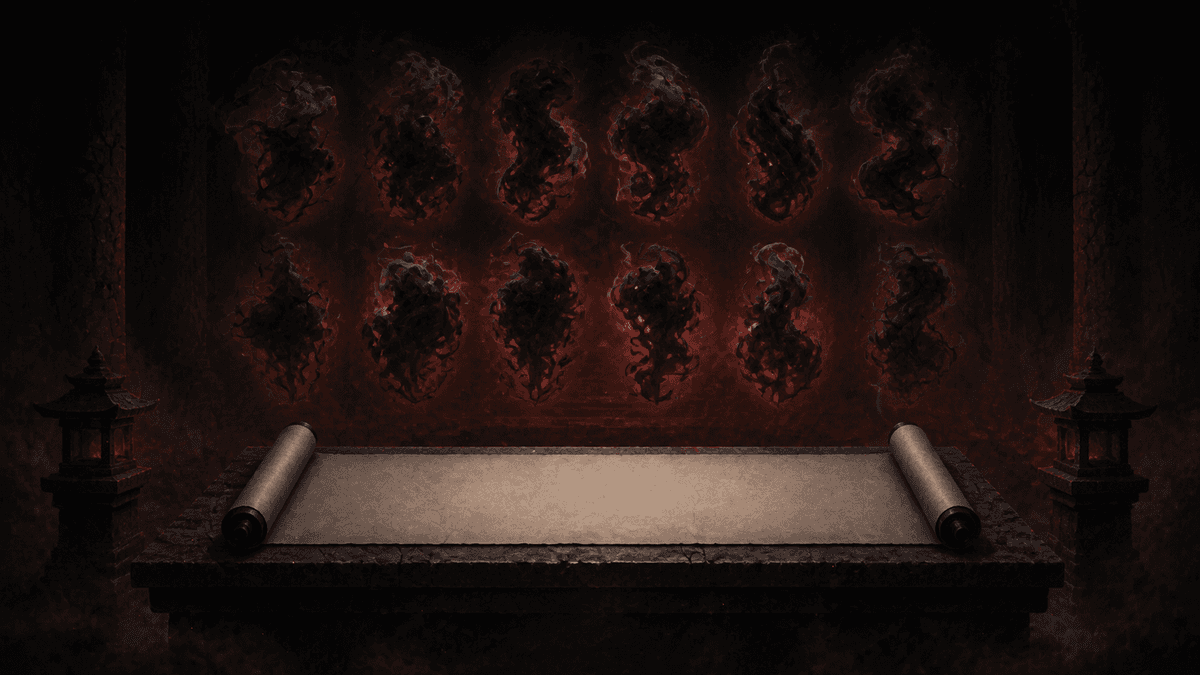 Wraith Codex
What Is the Wraith Codex — A Hell's Catalog of Unforgivable Types
Yurusen's "Wraith Codex" casts the everyday types of unforgivable people as wraiths, demons, and hell-wardens fallen into hell. Meet the world of all 100 — up to the three lords at the summit of Enma's court.
 Emotional care
The Psychology of Writing Out Anger — Why Putting It on Paper Calms You
Why does writing out anger and frustration on paper or in an app help you feel a little calmer? A clear, non-assertive look at the psychological effects said to come from writing — emotional labeling, easing rumination, and more.
 How to use
How to Use Yurusen — Filing into the Ledger and Passing Judgment
A beginner's guide to Yurusen, the ledger-of-judgment app. From filing someone you can't forgive, to the seven levels of judgment, the daily free points, and the Wraith Codex — explained simply.