What Is the Mountain of Needles — The Sword-Leaf Forest of the Crushing Hell
The "mountain of needles" is one of the oldest images of hell's torment. This article traces its origins — that it is a folk name, the sword-leaf forest of the Crushing Hell where the damned are lured by illusions of beauty, its picturing in the Ojoyoshu and hell scrolls, and the law of cause and effect — from a Buddhist and folkloric view, then bridges to the world of Yurusen.
By Katsuki Mitsumori
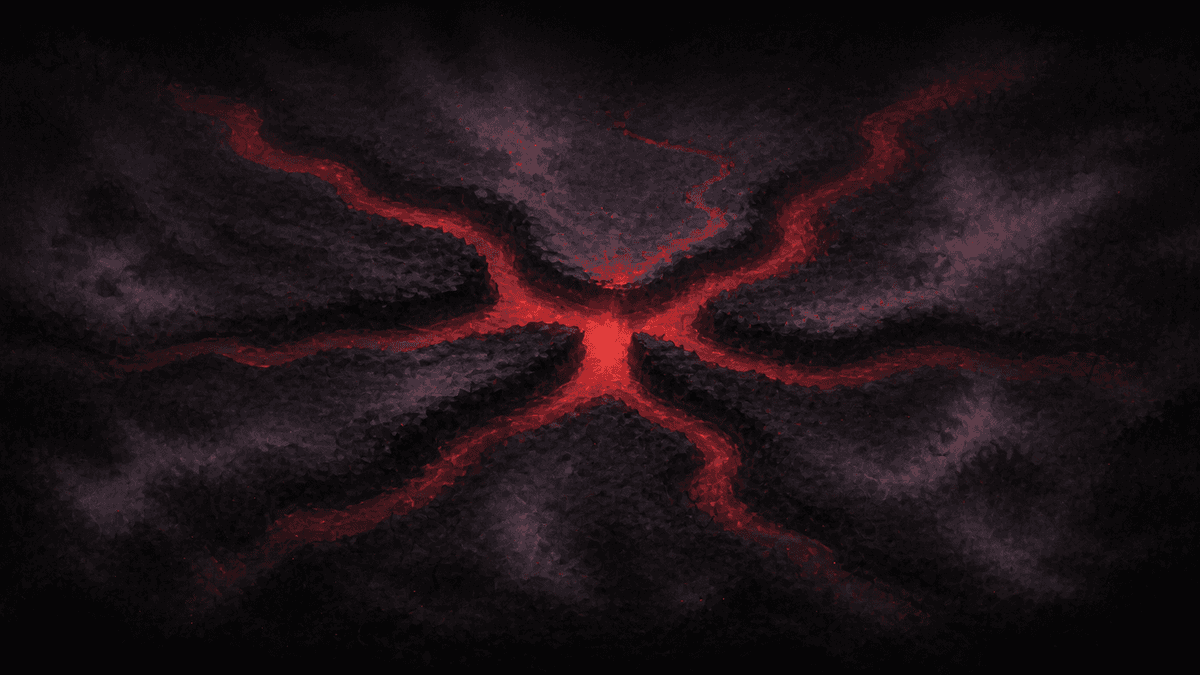
"There is a mountain of needles in hell" — it's a saying most of us hear at least once as children. The image of being made to climb a mountain of blades barefoot has long been passed down as a symbol of hell's torment. This article traces its origins and meaning, back to the very hells set out in the scriptures, from a Buddhist and folkloric view.
What is the mountain of needles
The mountain of needles is the tradition of the damned being made to climb a peak bristling with countless needles and blades. With every step the feet are torn, yet they cannot stop climbing — and that suffering has been told as one of the defining scenes for the severity of the place called hell.
In Buddhist teaching, the torments of hell are received in accord with one's conduct in life. The mountain of needles, too, is thought to be not a tale merely to stoke fear, but a visible form of the principle of cause and effect: that the recompense for wounding others returns, one day, to one's own body.
"Mountain of needles" is a folk name — which hell in the scriptures
In fact, "mountain of needles" is not a formal hell-name set out as such in the scriptures. Torments of mountains of blades and forests of swords are most often told of in the Crushing Hell (Samghata), one of the eight great hells set out in the texts. Sword-trees and blade-mountains are also counted among the sixteen minor hells attendant on the great ones.
In folk belief, apart from distinctions among individual hells, the name "mountain of needles" came to be widely loved as a plain image standing for hell itself. Even to those who could not read, a single mountain of blades could convey "the terror of hell" — and that plainness let the folk name take root. For the whole map of the hells, see also What Are the Eight Great Hells.
The Crushing Hell and the sword-leaf forest — lured by beauty
The Crushing Hell is said to be where those who piled up killing, theft, and lust fall. Within it stands a forest called the "sword-leaf forest," where every single leaf is a blade.
Its torment is not merely being made to climb. Atop the blade-leafed trees, an illusion of a beautiful person appears and beckons. Lured, the damned climb, and the blade-leaves cut them all over. When at last they reach the top, the same illusion now appears below the tree, and they try to descend and are cut again — those bound by the attachment of lust are said to climb and descend endlessly, bleeding without end. The Crushing Hell is also said to hold a torment of being crushed between iron mountains that close in from both sides.
The Ojoyoshu and hell scrolls — how the image was handed down
It was the Ojoyoshu, written by the Heian-era monk Genshin, that is said to have made such scenes of hell widely known in Japan. Vividly detailing the torments of hell, this work greatly influenced the hell scrolls that followed.
In time, mountains of blades and forests of swords came before people's eyes again and again, through hell scrolls and the picture-preaching of the Kumano nuns. The mountain of needles took deep root within temple picture-preaching and didactic tales as an icon that taught the recompense of good and evil.
What the mountain of needles conveys
Why has such a painful scene been handed down at all? Because the tales of hell were not mere horror stories but mirrors for reexamining how we live. When one pictures the mountain of needles, one cannot help but look back on oneself and ask, "Have I wounded anyone with a blade of my own?" Just as the sword-leaf forest mirrors the attachment of lust, the mountain of needles, too, has gone on telling — in the very form of pain — the law of cause and effect: that a deed which wounded another returns, one day, to the soles of one's own feet.
Yurusen's world and the mountain of needles
Yurusen is a private app for filing "the people you cannot forgive" into a ledger of judgment and passing verdicts. When we put into words the behavior that wounded us, we quietly reexamine the very thing the mountain of needles has always conveyed — the weight of harm and its recompense.
The forms of those fallen into hell are gathered on the Wraith Codex page. Go and find, there, the "type" that climbs the mountain of needles.
FAQ
Frequently asked questions
Q.In which hell is the mountain of needles said to be?
Mountains of blades and forests of swords are most often placed in the Crushing Hell (Samghata), one of the eight great hells. In regional folk belief, the 'mountain of needles' came to stand for hell in general as a widely loved image.
Q.Why are the damned said to be made to climb a mountain of needles?
Behind it lies the idea of cause and effect — that one bears, in one's own body, the recompense of deeds done in life. A mountain full of needles and blades is passed down as the scene where those who wounded others take on that same pain.
Q.What torment is the 'sword-leaf forest'?
It is a forest told of in the Crushing Hell where every single leaf is a blade. An illusion of a beautiful person appears atop the trees; lured, the damned climb and the blade-leaves cut them all over. As they try to come down, the illusion reappears below — those bound by lust are said to be cut again and again by their own attachment.
About the author
Katsuki Mitsumori三森 捷暉
CEO, SURISUTA K.K. / Operator of Doya Marke AI
Runs Doya Marke AI, a suite of practical AI services spanning content, ads, sales and HR, and hosts the YouTube channel 'SaaS wa Shinimasshen.' Creator and developer of Yurusen, an app for filing the people you could never forgive into a private ledger of judgment.
RELATED
Related reads
 Enma & Hell
'Heaven's Net Is Wide and Loose, Yet Nothing Slips Through' — Meaning, Origin, and the Wait
The proverb says heaven's net looks coarse-meshed yet never lets a wrongdoer escape. This piece covers its source in the Laozi, how it differs from inga ouhou, and where to put the feeling of waiting for a reckoning that will not come.
 Enma & Hell
What the Six Coins Mean — the Toll for the Sanzu River and the Sanada Crest
The six coins are the toll placed with the dead for crossing the Sanzu River. This piece covers why the number is six (one for each of the six realms), the burial custom and its paper form today, and what the Sanada clan meant by putting the coins on their crest.
 Enma & Hell
What Chikushodo Means — the Realm of Beasts, and the Weight of the Word 'Chikusho'
Chikushodo is the realm of the six where one is born as bird, beast, insect or fish, preying on one another and driven by others. This piece covers how it differs from the hungry-ghost and asura realms, why 'chikusho' became an insult, and what we can still see in it.