The Meaning of the Sanzu River — Its Name, Three Crossings, and the Six Coins
The Sanzu River is the river said to divide this world from the next, crossed after death. This piece traces the origin of the name 'three paths' (the three evil realms and the three fords), the six-coin toll, the riverside Sai-no-kawara and Jizo, and the ferry-keepers Datsueba and Keneo, then bridges to the world of Yurusen.
By Katsuki Mitsumori
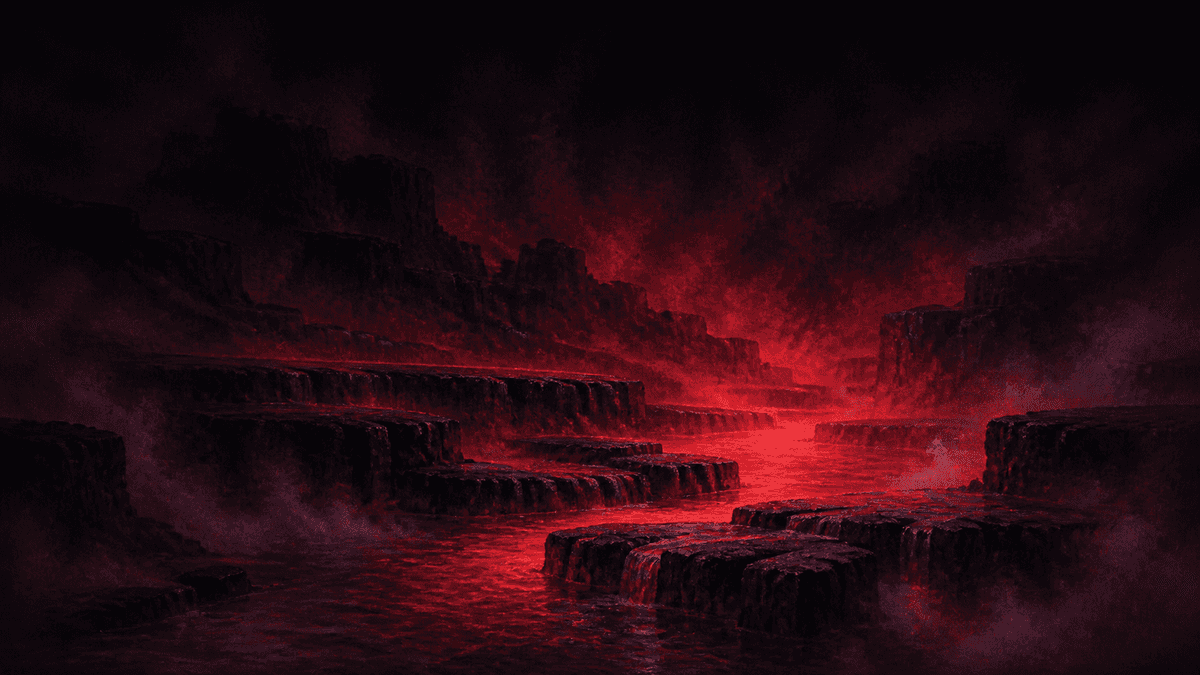
"What does the Sanzu River mean?" It is a phrase even heard as a metaphor for one's dying moments, yet few know the origin of the name. This article traces the meaning of the Sanzu River — from the source of its name to the tradition of Sai-no-kawara — from a Buddhist and folkloric view.
The meaning of the Sanzu River
The Sanzu River is the river the dead are said to cross from this world to the next. Only by crossing it are the dead said to enter the next world. As a symbol of the boundary dividing life and death, it has been widely passed down since ancient times. Describing someone's final moments as "starting to cross the Sanzu River" comes from this tradition.
That said, the idea of a river dividing the afterlife was not laid out in just this form in early Indian Buddhism. The fine detail of the Sanzu River is thought to have joined the Ten Kings cult in China and grown richer in Japan through texts such as the Jizo Juo-kyo.
The origin of "Sanzu" — three evil realms, or three fords
There are said to be two main theories behind the word "Sanzu" ("three paths").
One holds that it points to the three evil realms of Buddhism — hell, hungry ghosts, and beasts. The word "Sanzu" is said to derive from a passage in the sutra Konkomyo-kyo, taken to name the three worlds of suffering one falls into as retribution for evil deeds.
The other is the "three fords" theory: that the way of crossing splits three ways. According to one's deeds, the place of crossing divides three ways between good and ill — and these three fords are the "Sanzu." Both theories have run side by side since ancient times.
The three ways of crossing
By the three-fords tradition, the way across the river splits according to one's deeds in life. Those who did good cross by a bridge; those with light sins wade a shallow ford; those with grave sins are made to cross a swift, deep current — so the stories go. In other words, the very way of crossing was a mirror reflecting one's deeds. It is sometimes told in sequence: before advancing to the judgment of the ten kings led by King Enma, one must first pass this river as a barrier.
The six coins as toll
Tradition holds that six coins are needed as the toll to cross the Sanzu River. For this reason there was once a custom of placing six coins with the dead at burial. In some regions the custom lives on today in funerals, with six coins printed on paper placed in the coffin. One who carries no toll, it is said, has the robes stripped from them by Datsueba at the river's bank.
Sai-no-kawara and the bodhisattva Jizo
Before the Sanzu River is said to lie the "Sai-no-kawara," a riverbed. It has been told as the place where children who died before their parents arrive. The children try to pile stones into memorial towers, only for a demon to appear each time and knock them down — and still they pile again, a sorrowful scene. The one who saves these children is said to be the bodhisattva Jizo, and the tale of Sai-no-kawara spread in deep connection with Jizo devotion. On Jizo, see also What the Bodhisattva Jizo Is.
The keepers at the bank — Datsueba and Keneo
At the bank of the Sanzu River are said to wait keepers for the dead who cross: Datsueba, who strips the robes, and Keneo, who hangs the robe on a tree branch to weigh the gravity of sin. The pair keep the river's barrier together, questioning one's deeds in life first at the gateway to the next world — and so the Sanzu River has been depicted as the place that opens the story of judgment. On Datsueba, see What Is Datsueba.
Yurusen, and the river to cross
This Sanzu River flows through the world of the app "Yurusen" as well. Old Hag Robesnatch, who strips robes at the river's bank, is one of the beings standing at the deepest part of the Wraith Codex.
To cross the river is to pass a boundary from which there is no return. When you resolve that you can no longer forgive, that feeling too crosses a boundary. Yurusen is your private place to quietly bind that crossed feeling into the ledger. Robesnatch and the other wraiths can be seen on the Wraith Codex page.
FAQ
Frequently asked questions
Q.What does the Sanzu River mean?
The Sanzu River is the river the dead are said to cross from this world to the next. 'Sanzu,' meaning 'three paths,' is said to come from the tradition that how one crosses splits three ways according to one's deeds in life. Only by crossing it are the dead said to enter the next world.
Q.Why is it called 'three paths'?
It is said to come from the tradition that the way of crossing splits three ways according to one's deeds. Those who did good cross by a bridge, while others cross a shallow ford or a swift, deep current, as the stories tell.
Q.What is the link between the Sanzu River and the 'six coins'?
Tradition holds that six coins are needed as the toll to cross the Sanzu River. For this reason there was once a custom of placing six coins with the dead at burial. At the river's bank, Datsueba is also said to strip the robes of the dead.
Q.What is the 'Sai-no-kawara'?
It is a riverbed said to lie before the Sanzu River, where children who died before their parents are said to arrive. The children pile stones into towers, only for a demon to knock them down, so they pile again — a sorrowful scene. The bodhisattva Jizo is said to save these children from that suffering.
About the author
Katsuki Mitsumori三森 捷暉
CEO, SURISUTA K.K. / Operator of Doya Marke AI
Runs Doya Marke AI, a suite of practical AI services spanning content, ads, sales and HR, and hosts the YouTube channel 'SaaS wa Shinimasshen.' Creator and developer of Yurusen, an app for filing the people you could never forgive into a private ledger of judgment.
RELATED
Related reads
 Enma & Hell
'Heaven's Net Is Wide and Loose, Yet Nothing Slips Through' — Meaning, Origin, and the Wait
The proverb says heaven's net looks coarse-meshed yet never lets a wrongdoer escape. This piece covers its source in the Laozi, how it differs from inga ouhou, and where to put the feeling of waiting for a reckoning that will not come.
 Enma & Hell
What the Six Coins Mean — the Toll for the Sanzu River and the Sanada Crest
The six coins are the toll placed with the dead for crossing the Sanzu River. This piece covers why the number is six (one for each of the six realms), the burial custom and its paper form today, and what the Sanada clan meant by putting the coins on their crest.
 Enma & Hell
What Chikushodo Means — the Realm of Beasts, and the Weight of the Word 'Chikusho'
Chikushodo is the realm of the six where one is born as bird, beast, insect or fish, preying on one another and driven by others. This piece covers how it differs from the hungry-ghost and asura realms, why 'chikusho' became an insult, and what we can still see in it.