What Is the Hungry-Ghost Realm — the Six Realms, and Why One Falls Into It
The hungry-ghost realm (gaki-do) is one of the six realms, where beings suffer eternal hunger and thirst. This article traces the etymology of "preta," the three kinds of hungry ghost, the greed said to cause rebirth there, and the origins of the segaki rite and Obon, then bridges to the world of Yurusen.
By Katsuki Mitsumori
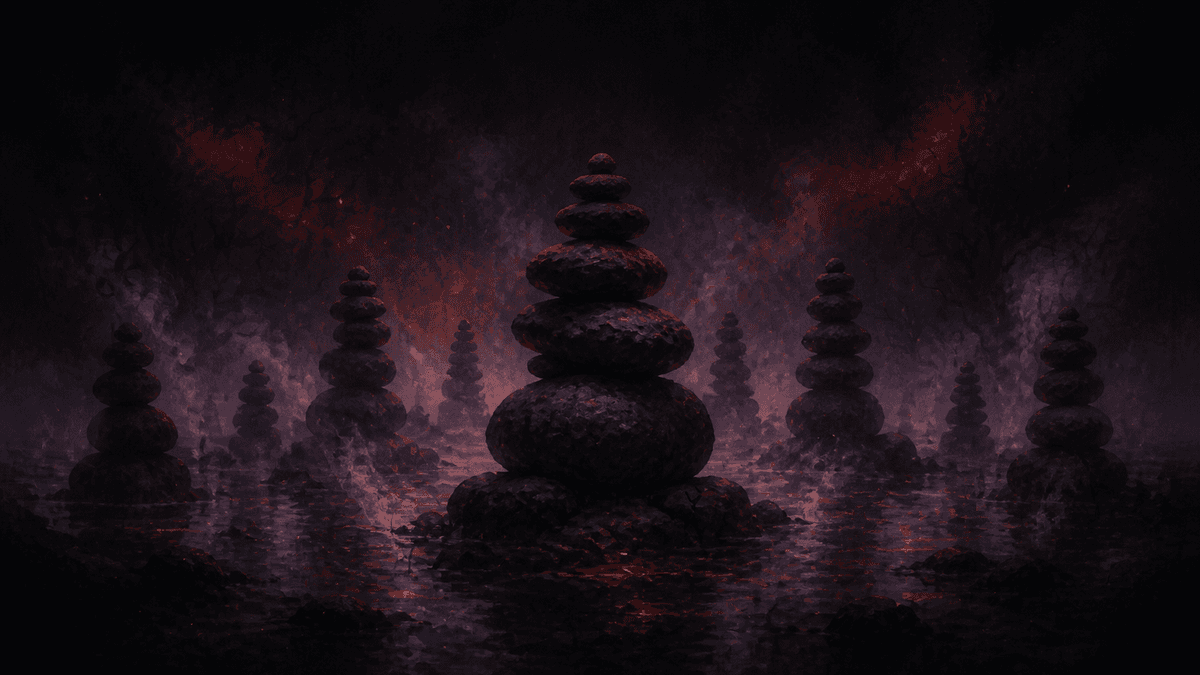
The word "gaki" (hungry ghost) is used today even to scold an unruly child, but it originally referred to beings living in the "hungry-ghost realm," one of the six realms taught in Buddhism. A world of hunger and thirst that is never, ever satisfied — this is the hungry-ghost realm. This article traces it from the roots of the word, to the state of mind said to cause rebirth there, to the rites of relief carried on in the segaki offering and Obon.
What is the hungry-ghost realm
The hungry-ghost realm (gaki-do) is one of the six realms of delusion, a world where beings are said to suffer endless hunger and thirst. The hungry ghosts who live there, bellies swollen yet limbs wasted thin, are never satisfied. Traditions tell that food turns to flame the moment they raise it to their mouths.
The Ojo Yoshu, compiled by the monk Genshin in the mid-Heian period, depicts the grim scenes of this world in fine detail: the ghost seeks water only for it to dry up before its eyes, and the scraps it does obtain will not pass its throat. The tale of the hungry-ghost realm is thought to give visible form to the teaching that an unquenchable thirst is born not from without, but from within the grasping heart.
The roots of the word "gaki"
"Gaki" is said to be a translation of the Sanskrit "preta." Preta originally meant "one who has departed" or "the deceased," and within Buddhism it came to denote a departed soul tormented by hunger.
The character for "ki" (鬼), too, differs from the horned monster we might picture; in older usage it pointed to "the spirit of a dead person." A hungry ghost, then, is literally "the starving soul of the dead." Beneath its fearsome ring lies a quiet gaze upon the dead who wander without offerings.
The hungry-ghost realm among the six
In Buddhism, living beings are said to be reborn again and again through six worlds in accord with their deeds. These are the six realms: hell, hungry ghosts, beasts, asuras, humans, and heavens — and the hungry-ghost realm is often placed just above the deepest hell realm, second from the bottom.
One is said to rise through the six realms by good deeds and to fall by evil ones. The hungry-ghost realm, though not as tormenting as hell, is drawn as a world of endless, gnawing want. For the whole picture, see also What Are the Six Realms of Rebirth.
The kinds of hungry ghost — no wealth, little wealth, much wealth
Hungry ghosts are not all of one form. The scriptures underlying the Ojo Yoshu speak of three kinds according to wealth: the ghost with no wealth, who never reaches food at all; the ghost with little wealth, who obtains a scrap; and the ghost with much wealth, who holds a fair share.
The striking point is that even the ghost of much wealth is never freed from thirst. The more it gains, the more it craves — the lack is rooted not in the amount held, but in the very shape of the heart. Broader accounts count thirty-six kinds of hungry ghost, each mirroring a form of human desire.
Why one falls into the hungry-ghost realm — the grasping heart
The cause of rebirth here is said to lie in greed, above all in kendon — the doubly closed heart that hoards its own from others while still craving what belongs to them. To eat one's fill alone and offer not a scrap to the starving is said to invite a fruit that, however much it eats, is never filled.
Turn it around, and the key out of this world is dana, the act of sharing. The hungry-ghost realm is less a world of punishment than a story that translates one law of cause and effect — that the taking heart and the giving heart decide one's destination — into the plain form of hunger. On how deeds bear their fruit, see also What Is Karma.
Segaki and Obon — the rites of relief
The tale does not end in fear. In Japan a custom called "segaki" — offering food and merit to hungry ghosts — has been handed down. Its origin is traced to a tale in which a hungry ghost named Enku appeared before the Buddha's disciple Ananda and told him, "In three days you too will be reborn a hungry ghost." When Ananda begged the Buddha for deliverance, he was taught that reciting a mantra over the offerings and giving to countless ghosts would let him escape the fate — this is said to be the prototype of segaki.
Another well-known origin, this time of Obon, is the tale of Mokuren (Maudgalyayana) saving his late mother, fallen into the hungry-ghost realm. Seeking her with supernatural sight, he found her suffering as a ghost, and by making offerings to many monks as the Buddha taught, she was saved. To give to the starving comes full circle as a memorial to one's ancestors — segaki and Obon have long been cherished as this circle of compassion.
Yurusen's world and the hungry ghost
Yurusen is a private app for filing "the people you cannot forgive" into a ledger of judgment and passing verdicts. Ruled by an unquenchable thirst, unable to stop taking from others — such a "type" surely exists around us, too. However much they hold, it is never enough, and to the pain of those they take from, they turn no eyes at all. When we put that figure into words and look at it, the tale of the hungry-ghost realm becomes, unexpectedly, close to home.
You need not force yourself to forgive it all. Yet when you quietly note that person's conduct in your ledger as "one type captured by hunger," your own heart is spared being dragged into that thirst. The forms of those living the worlds of hell and the six realms are gathered on the Wraith Codex page. Go and find, there, the "type" captured by hunger.
FAQ
Frequently asked questions
Q.What kind of realm is the hungry-ghost realm?
One of the six realms, where beings are said to suffer endless hunger and thirst. The hungry ghost is told never to be satisfied — food turns to flame when they try to eat. The mind of greed and stinginess in life is said to be its cause.
Q.Why is there a custom of giving alms to hungry ghosts?
The 'segaki' rite of offering food and merit to hungry ghosts is held to save those suffering from hunger and to turn that merit toward one's ancestors. Often observed at Obon, it has been passed down as an occasion to reaffirm a heart that cares for others.
About the author
Katsuki Mitsumori三森 捷暉
CEO, SURISUTA K.K. / Operator of Doya Marke AI
Runs Doya Marke AI, a suite of practical AI services spanning content, ads, sales and HR, and hosts the YouTube channel 'SaaS wa Shinimasshen.' Creator and developer of Yurusen, an app for filing the people you could never forgive into a private ledger of judgment.
RELATED
Related reads
 Enma & Hell
'Heaven's Net Is Wide and Loose, Yet Nothing Slips Through' — Meaning, Origin, and the Wait
The proverb says heaven's net looks coarse-meshed yet never lets a wrongdoer escape. This piece covers its source in the Laozi, how it differs from inga ouhou, and where to put the feeling of waiting for a reckoning that will not come.
 Enma & Hell
What the Six Coins Mean — the Toll for the Sanzu River and the Sanada Crest
The six coins are the toll placed with the dead for crossing the Sanzu River. This piece covers why the number is six (one for each of the six realms), the burial custom and its paper form today, and what the Sanada clan meant by putting the coins on their crest.
 Enma & Hell
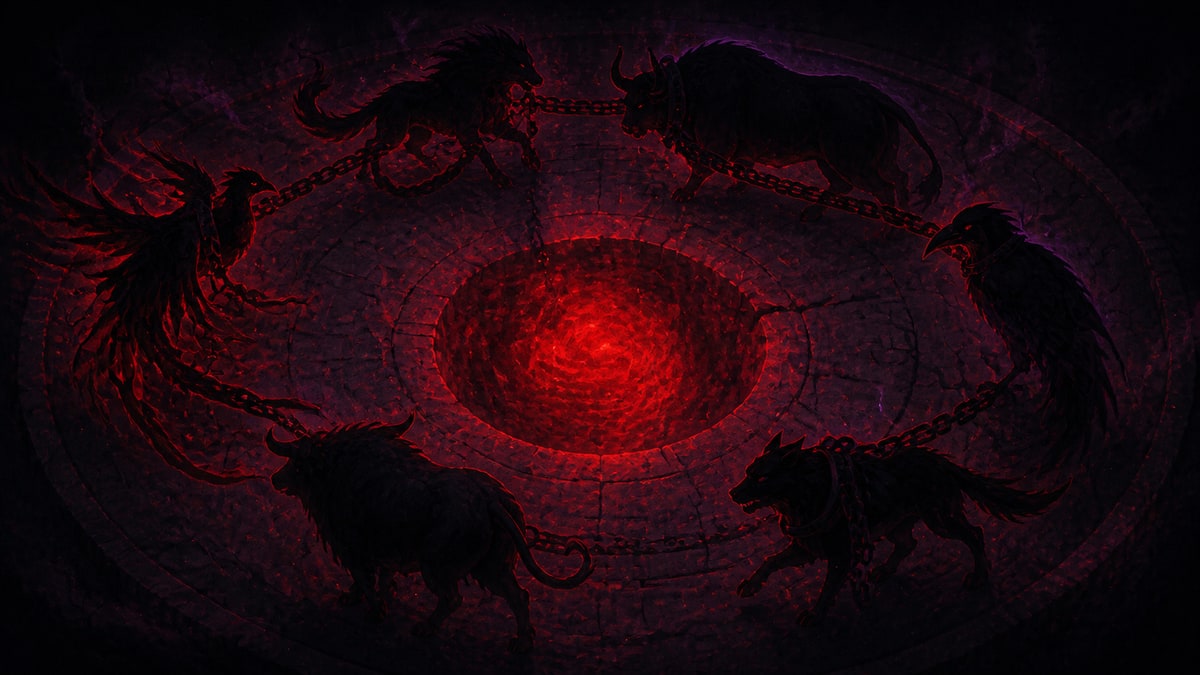
What Chikushodo Means — the Realm of Beasts, and the Weight of the Word 'Chikusho'
Chikushodo is the realm of the six where one is born as bird, beast, insect or fish, preying on one another and driven by others. This piece covers how it differs from the hungry-ghost and asura realms, why 'chikusho' became an insult, and what we can still see in it.