What Are the Ten Kings — The Ten Judges of the Underworld and Their Buddhas
The Ten Kings are the ten kings said to judge the dead in turn, from the seventh day through the third memorial, Lord Enma among them. This piece explains their names, days, and honji buddhas, the origins of the faith, and its growth into the Thirteen Buddhas — with sources — then bridges to Yurusen.
By Katsuki Mitsumori
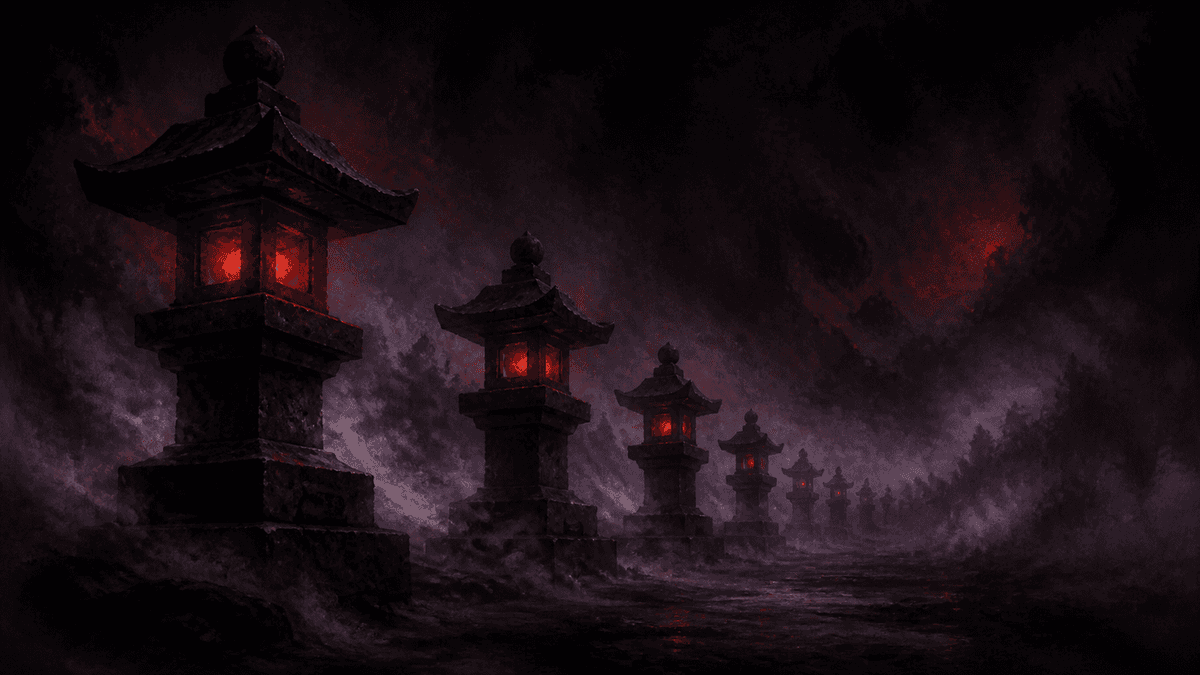
"What are the Ten Kings?" Many know Lord Enma yet do not know that Enma is "one of ten kings." This article explains the Ten Kings, the judges of the underworld, with their names and honji buddhas and the origins of the faith.
What the Ten Kings are
The Ten Kings are the ten kings said to judge the dead in turn in the underworld. Even the well-known Lord Enma is only one of these ten.
The dead are said to pass before these ten kings in turn, at set intervals of days after death, and to be questioned on their deeds one by one. That the judgment is not a single event but repeated many times is a defining feature of the Ten Kings idea.
The Ten Kings, their days, and their buddhas
The Ten Kings and the days of their judgment are generally handed down as follows.
| # | King | Day of judgment | Honji buddha |
|---|---|---|---|
| 1 | Qinguang | 7th day | Fudo Myoo |
| 2 | Chujiang | 14th day | Shakyamuni |
| 3 | Songdi | 21st day | Manjushri |
| 4 | Wuguan | 28th day | Samantabhadra |
| 5 | Yama (Enma) | 35th day | Jizo |
| 6 | Biancheng | 42nd day | Maitreya |
| 7 | Taishan | 49th day | Bhaisajyaguru |
| 8 | Pingdeng | 100th day | Avalokiteshvara |
| 9 | Dushi | 1st anniversary | Mahasthamaprapta |
| 10 | Wudao Zhuanlun | 3rd anniversary | Amida |
From the seventh day to the third memorial
Unless an exceptional saint or sinner, the dead are said to enter a suspended period between lives called the "intermediate state" (chuin). Through it, the king changes every seven days and judgment is handed down; at Taishan on the forty-ninth day, where one is reborn is said to be settled.
Thereafter the judgment continues at the hundredth day and the first and third anniversaries, and the last king, Wudao Zhuanlun, sees to which of the six realms one is sent. Datsueba, who strips robes at the Sanzu River, and the crystal mirror of judgment, which reflects one's deeds, are among the props that appear along this road of judgment.
Each king has an "honji buddha"
Another depth of the Ten Kings is the "honji buddha." The fearsome kings, it was held, are in truth buddhas and bodhisattvas who deliberately borrow a dread form to guide people.
Most moving is that the honji buddha of the central Yama is said to be Jizo Bodhisattva. Within the one who judges stands the one who saves. And the honji buddha of the last king, Wudao Zhuanlun, is Amida — the buddha who leads to the Pure Land. At the end of the line of judgment, a saving hand is prepared.
The origins of the faith
The Ten Kings idea is said to have arisen as Indian Buddhism passed into China and fused with Daoism and folk belief. Around the late Tang, a scripture called the Sutra of the Ten Kings (held to be an apocryphal, not canonical, text) was expounded and spread together with the practice of memorial offerings every seven days.
It reached Japan in the late Heian period, the Jizo Ten Kings Sutra was composed, and in the Kamakura period the pairing of the Ten Kings with honji buddhas was arranged. Not deciding a person's deeds in one stroke, but weighing them again and again — that careful gaze runs beneath this faith.
Growth into the Thirteen Buddhas, and memorial offerings
In Japan the faith grew into the "Thirteen Buddhas," adding three further memorial days (7th, 13th, and 33rd anniversaries) and their buddhas to the Ten Kings. That rites such as the seventh day and the forty-ninth day are still held today is because they are deeply tied to the custom of memorial offerings — the living offering good deeds for the deceased at these turning points of judgment. Beyond preaching terror, it was a frame that received the prayers of those left behind.
The king of judgment within Yurusen
This king of judgment lives on in the world of the app "Yurusen." The center of the Ten Kings, Enma — Lord Enma, who binds together the root of every ledger of judgment — is depicted standing at the deepest part of the Wraith Codex.
Just as the Ten Kings repeated their judgment many times, feelings of being unable to forgive are not settled in one stroke. Yurusen is your private place to give those repeating feelings the shape of stages and quietly bind them into the ledger.
You can view Enma and the other wraiths on the Wraith Codex page.
FAQ
Frequently asked questions
Q.What are the Ten Kings?
The Ten Kings are the ten kings said to judge the dead in turn in the underworld: Qinguang, Chujiang, Songdi, Wuguan, Yama (Enma), Biancheng, Taishan, Pingdeng, Dushi, and Wudao Zhuanlun. From the seventh day after death through the third memorial, the dead are said to pass before these kings in turn and be questioned on their deeds in life.
Q.Which of the Ten Kings is Lord Enma?
Lord Enma is generally the fifth of the Ten Kings, said to preside over the judgment on the thirty-fifth day after death. Among the Ten Kings he has long been widely known as the central figure.
Q.How does the faith in the Ten Kings relate to memorial rites?
Rites such as the seventh day and the forty-ninth day have been held to be occasions when the living offer good deeds for the deceased at the turning points of the Ten Kings' judgment. The faith is deeply tied to Japan's custom of memorial offerings and to the later faith in the Thirteen Buddhas.
About the author
Katsuki Mitsumori三森 捷暉
CEO, SURISUTA K.K. / Operator of Doya Marke AI
Runs Doya Marke AI, a suite of practical AI services spanning content, ads, sales and HR, and hosts the YouTube channel 'SaaS wa Shinimasshen.' Creator and developer of Yurusen, an app for filing the people you could never forgive into a private ledger of judgment.
RELATED
Related reads
 Enma & Hell
'Heaven's Net Is Wide and Loose, Yet Nothing Slips Through' — Meaning, Origin, and the Wait
The proverb says heaven's net looks coarse-meshed yet never lets a wrongdoer escape. This piece covers its source in the Laozi, how it differs from inga ouhou, and where to put the feeling of waiting for a reckoning that will not come.
 Enma & Hell
What the Six Coins Mean — the Toll for the Sanzu River and the Sanada Crest
The six coins are the toll placed with the dead for crossing the Sanzu River. This piece covers why the number is six (one for each of the six realms), the burial custom and its paper form today, and what the Sanada clan meant by putting the coins on their crest.
 Enma & Hell
What Chikushodo Means — the Realm of Beasts, and the Weight of the Word 'Chikusho'
Chikushodo is the realm of the six where one is born as bird, beast, insect or fish, preying on one another and driven by others. This piece covers how it differs from the hungry-ghost and asura realms, why 'chikusho' became an insult, and what we can still see in it.