What Is Enma's Ledger — Meaning, Origin, and Who Records Your Deeds
Enma's ledger (enmacho) is the book in which Lord Enma is said to record a person's deeds in life. This piece explains its meaning and origin, the twin gods (kushojin) who watch good and evil from your shoulders, its link to the jouhari mirror, and how it spread into everyday words like a teacher's or officer's 'enmacho,' then bridges to the world of Yurusen.
By Katsuki Mitsumori
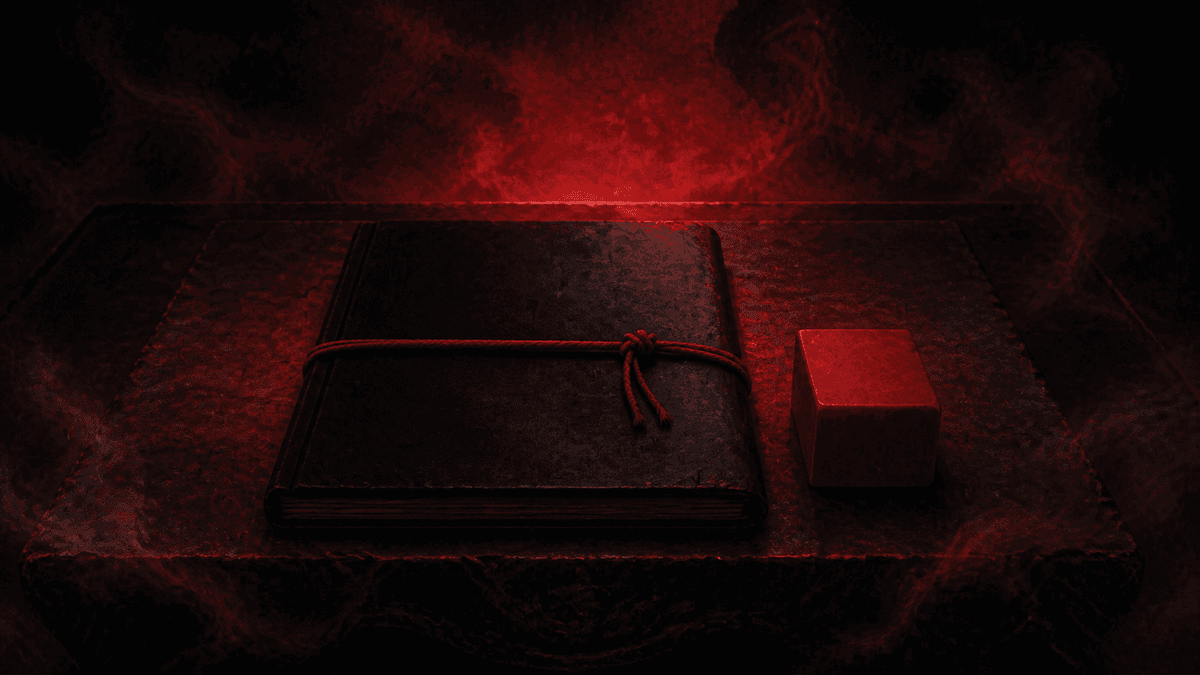
Ask "what is Enma's ledger," and many people picture a teacher's grade book. But behind the word lies an old tradition: Lord Enma, the king of hell, writes down a person's deeds. This article gently explains the meaning and origin of Enma's ledger — and who does the recording.
The meaning of Enma's ledger
Enma's ledger (enmacho) is the book in which Lord Enma, ruler of hell, is said to record all the good and evil a person does while alive. When someone dies and reaches hell, Lord Enma is said to open this ledger, weigh each deed against the record, and hand down a verdict.
In other words, the ledger is a symbol of caution: even deeds you assumed no one saw are, in fact, all written down.
Origin and tradition
Lord Enma is said to derive from "Yama," a deity in Indian mythology, who spread with Buddhism to China and then to Japan. In Japan he became widely known as a judge-like figure who records the deeds of the dead and weighs the gravity of sin.
Within this belief, the idea that "all deeds are recorded" gave rise to the word enmacho. Enma is also counted among the Ten Kings who judge the dead in turn, and the ledger has been handed down as the record on which that judgment rests.
Who records your deeds — the kushojin
It is little known, but tradition says the one who writes down your deeds is not Lord Enma alone. From the very moment you are born, two gods called the "kushojin" are said to ride on your shoulders and watch over your whole life.
One records your good deeds and the other your bad, without omission, and reports the whole account to Lord Enma after death. Even how you behave where no one is watching is set down right beside you — the dread of Enma's ledger lies in this "no escape."
Its link to the jouhari mirror
If Enma's ledger is the "record," what backs it up is the jouhari mirror. This mirror is said to replay the deeds of the dead as living scenes, just as they happened.
The written record, and the undeniable evidence reflected in the mirror. However smoothly you talk your way around it, once the two are set side by side there is no evasion. Enma's ledger and the jouhari mirror are the stage props that support one lesson — "deeds cannot be hidden" — from the two sides of text and image.
How it spread into everyday words
The idea that "all deeds are recorded" eventually took root in everyday language. From the Edo period on, it spread as a metaphor for any record book, and the book a schoolteacher uses to note students' grades and conduct came to be called an "enmacho." The usage appears in literary works from early on.
An officer's notebook for jotting down information on people, or the papers on which a boss records an employee's evaluation, may also be called an "enmacho." Each likens to that hellish ledger the tension of "your deeds are seen, and written down."
How it differs from a temple death register
Hearing "a book that records the dead," some may picture a temple's "past register" (kakocho). But Enma's ledger and the past register are entirely different things. The past register is a real record a temple keeps for memorial purposes, noting the posthumous names and dates of death of its parishioners; and the Edo-period household register known as the "shumon ninbetsu aratamecho" was likewise a ledger of this-worldly officialdom.
Enma's ledger, by contrast, is the unseen record of judgment said to be held by Lord Enma in the world beyond. Even as "books," one is for the living to mourn the dead, the other for one's own deeds to be called into question. Drawing the line between them makes the weight of the ledger's warning — that "deeds remain" — stand out all the more.
Yurusen's ledger
The app "Yurusen" places this tradition into your own hands as a private ledger. It is a place to quietly bind and record the "unforgivable people" who hurt you — that is Yurusen's ledger of judgment.
The people you record take shape as "types" of wraiths fallen into hell. You are under no obligation to force yourself to forgive. Entrusting your feelings to original entries that are not shown to other users is one way to shrink them to a manageable size and set them down a little. You choose whether to share a judgment card or senryu.
You can see the wraiths on the Wraith Codex page.
FAQ
Frequently asked questions
Q.What is Enma's ledger?
Enma's ledger (enmacho) is the book in which Lord Enma, the king of hell, is said to record every deed a person did in life — both good and bad. When the dead face judgment in hell, this ledger is said to be the basis for the verdict.
Q.Who records the deeds in Enma's ledger?
Lord Enma is said to record them, but tradition also tells of the 'kushojin' — two gods who ride on your shoulders from the moment you are born, note your good and evil without omission, and report it to Lord Enma. The warning here is that even deeds you assume no one sees are being written down.
Q.Do teachers' record books share the same name?
The origin is the same. By extension, the book in which a schoolteacher notes students' grades and conduct came to be called an 'enmacho,' and so did an officer's notebook or a company's personnel evaluations. All come from the idea that one's deeds are being written down.
Q.Can deeds recorded in the ledger be erased?
In folk belief, accumulating good deeds in life is said to lighten one's judgment. Rather than erasing the record itself, the common idea is to pile up good deeds and shift the balance.
About the author
Katsuki Mitsumori三森 捷暉
CEO, SURISUTA K.K. / Operator of Doya Marke AI
Runs Doya Marke AI, a suite of practical AI services spanning content, ads, sales and HR, and hosts the YouTube channel 'SaaS wa Shinimasshen.' Creator and developer of Yurusen, an app for filing the people you could never forgive into a private ledger of judgment.
RELATED
Related reads
 Enma & Hell
'Heaven's Net Is Wide and Loose, Yet Nothing Slips Through' — Meaning, Origin, and the Wait
The proverb says heaven's net looks coarse-meshed yet never lets a wrongdoer escape. This piece covers its source in the Laozi, how it differs from inga ouhou, and where to put the feeling of waiting for a reckoning that will not come.
 Enma & Hell
What the Six Coins Mean — the Toll for the Sanzu River and the Sanada Crest
The six coins are the toll placed with the dead for crossing the Sanzu River. This piece covers why the number is six (one for each of the six realms), the burial custom and its paper form today, and what the Sanada clan meant by putting the coins on their crest.
 Enma & Hell
What Chikushodo Means — the Realm of Beasts, and the Weight of the Word 'Chikusho'
Chikushodo is the realm of the six where one is born as bird, beast, insect or fish, preying on one another and driven by others. This piece covers how it differs from the hungry-ghost and asura realms, why 'chikusho' became an insult, and what we can still see in it.