What Is Kamikakushi? Japan's 'Spirited Away' Tradition, Explained
What is kamikakushi, being "spirited away"? A folklore-and-culture explanation of the Japanese tradition that explains sudden disappearances as the work of tengu, mountain gods or foxes — the Tono Monogatari accounts, the hidden-village stories, and a modern reading. Lore only.
By Katsuki Mitsumori
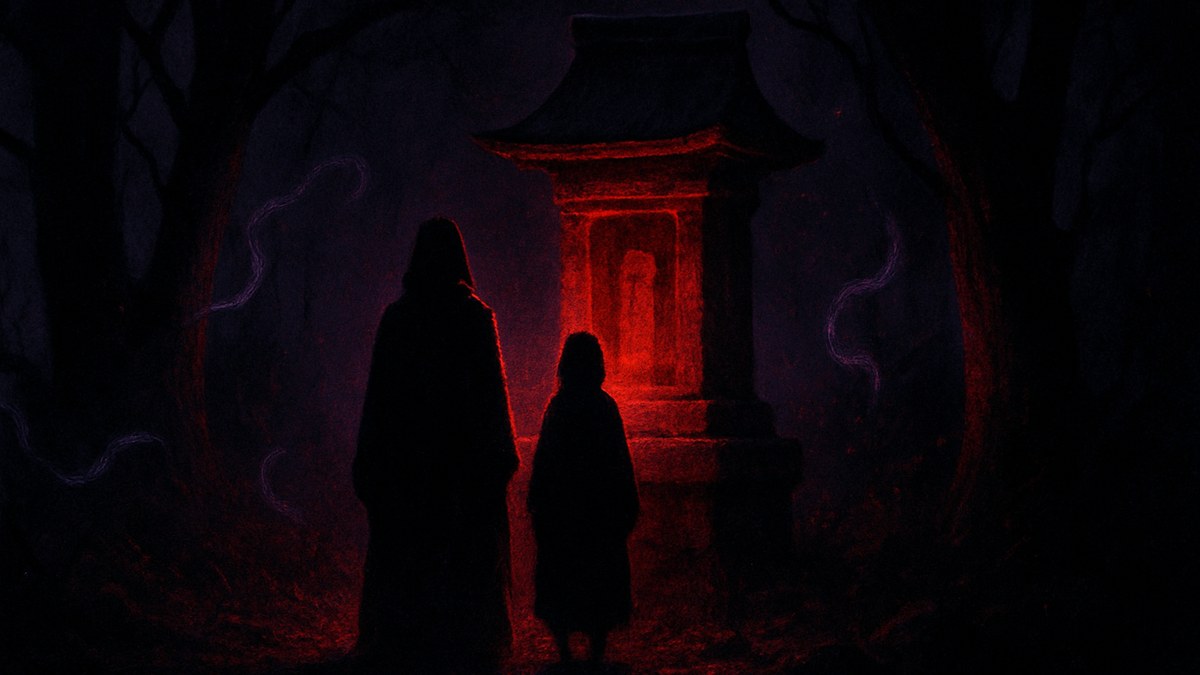
One day a person is simply gone. The search turns up nothing, and in time it is said: they were spirited away. Japanese villages preserve more of these accounts than anyone could count.
This article explains what kamikakushi is, where the idea comes from, what Tono Monogatari recorded, and how to read it today — purely as a matter of folklore and culture.
What kamikakushi is (the meaning)
Kamikakushi means, literally, "hidden by a god": the tradition of explaining a sudden disappearance as the work of a deity, a tengu, or a spiritual presence of the mountains. The whole idea sits in that phrasing — someone did the hiding.
Those said to be taken were, in most tellings, children and young women. A child playing at dusk does not come home. A daughter who went to gather mountain vegetables does not return. Searches produce nothing. Kamikakushi is the explanatory form a community reached for in that situation.
Who did the hiding — tengu, mountain gods, foxes
The agent varies by region. Abduction by a tengu is the most widespread telling, but foxes, mountain gods, or a household spirit such as a zashiki-warashi are also named.
What they share is that all of them belong outside the village. Mountain, forest, pass, the far bank of the river — beyond the inhabited world lies another order, and one can be drawn into it. As with kimon and omagatoki, the dread of a boundary is doing the work.
The kamikakushi of Tono Monogatari
The most memorable record of kamikakushi is Yanagita Kunio's Tono Monogatari (1910), a collection of tales from the Tono district of Iwate. It contains several such accounts.
The best known is of a young woman who vanished on the mountain and, long years later, appeared before her family up in the hills. She spoke of living among the yamabito, the mountain people, and then left again. The record leaves less horror than a quiet, lonely resonance.
What Tono Monogatari keeps returning to is the boundary between mountain and village: right beside the settled world lies a mountain world with an order of its own, and the two occasionally cross. Kamikakushi was told as an event that happens at that point of contact.
The hidden village — stories of those who came back
Among those said to return, a recurring pattern has them describe being entertained in a splendid mansion, or living in a village they did not know. These are the kakurezato, the hidden villages: tales of visiting another world.
The dragon palace of Urashima Taro belongs to the same lineage. Time runs differently over there, and the returning traveller finds long years have passed. The peculiar ache of kamikakushi stories probably comes from that slippage in time.
A modern reading — the need for an explanation
Seen with today's eyes, most cases told as kamikakushi were probably accidents, people lost in the mountains, runaways, or crimes. Even so, it would be too quick to file the tradition under ignorance.
A loss whose cause you cannot know is among the hardest things a person can face. Why did they go? Was it my fault? An unanswerable question wears the survivors down without limit. "A god hid them" worked to stop that question — nobody is to blame, this is beyond human reckoning.
Kamikakushi was, among other things, a device by which a community handled grief. Just as goryo belief enshrined angry spirits into calm, kamikakushi gave inexplicable loss somewhere to sit.
Feelings with no explanation need somewhere to sit too
Plenty in our own lives resists explanation. Why did they say that? Why can I not let this go? Held without an answer, thought starts circling the same ground.
You do not have to force a conclusion. Start by putting what you feel, exactly as it is, into words and setting it outside you. Noroi Nikki is a private app for writing out exactly those negative feelings you cannot say to anyone, and quietly setting them down. Saved journal text is not public to other users. You choose whether to share a curse card.
What has no answer still needs somewhere to sit. Just as older generations kept the word kamikakushi ready, keep a place ready for your own words.
For more folklore of mountains and boundaries, see what a zashiki-warashi is and what possession means.
FAQ
Frequently asked questions
Q.What does kamikakushi mean?
Kamikakushi — literally 'hidden by a god' — is the tradition of explaining a sudden disappearance as the work of a god, a tengu or some spiritual presence of the mountains. It was told mainly of children and young women who vanished from a village or on a mountain. It is the form of explanation a community gave to disappearances whose cause could not be established.
Q.What was said to happen to someone spirited away?
Accounts vary: they return after days or years, they never return, or they return with only vague memories. Some who came back described being entertained in a fine mansion, which links to the hidden-village and otherworld-visit stories. All of it is tradition, and none of it has been established as fact.
Q.Does Tono Monogatari contain kamikakushi stories?
Yes. Yanagita Kunio's Tono Monogatari records several, including a woman who vanished on the mountain and reappeared before her family long years later. Characteristically, they are told alongside the boundary between mountain and village and the yamabito said to live there.
About the author
Katsuki Mitsumori三森 捷暉
CEO, SURISUTA K.K. / Operator of Doya Marke AI
Runs Doya Marke AI, a suite of practical AI services spanning content, ads, sales and HR, and hosts the YouTube channel 'SaaS wa Shinimasshen.' Creator and developer of Noroi Nikki, an app for writing out and letting go of emotions.
This article explains folklore, language and culture. It is not medical, legal or religious advice. Traditions are introduced as culture, not as instructions to harm anyone. Claims without a source are marked as popular belief.
RELATED
Related reads
 Folklore of curses
What Is Hyakki Yagyo? Japan's Night Parade of One Hundred Demons, Explained
What is hyakki yagyo? A folklore-and-culture explanation of Japan's night parade of demons — the tales in Konjaku Monogatari and Uji Shui Monogatari, the Muromachi picture scrolls, the link to tsukumogami, and what was said to happen if you met it. Lore only.
 Folklore of curses
What Are Tsukumogami? Japan's Spirits of Old Objects, Explained
What are tsukumogami? A folklore-and-culture explanation of the Japanese belief that tools and objects gain a spirit after long years — the Tsukumogami Emaki scroll, the link to hyakki yagyo, and the memorial rites for needles and dolls. Lore only.
 Folklore of curses
What Is a Zashiki-warashi? Meaning, Lore, and Tono Monogatari
What is a zashiki-warashi? A folklore-and-culture deep dive into its meaning and the lore of northeastern Japan — the record in Kunio Yanagita's Tono Monogatari, the child-shaped being that brings a household wealth, the tradition that a house declines once it leaves, and the theories about its true nature. Not a claim that it is real.