What Is a Zashiki-warashi? Meaning, Lore, and Tono Monogatari
What is a zashiki-warashi? A folklore-and-culture deep dive into its meaning and the lore of northeastern Japan — the record in Kunio Yanagita's Tono Monogatari, the child-shaped being that brings a household wealth, the tradition that a house declines once it leaves, and the theories about its true nature. Not a claim that it is real.
By Katsuki Mitsumori
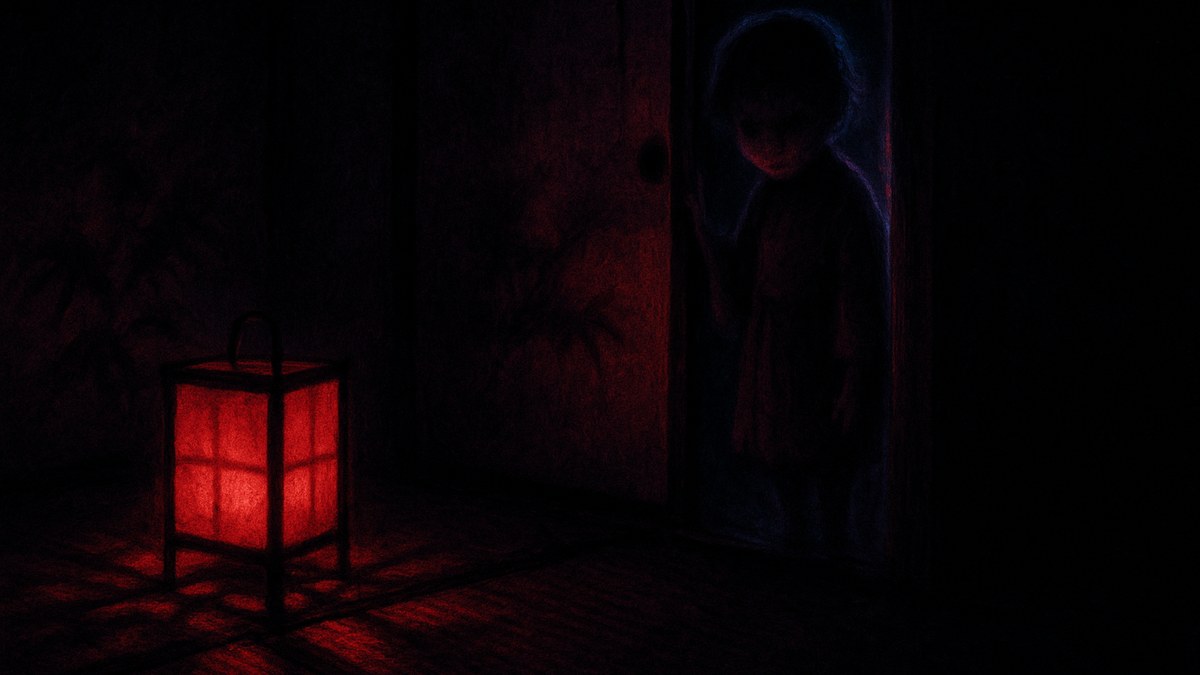
Not all Japanese yokai and zashiki-warashi lore is frightening. The zashiki-warashi — a child-shaped being said to bring good fortune to a house — is a prime example. This article explains what a zashiki-warashi is — its meaning and lore, the record in Tono Monogatari, and the theories about its true nature — purely as a matter of folklore and culture. It makes no claim that it is real.
What a zashiki-warashi means
A zashiki-warashi is a folk legend, told mainly in the Tohoku region of northeastern Japan and centered above all on the Kitakami basin of Iwate Prefecture, of a being in the shape of a child said to dwell in a house. Often described as a bob-haired child of about five to ten years old appearing in the parlor or storehouse, it was thought to bring wealth and good fortune to that household. Unlike the onryo or curse that harms people, it has largely been passed down as a familiar, guardian-like presence of the home. It is folklore, not a verified fact.
How Tono Monogatari spread the zashiki-warashi
What made zashiki-warashi lore known across Japan was "Tono Monogatari," written in 1910 by the folklorist Kunio Yanagita. There it is recorded that "a house in which this deity dwells is rich and prosperous at will," depicting the zashiki-warashi as a being that governs the rise and fall of a household. Appearing deep in the night in the inner parlor of an old family, walking briskly along the edges of the tatami and the pillars, and fiddling with the pillow of a sleeper — such concrete descriptions gave this being a vivid outline. The zashiki-warashi is also a symbolic figure marking when Japanese yokai and spirits came to be told of in earnest as an object of folklore studies.
The zashiki-warashi in Tohoku folk culture
The zashiki-warashi is depicted with rich variation in name and form from region to region. Some places call it "zashiki-bokko" or "kura-bokko," and records from Esashi in Iwate preserve a tradition of a hierarchy — from the lowly "Kometsuki-warashi" in the earthen-floored area up to the highest "Chopirako" dwelling in the inner parlor. Told that only children can see it, or that footsteps are heard at night, such tellings seem to give story-form to the unseen presence felt within the space of a house, in the shape of a child. Tales of guests at inns encountering a zashiki-warashi are still passed down across the country today.
The lore that "a house declines once it leaves"
One striking piece of zashiki-warashi lore is that "a house it dwells in prospers, and a house it has left declines." Tono Monogatari, too, records a tale of the whole family of an old house dying of food poisoning after the zashiki-warashi departed. That a fortune-bringing being should have its coming and going tied to the rise and fall of a household gives this tradition its depth. Fortune and awe sit back to back; people layered onto the unseen both their wish for prosperity and their fear of losing it.
Theories about the zashiki-warashi's true nature
Why is it told of in the shape of a "child"? Regarding its true nature, several theories have been advanced within folklore studies. Kizen Sasaki, who conveyed the Tono tales to Yanagita, surmised it might be the spirit of a child once "thinned out" — killed to reduce mouths to feed. Tohoku has a painful history of children who could not be raised being buried beneath the earthen floor or the kitchen, and one view holds that this grief lies behind the lore of the "child who dwells in the house." Other theories tie it to the kappa. None can be proven, but they suggest that behind a bright legend wishing for a household's prosperity may lie a requiem for lives that were lost.
Entrusting your feelings to an unseen presence
Zashiki-warashi lore shows how, since ancient times, people have entrusted their feelings to the unseen and communed with it. Speaking to a presence you cannot see, layering wishes and worries onto it, was also a plain kind of wisdom for settling the heart.
Saved journal text in Noroi Nikki is not public to other users. As if quietly confiding in a zashiki-warashi, write the feelings pooled in your chest into a journal and set them down, little by little.
For a related piece of lore, see also what a tatari (curse) is.
FAQ
Frequently asked questions
Q.What does zashiki-warashi mean?
A zashiki-warashi is a folk legend, told mainly in northeastern Japan (Tohoku), of a being in the shape of a child said to dwell in a house. It is said to bring wealth and good fortune to that household; a house it inhabits prospers, and one it leaves is said to decline. Unlike spirits that harm people, it has largely been cherished as a kind of guardian of the home. It is folklore, not something whose existence has been verified.
Q.Which region's lore is the zashiki-warashi?
It is told most strongly in Tohoku, above all Iwate Prefecture. It became widely known through its record in Kunio Yanagita's 'Tono Monogatari,' and is said to appear in the parlor (zashiki) or storehouse of old families. Names and depictions vary by region.
Q.Is the zashiki-warashi a frightening being?
Unlike an onryo or a curse that harms people, the zashiki-warashi has been told of as a basically auspicious, fortune-bringing being. Yet there is also the lore that 'a house declines once it leaves,' so a certain awe sits back to back with the good fortune.
About the author
Katsuki Mitsumori三森 捷暉
CEO, SURISUTA K.K. / Operator of Doya Marke AI
Runs Doya Marke AI, a suite of practical AI services spanning content, ads, sales and HR, and hosts the YouTube channel 'SaaS wa Shinimasshen.' Creator and developer of Noroi Nikki, an app for writing out and letting go of emotions.
This article explains folklore, language and culture. It is not medical, legal or religious advice. Traditions are introduced as culture, not as instructions to harm anyone. Claims without a source are marked as popular belief.
RELATED
Related reads
 Folklore of curses
What Are Tsukumogami? Japan's Spirits of Old Objects, Explained
What are tsukumogami? A folklore-and-culture explanation of the Japanese belief that tools and objects gain a spirit after long years — the Tsukumogami Emaki scroll, the link to hyakki yagyo, and the memorial rites for needles and dolls. Lore only.
 Folklore of curses
What Is Hyakki Yagyo? Japan's Night Parade of One Hundred Demons, Explained
What is hyakki yagyo? A folklore-and-culture explanation of Japan's night parade of demons — the tales in Konjaku Monogatari and Uji Shui Monogatari, the Muromachi picture scrolls, the link to tsukumogami, and what was said to happen if you met it. Lore only.
 Folklore of curses
What Is Kamikakushi? Japan's 'Spirited Away' Tradition, Explained
What is kamikakushi, being "spirited away"? A folklore-and-culture explanation of the Japanese tradition that explains sudden disappearances as the work of tengu, mountain gods or foxes — the Tono Monogatari accounts, the hidden-village stories, and a modern reading. Lore only.