What Are Tsukumogami? Japan's Spirits of Old Objects, Explained
What are tsukumogami? A folklore-and-culture explanation of the Japanese belief that tools and objects gain a spirit after long years — the Tsukumogami Emaki scroll, the link to hyakki yagyo, and the memorial rites for needles and dolls. Lore only.
By Katsuki Mitsumori
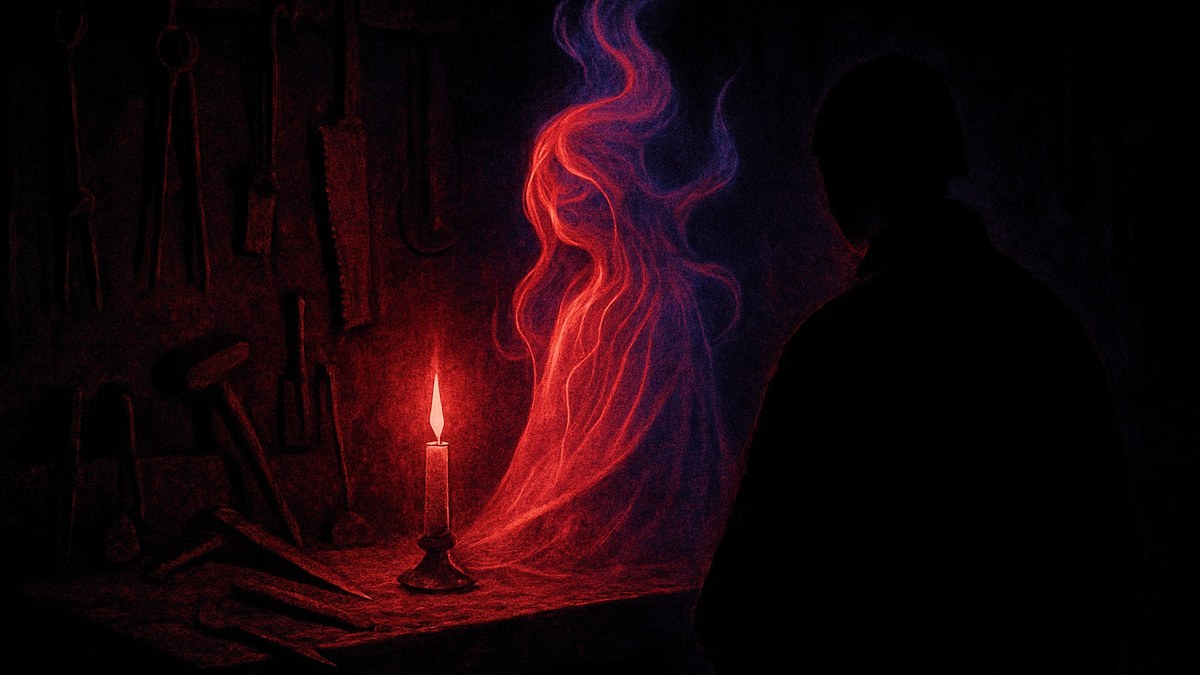
Letting go of something you have used for years, your hand hesitates for no clear reason. Japan turned exactly that sensation into a creature: the tsukumogami.
This article explains what tsukumogami are, where the idea comes from, how they were painted, and how they connect to the memorial rites for needles and dolls — purely as a matter of folklore and culture.
What tsukumogami are (the meaning)
A tsukumogami is a tool or household object that, after long years, gains a spirit and starts to move as a yokai. Instruments like the biwa and koto, pots and kettles, umbrellas, straw sandals, fans — any everyday object is a candidate.
An older writing renders the name as "the ninety-nine spirit," from the idea that an object transforms after ninety-nine years: one year short of a century. Tsukumo is also linked to tsukumogami, a word for white hair, so respect and wariness toward what has grown old are folded together in the single term.
The Tsukumogami Emaki — the revenge of the discarded
The Muromachi-period Tsukumogami Emaki tells the idea most directly. Old tools thrown into the street at the year-end cleaning are outraged — "after all we have done for you" — gather together, transform into yokai, and set about taking revenge on people.
And they march. They form the procession of hyakki yagyo. The biwa lutes and kettles striding cheerfully through the Shinju-an scroll make sense only against this background.
Notably, at the end of the scroll the tools take refuge in the Buddhist law and attain enlightenment. The story does not stop at terror; it ends by pacifying — the same shape as goryo belief, and a very Japanese way to close a tale.
Why a spirit was seen in a tool
Japanese folklore has long recognised a spiritual quality in everything: in mountains, rivers and rocks, and in tools that a person has worked with and worn in. The more you use it, the denser that presence becomes.
Layered onto that is a household discipline. Do not treat things carelessly; do not use and discard. That teaching was handed to children in the form of a story — "there will be consequences." A tsukumogami is a frightening yokai and, at the same time, the guardian of the manners of taking care of things.
Hari-kuyo and ningyo-kuyo — rites for sending things on
The sensibility survives as ritual. Hari-kuyo: broken sewing needles pressed into tofu or konjac and offered at a shrine. Ningyo-kuyo: dolls whose service is over taken to a temple. Brushes and kitchen knives get their own memorial services in various regions.
All of them are ways of sending something on rather than throwing it out. The faint guilt of disposing of a long-used thing as mere rubbish is what these rites take off your hands. Just as oharai and yaku-otoshi absorb a person's impurity, kuyo absorbs an object's history.
Attachment transfers — a modern view
The tsukumogami idea travels well into modern life. The mug you have used for years, your first smartphone, clothes you no longer wear. They are finished as objects, and still hard to release, because the memory of a stretch of time is stuck to them.
Psychology explains this as projecting part of the self onto a possession. What lives in the tool, then, is both the tool's spirit and the person who used it. Letting go is painful because it means cutting away a piece of yourself.
Objects are not the only hard thing to release
Tools are not the only things that resist letting go. A relationship that has ended, one remark someone made, an incident that ought to be long past. The longer you have carried it, the more it has become part of you, and the more it hurts to detach.
Which is why "just forget it" rarely works, and a step is needed: put it into words, then send it on. Noroi Nikki is a private app for writing out exactly those negative feelings you cannot say to anyone, and quietly setting them down. Saved journal text is not public to other users. You choose whether to share a curse card.
The way a tool is given a memorial before it goes, give the old weight in your chest a proper wording, and then see it off.
For more folklore of objects and yokai, see what hyakki yagyo is and what katashiro are.
FAQ
Frequently asked questions
Q.What does tsukumogami mean?
Tsukumogami is the tradition that a tool or household object which has passed long years gains a spirit and begins to move as a yokai. An older writing gives it as 'the ninety-nine spirit,' from the idea that an object transforms after ninety-nine years — one year short of a century.
Q.Why were old objects thought to become yokai?
Japanese tradition has long recognised a spiritual quality in all things, and felt it most strongly in tools that had been used for years. Joined to the warning that treating things carelessly brings consequences, this produced stories in which discarded tools turn into yokai and come back for revenge.
Q.Are tsukumogami related to the needle and doll memorial rites?
Not identical, but they share a root. Hari-kuyo, in which broken needles are pressed into tofu and offered, and ningyo-kuyo, in which dolls that have finished their service are taken to a temple, both rest on the sense that objects too have a heart. They are rites for *sending an object on* rather than throwing it away.
About the author
Katsuki Mitsumori三森 捷暉
CEO, SURISUTA K.K. / Operator of Doya Marke AI
Runs Doya Marke AI, a suite of practical AI services spanning content, ads, sales and HR, and hosts the YouTube channel 'SaaS wa Shinimasshen.' Creator and developer of Noroi Nikki, an app for writing out and letting go of emotions.
This article explains folklore, language and culture. It is not medical, legal or religious advice. Traditions are introduced as culture, not as instructions to harm anyone. Claims without a source are marked as popular belief.
RELATED
Related reads
 Folklore of curses
What Is Kamikakushi? Japan's 'Spirited Away' Tradition, Explained
What is kamikakushi, being "spirited away"? A folklore-and-culture explanation of the Japanese tradition that explains sudden disappearances as the work of tengu, mountain gods or foxes — the Tono Monogatari accounts, the hidden-village stories, and a modern reading. Lore only.
 Folklore of curses
What Is a Zashiki-warashi? Meaning, Lore, and Tono Monogatari
What is a zashiki-warashi? A folklore-and-culture deep dive into its meaning and the lore of northeastern Japan — the record in Kunio Yanagita's Tono Monogatari, the child-shaped being that brings a household wealth, the tradition that a house declines once it leaves, and the theories about its true nature. Not a claim that it is real.
 Folklore of curses
What Is Hyakki Yagyo? Japan's Night Parade of One Hundred Demons, Explained
What is hyakki yagyo? A folklore-and-culture explanation of Japan's night parade of demons — the tales in Konjaku Monogatari and Uji Shui Monogatari, the Muromachi picture scrolls, the link to tsukumogami, and what was said to happen if you met it. Lore only.