What Is Oharai? The Shinto Rite of Purifying Away Defilement
What is oharai (Shinto purification)? A folklore explanation of its meaning and origins, how it differs from yakubarai and o-kiyome, and the flow of the shrine rite — the idea of cleansing away defilement and misfortune.
By Katsuki Mitsumori
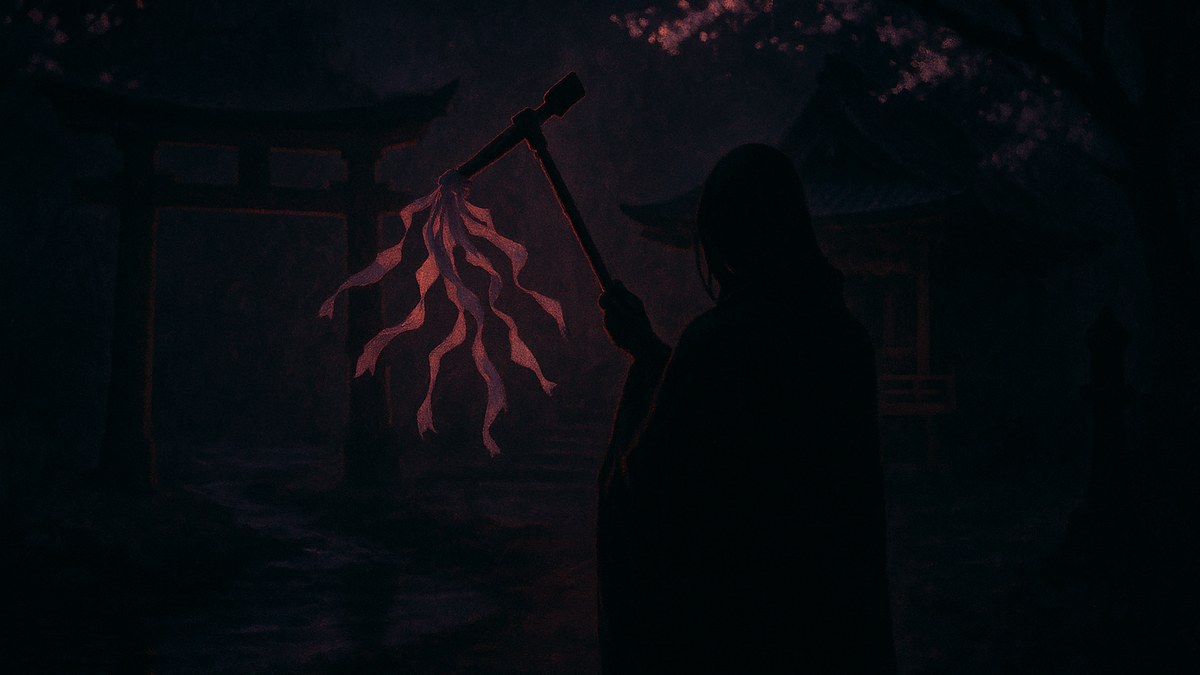
When buying a new car, building a house, or reaching an unlucky year, many people have received an "oharai" at a shrine — that scene of a priest waving a wand tipped with white paper from side to side. This article explains what oharai is — its meaning and origins, the ideas of harae and misogi, the procedure and kinds of the shrine rite, and how it differs from yakubarai, o-kiyome, and kito — as a matter of Shinto and folklore.
What oharai is
Oharai is a Shinto rite that removes the sin, defilement (kegare), and misfortune clinging to a person, returning body and mind to a pure state. In Shinto, people are thought to take on "defilement" and "sin" unawares as they live, and by purifying it away, one is believed to recover one's original purity. The priest's gesture of chanting a norito prayer and waving the wand called the onusa from side to side is meant to sweep that defilement off. In antiquity such offenses and calamities were sorted into "heavenly sins" (amatsu-tsumi) and "earthly sins" (kunitsu-tsumi), and the idea of the "great purification" (oharae) that sweeps them all away together took shape.
Harae and misogi — the two purifications
To understand oharai, two forms of cleansing are essential: harae and misogi. Misogi is the act of immersing the body in the water of a river, the sea, or a waterfall to wash defilement away — purification by water. Harae, by contrast, removes defilement through rites using a norito and ritual implements. The passage in myth where the deity Izanagi washes off the defilement of the underworld in water is told as the origin of misogi. Harae and misogi are not two separate things, but two expressions of a single wish: to recover purity.
The procedure and flow
To receive a formal oharai (kito) at a shrine, you first apply at the shrine office and are shown to the worship hall. The usual flow is a purification by the priest (shubatsu) with the onusa, the chanting of the norito, and the offering of a tamagushi sprig with a bow. Besides the onusa, purification implements handed down by region include kirinusa — finely cut paper and hemp scattered over the worshipper — and salt water (ento). It takes from a dozen minutes to about half an hour. It is a formal setting, but no special qualification or memorized ritual is required; simply follow the priest's guidance.
Kinds of oharai
Oharai varies by purpose. The "great purification" (oharae), which sweeps away half a year's defilement at once, is a signal rite held at shrines nationwide on the last days of June and December; the June one is called the nagoshi-no-harae and is known for the custom of passing through a great ring of woven reeds (chinowa). Beyond it, oharai has accompanied nearly every threshold of daily life — warding off an unlucky year, prayers for household and road safety, the ground-breaking rite that purifies the site of a new house, the blessing of a new car, and rites of passage such as a newborn's first shrine visit and shichi-go-san.
Oharai, yakubarai, o-kiyome, and kito
Similar words include yakubarai, o-kiyome, and kito. Where oharai is the broad term for purifying away defilement and misfortune in general, yakubarai refers to purification against a specific calamity, such as the perils of an unlucky year. O-kiyome usually means a simpler, more everyday act of removing defilement with salt or water. Kito is the act of conveying a wish to the gods and praying for their protection — closer to a prayer to "receive" power than to the "removal" of oharai. The precise lines differ by shrine and region, but all rest on the same wish: to recover purity.
A purification of the heart, in words
At the root of oharai is a conviction: defilement can be swept away; you need not carry it. This applies not only to unseen defilement but to the negative feelings gathered in the heart. Anger and resentment you have swallowed, left alone, settle like sediment in the mind.
Saved journal text in Noroi Nikki is not public to other users. As a priest purifies defilement with a norito, set the thoughts in your chest down in words. To write and purify may be a small, modern oharai for recovering the clarity of the heart.
Related reading: What is jorei? Spirit exorcism, how it differs from oharai, and the folklore behind it
Related reading: What is o-hyakudo mairi? The folk prayer of walking a vow a hundred times over
FAQ
Frequently asked questions
Q.What is oharai?
Oharai is a Shinto rite that removes the sin, defilement (kegare), and misfortune that cling to a person, restoring body and mind to a pure state. In Shinto, people are thought to gather kegare unknowingly as they live, and purifying it away is believed to restore one's original purity. The classic image is a priest chanting a norito prayer and waving the onusa wand from side to side.
Q.How does oharai differ from yakubarai?
Oharai is the broad term for purifying away defilement and misfortune in general, while yakubarai refers to purification aimed at a specific calamity, such as the perils of an unlucky year. O-kiyome, meanwhile, usually means a simpler, more everyday act of removing defilement with salt or water. The exact lines vary by shrine and region, but all rest on the same idea.
Q.When do people receive oharai?
It is commonly received at turning points in life and daily living — warding off the perils of an unlucky year, prayers for household safety or road safety, the ground-breaking rite for a new house, or the blessing of a new car. No special qualification or memorized ritual is needed; you apply at the shrine office and follow the priest's guidance. It is a way of composing the heart and marking a threshold.
About the author
Katsuki Mitsumori三森 捷暉
CEO, SURISUTA K.K. / Operator of Doya Marke AI
Runs Doya Marke AI, a suite of practical AI services spanning content, ads, sales and HR, and hosts the YouTube channel 'SaaS wa Shinimasshen.' Creator and developer of Noroi Nikki, an app for writing out and letting go of emotions.
This article explains folklore, language and culture. It is not medical, legal or religious advice. Traditions are introduced as culture, not as instructions to harm anyone. Claims without a source are marked as popular belief.
RELATED
Related reads
 Folklore of curses
What Is a Katashiro? Japan's Purification Custom of Entrusting Defilement to a Substitute
The katashiro, familiar from the Great Purification at Shinto shrines, is a paper or doll in human shape onto which you transfer your own defilement before letting it flow away. Here is what a katashiro is, how it differs from a yorishiro, its history back to clay figurines, its use in the Great Purification, nademono and nagashi-bina, and how it differs from the straw doll.
 Folklore of curses
What Is an Ofuda? The Meaning of the Shrine Tablet and How to Enshrine It
What is an ofuda (the Shinto shrine tablet)? A folklore explanation of its meaning and types, how it differs from omamori and gofu, how to enshrine it properly on a household altar, and the custom of renewing it each year.
 Folklore of curses
What Is Jorei? Spirit Exorcism, How It Differs from Oharai, and the Folklore Behind It
What is jorei (spirit exorcism)? A folklore-and-culture explanation of its meaning, how it differs from oharai and jorei-as-pacification, and how spirits and curses have been understood in Shinto, Buddhism, and folk belief. Not an endorsement of any practitioner or rite.