What Is Goryo Shinko? Japan's Belief in Pacifying Vengeful Spirits
What is goryo shinko, the Japanese belief in appeasing vengeful spirits? A folklore-and-history explanation of how the resentment of those who died unjust deaths was enshrined and turned into protective gods — from the 863 goryoe at Shinsen-en and the eight goryo to Prince Sawara, Sugawara no Michizane, and the Gion Festival.
By Katsuki Mitsumori
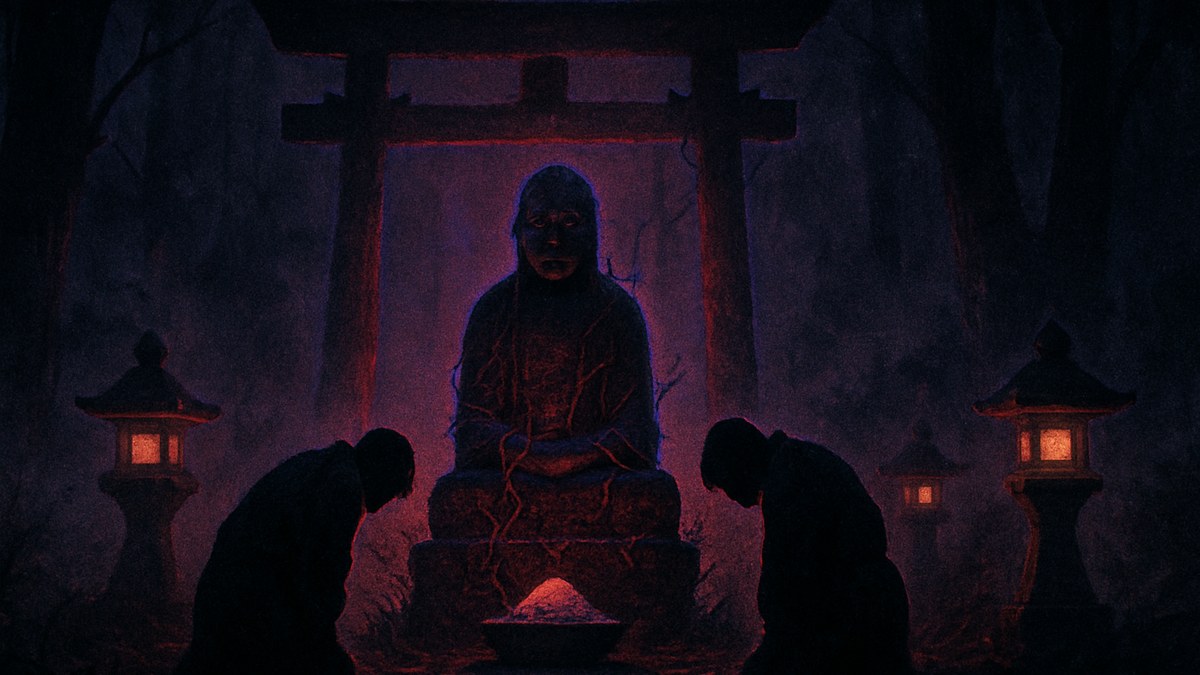
The Tenmangu shrines that honor Sugawara no Michizane, the Gion shrine famed for warding off plague — behind these halls still standing across Japan runs a distinctly Japanese way of thinking called goryo shinko. It deliberately enshrines and honors a spirit that ought to be terrifying, and turns it into a guardian god. This article traces that strange belief as a matter of folklore and history.
This is not a guide to cursing anyone. On the contrary, goryo shinko is a story of the old Japanese wisdom about how to pacify human resentment.
What goryo shinko means
Goryo shinko is the belief that the resentment of a person who died an unjust death in political strife or disaster could cause epidemics and natural disasters, and that by enshrining such a spirit with great care one could pacify it and, in time, ask it to become a god who protects people.
What matters here is the move that renames a feared "onryo," a vengeful spirit, into a "goryo," an honored soul, through reverent worship. "Goryo" originally meant the spirit of one who died an unnatural death and left behind attachment and grudge in this world. Rather than crushing the resentment by force, one acknowledges the bitterness and, by enshrining it, softens it. The heart of goryo shinko lies in this posture of pacification.
The origins and history of goryo shinko
The seed of this belief is old. In Japan, from primeval times, people held that when a person dies the spirit leaves the body. In the ancient period the notion grew stronger that the spirits of the politically defeated and those who died in bitterness could bring calamity, and from the Nara period into the early Heian period it took shape as goryo shinko.
An early recorded example is the goryoe held in 863 (Jogan 5) at the Shinsen-en garden in Kyoto. Against a backdrop of an epidemic that had killed many at court from the previous year, it linked the deaths to the vengeance of those who had perished in bitterness, and sought to console and pacify their spirits. The spirits enshrined then became the core of what were later fixed as the "eight goryo" (hassho goryo), enshrined at the Kamigoryo and Shimogoryo shrines in Kyoto.
The feared spirits themselves
Those enshrined as goryo include real historical figures. Prince Sawara — younger brother of Emperor Kanmu, accused of rebellion and said to have died protesting his innocence while refusing food — was later given the posthumous title Emperor Sudo and became a leading goryo. Others feared and enshrined as goryo include Princess Igami (Inoue), said to have died in indignation after being deposed as empress, along with Prince Iyo and Fujiwara no Hirotsugu, who fell in political upheavals.
The most famous of all is Sugawara no Michizane. After he lost a political struggle, was demoted to Dazaifu, and died in despair, the capital saw a run of lightning strikes and deaths of high officials. People feared this as the vengeance of Michizane's spirit and in time enshrined him as "Tenjin." A dreaded spirit turned into a being revered as the god of learning — the beginning of the Tenjin belief that continues today.
The Gion goryoe and festivals of pacification
Festivals to pacify goryo eventually took root as annual observances. The Gion goryoe, the root of the summer Gion Festival, likewise belongs to the current of goryo shinko: it pacifies a plague deity, an epidemic god spoken of in connection with figures such as Gozu Tenno. The idea is to turn the raging, cursing power of a spirit (ara-mitama) into the blessing-bearing power of a pacified one (nigi-mitama). Beneath the festival's splendor lies this old wish.
In this way goryo shinko became one source of larger beliefs still alive today, such as the Tenjin and Gion faiths. Its depth lies precisely in how dread and reverence are bound back to back.
Why a belief in "pacifying" resentment arose
What goryo shinko teaches is that the Japanese have long treated resentment and tatari not as "an evil to be erased" but as "something to face and pacify." Feelings of bitterness, our forebears may have thought, soften more when their existence is properly acknowledged and honored than when they are denied and forced down. Not cursing back, but enshrining and calming — here one senses a wisdom that tries, somewhere, to break the chain of resentment.
This offers a quiet hint for us today as we deal with our own anger and grudges.
Acknowledge and pacify your own resentment
Goryo shinko teaches that pacification begins not by forcibly denying fierce resentment but by first admitting that it "was there." The same is true of the anger and grudge inside you. The more you try to treat it as if it never happened, the longer it smolders in your chest.
Saved journal text in Noroi Nikki is not public to other users. First put your own resentment into words, and quietly let it settle.
For a related piece of lore, see also what an onryo is.
FAQ
Frequently asked questions
Q.What does goryo shinko mean?
Goryo shinko is a distinctly Japanese belief that the resentment of those who died unjust deaths in political strife or disaster could cause epidemics and calamities, and that by enshrining and honoring such spirits one could pacify them and even turn them into protective deities. Its hallmark is transforming a feared vengeful spirit (onryo) into a revered goryo, an honored soul, through worship.
Q.When did goryo shinko begin?
It took shape from the Nara period into the early Heian period. An early recorded example is the goryoe held at Shinsen-en garden in Kyoto in 863, which sought to link a raging epidemic to the vengeance of those who had died in bitterness, and to console and pacify their spirits.
Q.How does goryo shinko relate to curses and tatari?
It rests on the idea of tatari, spiritual retribution. People feared that the spirit of one who died in bitterness would visit calamity, and enshrined that spirit to pacify it — the central notion being to turn a cursing spirit into a guardian god by honoring it rather than fighting it.
About the author
Katsuki Mitsumori三森 捷暉
CEO, SURISUTA K.K. / Operator of Doya Marke AI
Runs Doya Marke AI, a suite of practical AI services spanning content, ads, sales and HR, and hosts the YouTube channel 'SaaS wa Shinimasshen.' Creator and developer of Noroi Nikki, an app for writing out and letting go of emotions.
This article explains folklore, language and culture. It is not medical, legal or religious advice. Traditions are introduced as culture, not as instructions to harm anyone. Claims without a source are marked as popular belief.
RELATED
Related reads
 Folklore of curses
What Is Majinai? The Meaning, Roots, and Origins of Japanese Charms
What is majinai, the Japanese word for a charm or spell? A folklore-and-history explanation of its meaning and roots — the etymology of majinau and maji, the difference between protective charms and harmful curses, and everyday spells with salt, teru teru bozu, and words. Not a how-to for harming anyone.
 Folklore of curses
What Is Onryo? The Folklore of the Vengeful Spirit the Japanese Feared and Enshrined
An onryo is the spirit of someone who died with bitterness or a grudge, believed to bring misfortune. From a folklore view, here's its meaning, famous legends, and the goryo belief that enshrined these vengeful spirits as gods.
 Folklore of curses
What Is Black Magic? Its Difference from White Magic, and Its History as Culture
Black magic, familiar from films and stories, is described as magic meant to harm others — contrasted with white magic, aimed at healing and protection. Here is what the concept means, why the black/white line is blurry, its history through grimoires and witch hunts, and parallels worldwide (this is not a guide to practicing it).