What Is Onryo? The Folklore of the Vengeful Spirit the Japanese Feared and Enshrined
An onryo is the spirit of someone who died with bitterness or a grudge, believed to bring misfortune. From a folklore view, here's its meaning, famous legends, and the goryo belief that enshrined these vengeful spirits as gods.
By Katsuki Mitsumori
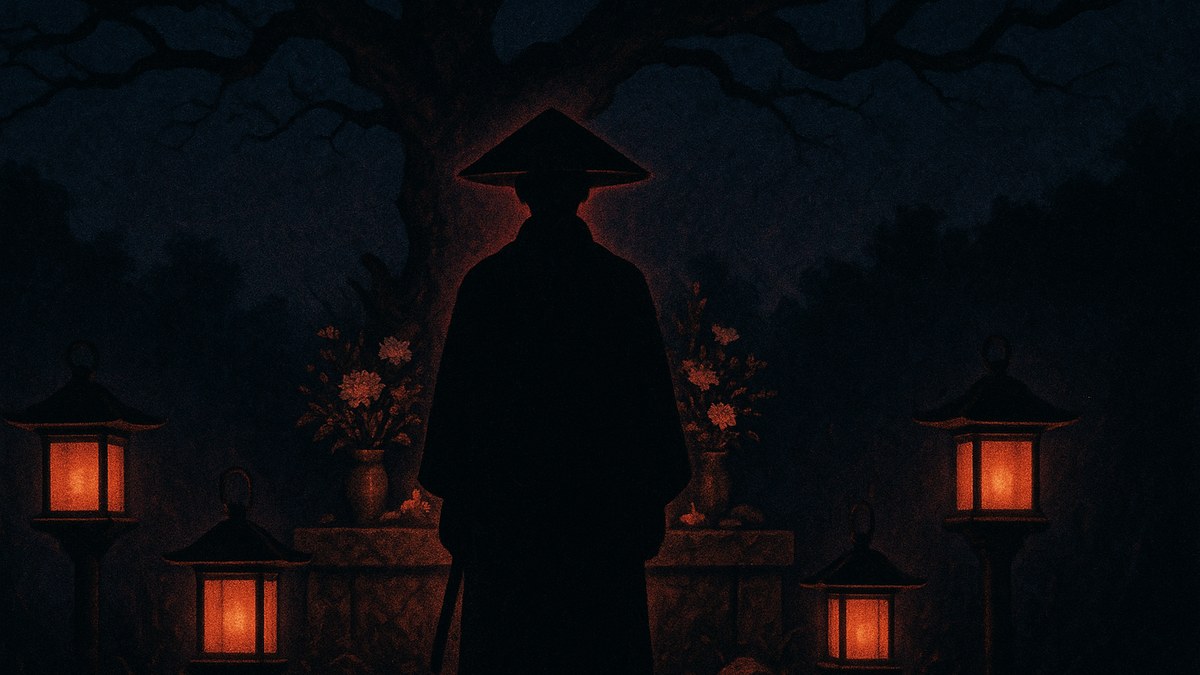
Throughout history, the names of those who died in bitterness have often been handed down as onryo — vengeful spirits. A soul that carries a grudge brings misfortune: this idea, which sounds like mere legend to us today, once carried enough weight to move politics and faith. From a folklore view, this article covers what an onryo is, how it differs from goryo and ikiryo, the legends of the three great onryo, the rise of goryo belief, and the onryo in modern culture — aiming to be the most careful single read available.
What an onryo is
An onryo is the spirit of a person who died carrying bitterness or a grudge, believed to bring misfortune to the living world. The spirits of those who met a violent death or were unjustly cast down were especially feared.
Behind this lies the sense that a grudge left unsettled does not vanish. A soul that departed the world unfulfilled was believed not to find rest but to linger, causing plagues, disasters, and the ruin of the powerful. An onryo was, in a sense, "unappeased bitterness" taking form.
Onryo, goryo, and ikiryo — the differences
Two related words are goryo and ikiryo. Let us sort them out. An onryo is the raging spirit of one who died bearing a grudge. A goryo is that onryo enshrined with care and calmed into a deity — the "pacified form" the onryo has turned into. An ikiryo, by contrast, is said to be the spirit of a living person, sent forth by intense resentment or jealousy to work upon another; it arises from the living, which sets it sharply apart from the onryo. See What Is Ikiryo for more. It helps to hold onryo as "the grudge of the dead," ikiryo as "the grudge of the living."
The three great onryo — Michizane, Masakado, Sutoku
The most renowned onryo are Sugawara no Michizane, Taira no Masakado, and Emperor Sutoku, popularly called the "three great onryo of Japan" (the lineup has several versions).
Michizane, esteemed as a scholar yet defeated in political strife and exiled to Dazaifu, where he died. Masakado, who raised a revolt against the court in the east and was struck down. Emperor Sutoku, who lost the Hogen rebellion, was exiled to Sanuki, and died in despair. The lightning, plagues, and upheavals that struck the capital after their deaths were all received as tatari born of their bitterness. Historical scholarship notes that these three came to be grouped as the "three great onryo" in no small part through the influence of Edo-period popular fiction and kabuki. People feared — that gravely — the grudge of those forced into misfortune by power, and handed it down as story.
Why onryo arose — the rise of goryo belief
The idea of the onryo spread through society in the Heian period. As plague and disaster struck the capital again and again, their cause came to be sought in the "onryo" of those who had died violent deaths after losing at politics. The rite held to appease such spirits was the goryo-e.
The goryo-e held at Shinsen-en in 863 is well known as an early example. Enshrining a feared spirit as a deity calmed it and turned it from a bringer of misfortune into a protector of the people — this faith is called goryo belief. The onryo was not merely an object of terror but an idea spoken of together with enshrinement.
From fear to faith, and into modern culture
Sugawara no Michizane was enshrined at Kitano Tenmangu and elsewhere and came to be widely revered as a god of learning. Masakado is enshrined at Kanda Myojin, Sutoku at Shiramine Jingu and others. A being feared for bringing misfortune turned into a god who protects and guides people. Rather than sealing a grudge away by force, they honored it, drew near to its bitterness, and softened it through enshrinement. This stance — not expelling the raging soul but seeking to live alongside it — captures a defining feature of Japanese faith.
Even today, Masakado's grave-mound (kubizuka) in Otemachi, Tokyo, is carefully tended, and onryo stories live on in novels, films, and games. It is worth noting that seeing the onryo only as "a fearsome, cursing being" is one-sided. An onryo, calmed and enshrined, turns into a protective deity — only when that return journey is included does the whole idea of the onryo come into view.
Writing to appease a grudge you cannot resolve
What the stories of onryo convey is an old, lived sense that bitterness left unresolved does not vanish easily. Perhaps the same holds within the human heart. Swallowed resentment, left alone, quietly eats away at you.
Saved journal text in Noroi Nikki is not public to other users. As people enshrined and calmed a spirit, you set the resentment deep in your chest into the form of words and place it outside for a while. To write and appease may be, in our own age, a rite for making peace with a raging feeling.
Related article: What Is Tatari? The Folk Meaning of the Misfortune the Japanese Have Long Feared
FAQ
Frequently asked questions
Q.What is an onryo?
An onryo is the spirit of a person who died carrying bitterness or a grudge, believed to bring misfortune to the living world. The spirits of those who met a violent death or were unjustly cast down were especially feared, thought to cause plagues or disasters out of their resentment. A soul that could not settle its grudge was believed to linger in the world until appeased.
Q.Who are the three great onryo of Japan?
They are commonly said to be Sugawara no Michizane, Taira no Masakado, and Emperor Sutoku, all of whom died amid political strife, exile, or misfortune. Calamities and strange events after their deaths were received as arising from their bitterness, and they were later enshrined with great care. The exact lineup, however, has several versions.
Q.How were onryo appeased?
The feared onryo were appeased by building shrines and enshrining them as gods — this is called goryo belief. Sugawara no Michizane was enshrined at Tenmangu as a god of learning, turning from a bringer of misfortune into a protector of the people. The underlying idea is to soften a grudge not by sealing it away but by honoring and enshrining it.
About the author
Katsuki Mitsumori三森 捷暉
CEO, SURISUTA K.K. / Operator of Doya Marke AI
Runs Doya Marke AI, a suite of practical AI services spanning content, ads, sales and HR, and hosts the YouTube channel 'SaaS wa Shinimasshen.' Creator and developer of Noroi Nikki, an app for writing out and letting go of emotions.
This article explains folklore, language and culture. It is not medical, legal or religious advice. Traditions are introduced as culture, not as instructions to harm anyone. Claims without a source are marked as popular belief.
RELATED
Related reads
 Folklore of curses
What Is Tatari? The Folk Meaning of the Misfortune the Japanese Have Long Feared
Tatari is an old idea that the anger of gods, spirits, or nature falls upon people as misfortune. From a folklore view, here's its meaning, its origins, its link to goryo belief, and what people were really trying to appease.
 Folklore of curses
What Is Ohyakudo-mairi? The Folk Practice of Praying the Same Wish a Hundred Times
Ohyakudo-mairi is a Japanese folk practice of visiting the same shrine or temple a hundred times to make a wish. Here's its meaning, its origins, the basic form using the "hundred-times stone," and the quiet inner work behind repeating a prayer.
 Folklore of curses
What Is Yaku-otoshi? How It Differs from Yaku-barai, and the Folk Practice of Letting Go of Misfortune
Yaku-otoshi is a folk practice of deliberately shedding and letting go of misfortune clinging to you. Here's how it differs from yaku-barai and yaku-yoke, its link to the "unlucky years," and the meaning behind dropping and releasing things.