What Is Hyoui? Meaning, Lore, and the Fox Possession and Living Spirit
What is hyoui (spirit possession)? A folklore-and-culture deep dive into its meaning and lore — the difference between "tsuki" and "mochi" possession, Japanese traditions such as fox possession and the living spirit, and divine possession and trance cultures around the world. Not a claim that spirits are real.
By Katsuki Mitsumori
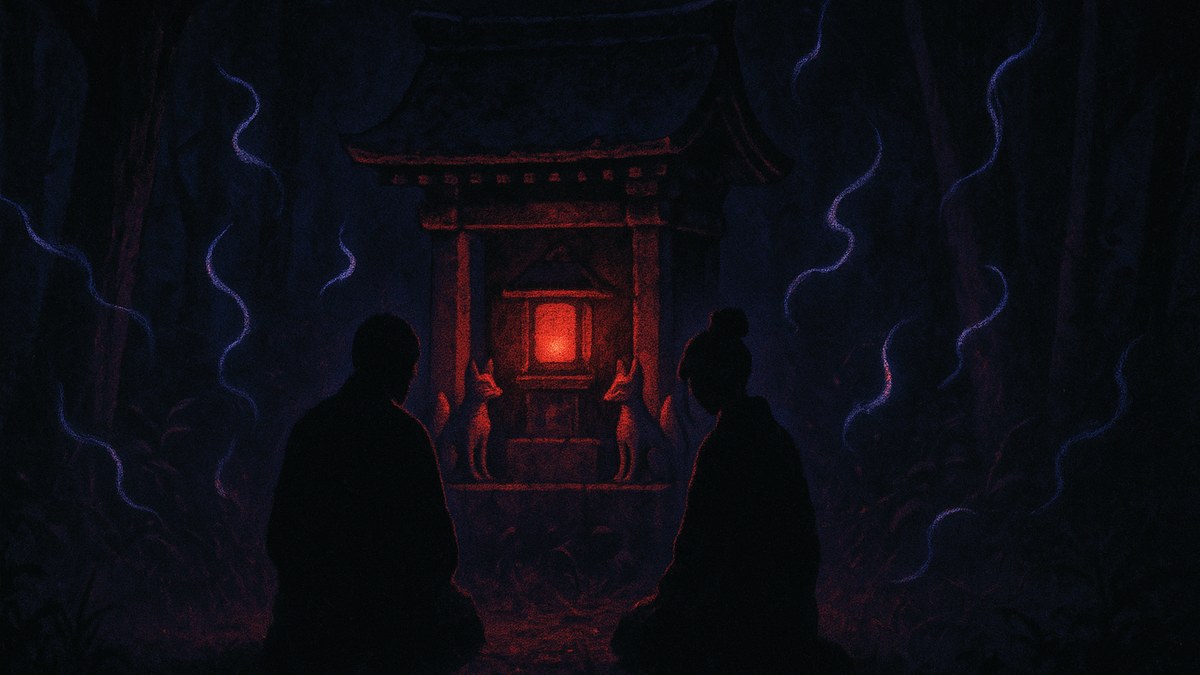
"Hyoui" is often depicted in ghost stories and horror — a person changed by being taken hold of by something. Behind that image lies a long history of belief and folklore across the world. This article explains what hyoui is — its meaning and lore, fox possession and the living spirit, and possession cultures worldwide — purely as a matter of folklore and culture. It makes no claim that spirits are real.
What hyoui means
Hyoui (spirit possession) is a term for a phenomenon in which a spirit, deity, or animal spirit is said to take hold of a person and affect their mind and body. What takes hold is called a "possessing spirit" (tsukimono). Found widely in the world's religions and folk beliefs, it has served to make sense of a person suddenly changing, or behaving in ways that resist explanation, as an encounter with the unseen. It is a cultural telling, not a verified fact.
"Tsuki" and "mochi" — two forms of possession lore
In folklore studies, possession traditions are sometimes divided into "tsuki" and "mochi." "Tsuki" is a phenomenon in which another spirit temporarily transfers into a person — fox possession is one example. "Mochi," by contrast, is said to be inherited within a family line, and such families were called "fox-holders" (kitsune-mochi) or "inugami lineages." This notion of "mochi" bred discrimination — avoiding marriage ties with particular households — and at times set off serious conflict within local communities. Possession lore was not merely tales of the uncanny; it was inseparable from the very fabric of the community.
Japanese possession lore — fox possession and the living spirit
The best-known Japanese possession lore is kitsunetsuki, "fox possession," in which a fox spirit is said to take hold of a person and alter their words and deeds. The fox was long revered as a messenger of the rice-field god and of the Inari faith, while also being feared as a being that bewitches and possesses people; that very ambivalence sustains the fox-possession telling. Also long told as a form of possession is the ikiryo, the "living spirit" — the fierce resentment or attachment of a living person said to become a spirit and cling to another. The living spirit of Lady Rokujo in "The Tale of Genji" is a famous example. This lore tells of how greatly people's violent emotions have been feared.
Possession cultures around the world
The idea that a deity or spirit takes hold of a person is not Japan's alone. Around the world are widespread cultures of divine possession and trance, in which a god is said to descend into a person during ritual. Studies of shamanism sometimes divide the shaman into an "ecstatic" type, who journeys to the spirit world in person, and a "possession" type, who has spirits descend into the self to convey their words — and Japan's shrine-maiden practices are said to belong mainly to the latter. In other words, possession has been received not only as an object of fear but, at times, as a manifestation of sacred power. It is a cultural form universal to humankind, giving meaning to changes of mind and events of the community as an encounter with the unseen.
"Being possessed," seen through psychology
An uncontrolled possession, in which the mind is seized against one's will, and a controlled possession, in which a god is deliberately invited during ritual — this distinction speaks to us who live today as well. When resentment or anxiety toward someone will not leave your mind, so that you feel driven by it around the clock, a person feels as if "possessed" by something that came from outside the self. Possession lore can also be read as the trace of a wisdom that named emotion too strong to handle as something from outside, in order to keep a distance from it.
Thoughts that take hold of the heart — let them out in words
The lore of possession indirectly portrays how strong emotion can drive a person as if it came from outside the self. Resentment or fixation on someone that will not leave your mind, so that you feel possessed around the clock — this can happen to people of any age. But there is no need to hurl that feeling into real action.
Saved journal text in Noroi Nikki is not public to other users. Put the resentment that won't leave your mind into words first, and set it down from your chest, little by little.
For related lore, see also what a living spirit (ikiryo) is and what juso (a curse) is.
FAQ
Frequently asked questions
Q.What does hyoui mean?
Hyoui (spirit possession) is a term for a phenomenon in which a spirit, deity, or animal spirit is said to take hold of a person and affect their mind and body. Found widely in religions and folk beliefs across the world, in Japan it has been passed down as lore of fox possession and the living spirit. It is folklore and culture, not something whose existence has been verified.
Q.What possession lore exists in Japan?
Well-known examples include kitsunetsuki, in which a fox spirit is said to take hold of a person, and the ikiryo, the living spirit — the strong feeling of a living person said to become a spirit and cling to another. Local possessing-spirit lore such as inugami also exists, deeply tied to regional belief and social conditions.
Q.Is possession only a Japanese idea?
No. The notion that a deity or spirit takes hold of a person is found worldwide, and cases of a god descending into a person during ritual (trance, divine possession) exist in many places. Possession is a universal cultural form for making sense of changes in the mind and unexplained events as an encounter with the unseen.
About the author
Katsuki Mitsumori三森 捷暉
CEO, SURISUTA K.K. / Operator of Doya Marke AI
Runs Doya Marke AI, a suite of practical AI services spanning content, ads, sales and HR, and hosts the YouTube channel 'SaaS wa Shinimasshen.' Creator and developer of Noroi Nikki, an app for writing out and letting go of emotions.
This article explains folklore, language and culture. It is not medical, legal or religious advice. Traditions are introduced as culture, not as instructions to harm anyone. Claims without a source are marked as popular belief.
RELATED
Related reads
 Folklore of curses
What Is Ushi no Koku Mairi? The Meaning and Origins of Japan's Midnight Curse Ritual
What is ushi no koku mairi (the hour-of-the-ox shrine visit)? A folklore-and-culture explanation of its meaning and origins — the ritual of nailing a straw doll at the witching hour, and the legend of the "curse rebound." Not a how-to, and not something we encourage doing.
 Folklore of curses
What Is Kodoku? Japan's Outlawed Insect Curse, Explained
What is kodoku? A folklore-and-history explanation of the sorcery said to have reached Japan from China — the character for ko, the Han-dynasty witchcraft scandals, the Ritsuryo law that made "kodoku enmi" a capital crime, and the link to inugami possession lineages. Lore only.
 Folklore of curses
What Does the Straw Doll Curse Mean? The Folklore Behind Japan's Wara Ningyo
What does the straw doll curse (wara ningyo) mean? A folklore-and-culture explanation of the five-inch-nail legend, its link to the midnight shrine ritual, and the idea of the "effigy." Not a how-to, and not something we encourage doing.