What Does the Straw Doll Curse Mean? The Folklore Behind Japan's Wara Ningyo
What does the straw doll curse (wara ningyo) mean? A folklore-and-culture explanation of the five-inch-nail legend, its link to the midnight shrine ritual, and the idea of the "effigy." Not a how-to, and not something we encourage doing.
By Katsuki Mitsumori
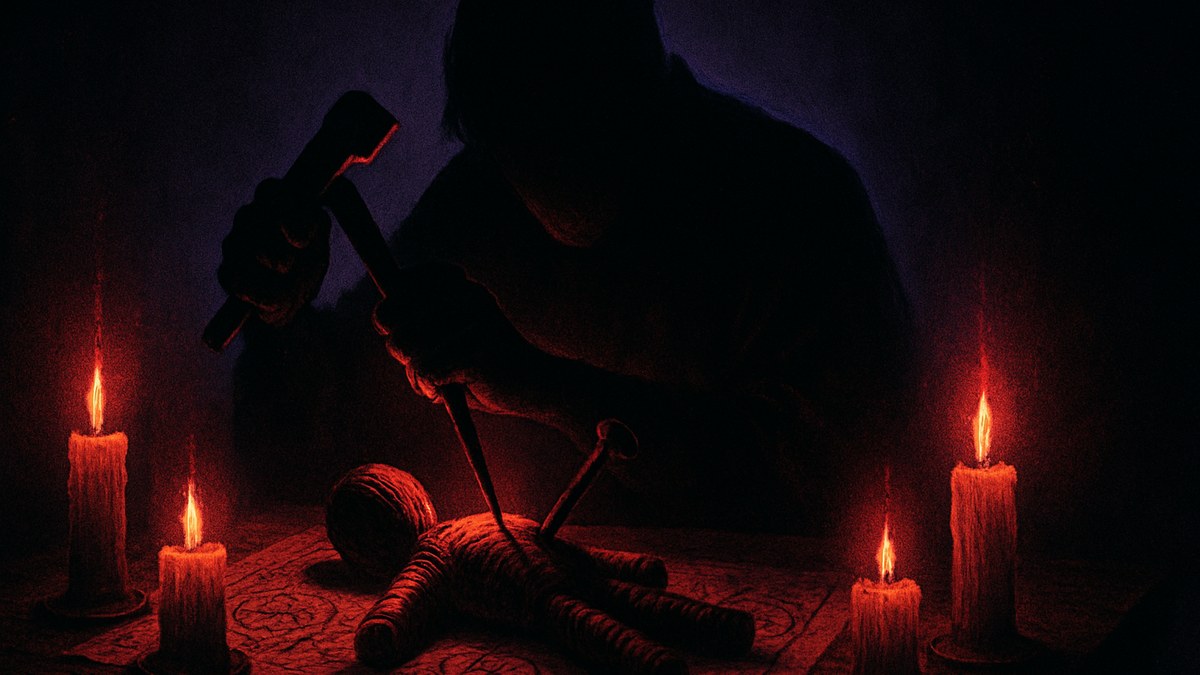
Driving nails into a human figure woven from straw — the "straw doll curse" is an eerie image many people picture as a staple of Japanese ghost stories and horror. Yet why the straw doll came to be seen as a tool of cursing, and what meaning was read into it, is surprisingly little known. In truth, the straw doll has a long history of being used not to harm people, but to protect them.
This article explains the meaning of the straw doll curse and its folklore — tracing back to its original form — purely as a matter of tradition and culture. It is not a guide to cursing anyone. At the end, we also touch on how to face feelings of resentment and the urge to curse.
What the straw doll curse means
A wara ningyo (straw doll) is a doll made as a "stand-in" for a hated person. You liken the doll to your target, and by bringing harm to it, you imagine the same thing befalling them. This idea is said to be a form of sympathetic magic — a category the British anthropologist James Frazer used in classifying magic, resting on the belief that things resembling each other influence each other. From the Western voodoo doll onward, similar doll-based magic appears around the world; the straw doll is its Japanese form. Of course, this is folklore only, with no verified power to harm anyone.
Why straw? A faith that held rice sacred
Why make the doll from straw at all? Behind it lies a faith, long held in Japan, that treated rice (and its straw) as sacred. The rice plant that yields the grain was thought to house a spiritual power, and a doll woven from its straw was believed to carry a special force as well. The lineage of human-shaped straw figures is older still: in ancient China they were called suurei and used even as grave goods buried with the dead. From early on, the straw doll bore the character of a katashiro — a substitute that stands in for a person. For substitute effigies in general, see also what a katashiro is.
More than cursing: substitutes, pest-sending, and warrior dummies
It may come as a surprise, but the uses of the straw doll were originally very broad. In the Heian period, when plague spread, straw dolls were set up along the roads to drive off the disease-demon. In farming villages, a rite called mushi-okuri ("sending off the insects") paraded a straw doll through the fields to expel crop pests, finally floating it down a river. In many regions there were customs of loading a village's misfortune onto a doll and sending it beyond the settlement to pray for good health. War chronicles such as the Taiheiki even record straw dolls dressed in armor to pose as warriors and deceive the enemy. The straw doll was, from the start, a multipurpose tool for prayer, warding off ill fortune, and standing in for a person.
The five-inch nail and the "effigy" lore
When this straw doll became widely known as a "tool of cursing," what it fused with was the five-inch nail (a thick nail about 15 cm long). In the ushi no koku mairi legend described below, the nail is the tool for pinning the doll to a sacred tree. One folk belief says that slipping the target's hair or nail clippings inside the doll strengthens the "likeness" — an idea that echoes contagious magic, the belief that things once in contact go on influencing each other even when parted. Others say the spot you strike determines where harm reaches the target, but all of these are merely images shaped within ghost stories and tradition.
The link to ushi no koku mairi
Behind the straw doll's fame as a symbol of cursing lies the legend of ushi no koku mairi, the "hour-of-the-ox shrine visit." Within that whole image — a white-robed figure driving nails into a straw doll at a shrine deep in the night — the doll has been passed down as the central prop. Straw dolls once served a wide range of purposes, from festival rites to stand-in beliefs, but through such stories, and through later ghost tales and horror, the image of a "tool of cursing" took hold.
A common misconception: the straw doll is not "equal to a curse"
The most stubborn misconception about the straw doll is that it is "solely a tool for cursing people." As we have seen, dolls shaped from straw have a far longer history of being used to protect people — festival rites, warding off plague, sending off pests, standing in for a person. The image of a cursing tool was emphasized only later, centered on the tale of ushi no koku mairi. In its original form, the straw doll was closer to a yorishiro, a vessel entrusted with people's wishes and fears.
Entrust the urge to curse to words, not a doll
That the straw doll legend has endured so long is surely because, in every age, people have carried in their hearts the experience of hating another from the depths. But there is no need to aim that feeling at real magic or action. Anger fierce enough to make you want to curse someone grows far lighter once you first put it into words and get it outside yourself.
Noroi Nikki is a private app for gently writing out, and letting go of, exactly those "curses you can tell no one." In place of a doll, write your resentment and anger straight into a journal. Saved journal text is not public to other users. Rather than hoarding it in your chest, the more you write it out, the lighter that weight becomes, little by little.
See also what ushi no koku mairi is, the ritual in which the straw doll takes center stage.
FAQ
Frequently asked questions
Q.What does the straw doll curse mean?
A wara ningyo (straw doll) is made as a stand-in, or effigy, for a hated person; driving nails into it is meant to bring harm to that person. The idea is said to rest on sympathetic magic — the belief that things resembling each other influence each other. But it is folklore and tradition only, with no verified power to harm anyone.
Q.Why is a five-inch nail said to be used?
The five-inch nail (a thick nail about 15 cm long) has been spoken of as the tool for pinning a straw doll to a sacred tree in the ushi no koku mairi legend. Folk beliefs say the spot you strike determines where harm reaches the target, but these are images shaped inside ghost stories and tradition, with no factual basis.
Q.Was the straw doll always a tool of cursing?
Dolls shaped from straw were originally used for a wide range of purposes — festival rites, stand-in beliefs, and more — not necessarily cursing. The idea of using a human 'effigy' became strongly tied to the image of magic only over the course of time.
About the author
Katsuki Mitsumori三森 捷暉
CEO, SURISUTA K.K. / Operator of Doya Marke AI
Runs Doya Marke AI, a suite of practical AI services spanning content, ads, sales and HR, and hosts the YouTube channel 'SaaS wa Shinimasshen.' Creator and developer of Noroi Nikki, an app for writing out and letting go of emotions.
This article explains folklore, language and culture. It is not medical, legal or religious advice. Traditions are introduced as culture, not as instructions to harm anyone. Claims without a source are marked as popular belief.
RELATED
Related reads
 Folklore of curses
What Is Ushi no Koku Mairi? The Meaning and Origins of Japan's Midnight Curse Ritual
What is ushi no koku mairi (the hour-of-the-ox shrine visit)? A folklore-and-culture explanation of its meaning and origins — the ritual of nailing a straw doll at the witching hour, and the legend of the "curse rebound." Not a how-to, and not something we encourage doing.
 Folklore of curses
Types of Curses in Japan: A Folklore Guide to Japanese Curses
What are the types of curses in Japanese folklore? A clear guide from folklore and legend — the sympathetic and contagious principles behind all magic, curses using tools like straw dolls, curses of words and kotodama, curses of spirits such as ikiryo and onryo, and kodoku and possession-lineage lore. Not a how-to for cursing anyone.
 Folklore of curses
What Is Noroi-gaeshi? The Meaning of Japan's 'Curse Rebound' Folklore
What is noroi-gaeshi (the curse rebound)? A folklore-and-culture explanation of its meaning, the ushi no koku mairi legend that "if you're seen, it returns to you," and why it has long been feared. Not a how-to, and not something we encourage doing.