Types of Curses in Japan: A Folklore Guide to Japanese Curses
What are the types of curses in Japanese folklore? A clear guide from folklore and legend — the sympathetic and contagious principles behind all magic, curses using tools like straw dolls, curses of words and kotodama, curses of spirits such as ikiryo and onryo, and kodoku and possession-lineage lore. Not a how-to for cursing anyone.
By Katsuki Mitsumori
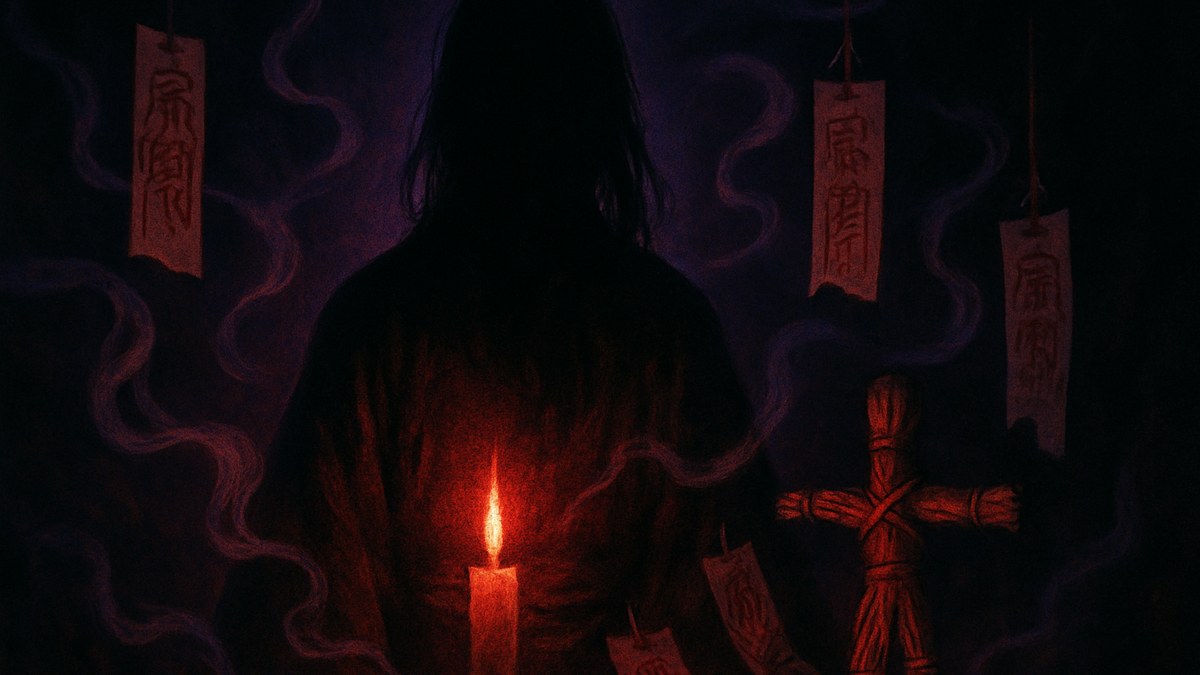
Say "a curse" and Japanese folklore holds a remarkable variety of forms — nailing a doll, chanting words, the spirit of a living person said to fly at another. This article explains what types of curses exist, purely as a matter of folklore and legend, sorting them into broad categories.
All of these are historical and cultural lore, not a how-to for cursing anyone. At the end, we touch on how to face feelings fierce enough to make you want to curse.
Two principles that sort all curses
Before the specific types, it helps to grasp two old ideas common to magic the world over. Anthropology has long organized magic around two basic principles: "sympathetic magic," the notion that things resembling each other affect one another, and "contagious magic," the notion that things once in contact stay connected even when parted.
Much of Japan's curse lore fits these two. Acting on a doll made to resemble the target is the sympathetic idea; using the target's hair, nails, or a worn possession is the contagious idea. The many forms of curses can be seen as these two plain notions branching out across eras and regions.
Curses using tools
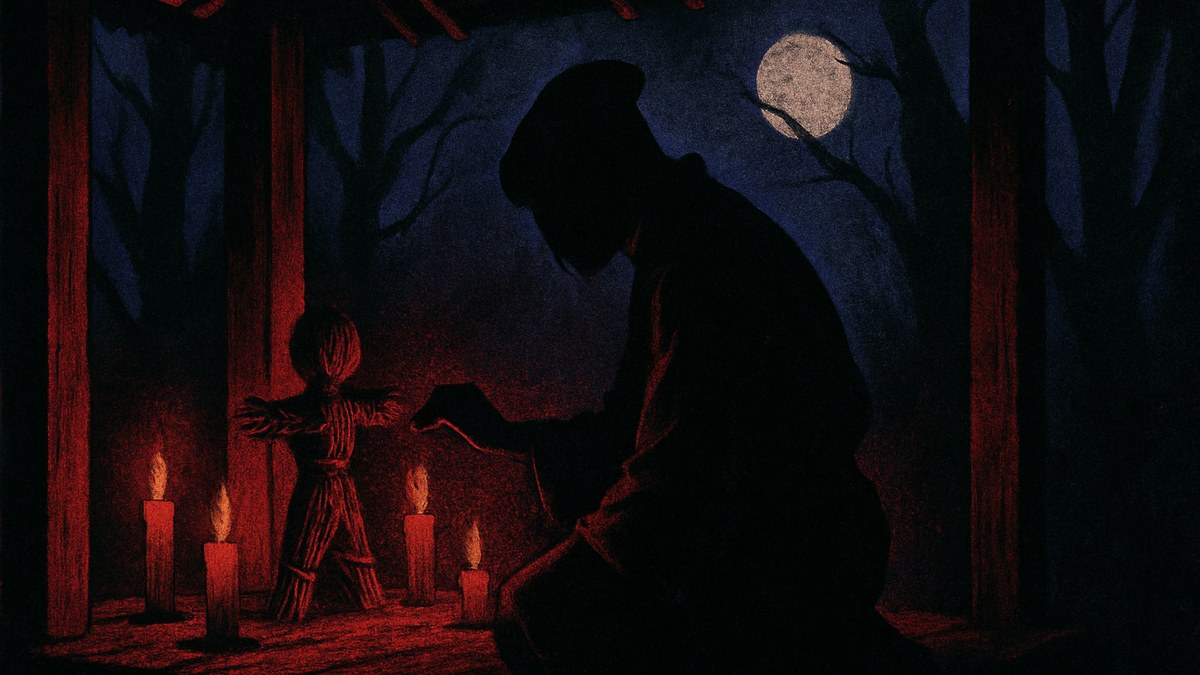
First come curses using tools or dolls. The leading example acts on a "katashiro" — an effigy, such as a straw doll, standing in for the target. "Ushi no koku mairi," nailing a straw doll to a sacred tree at a shrine deep in the night, is the best-known form. Tradition describes a pattern: in the hour of the ox (roughly 1 to 3 a.m.), in white robes with an iron trivet worn on the head, one visits for seven nights until the vow is fulfilled — but if anyone sees the figure, the power is lost. Places such as Kifune Shrine in Kyoto are spoken of as its home ground.
Intriguingly, ushi no koku mairi is said to have begun not as a ritual of grudge but as a visit in the hour of the ox to the deity of Kifune to pray for a good match and the granting of heartfelt wishes. Only later did it turn into a tale of jealousy and resentment avenged. The forms of curses have their meanings rewritten over time. All of this is told as tradition, not something we encourage doing.
Curses of words
Next are curses using words themselves. Japan has long held the idea of "kotodama," that power dwells in words: good words invite a good reality, bad words a bad one — which is exactly why the words one speaks were chosen with care. Curse phrases uttered wishing another's misfortune, and the spells and the "kuji" said to be used by onmyoji, belong to this curse of words.
Word-curses were feared because people so firmly believed "words have the power to move reality." Turned around, this means words hold not only the power to harm another but also the power to order and lighten your own heart.
Curses of spirits
Third are curses worked by spirits. Well known are the "ikiryo," where a living person's fierce resentment is said to leave the body and afflict another, and the "onryo," the spirit of one who died in bitterness said to bring calamity. The ikiryo is spoken of from especially early times: in "The Tale of Genji," the Lady Rokujo becomes, without even realizing it, a jealous living spirit tormenting her rival — a famous emblem of the idea.
These rest on the notion that fierce feelings such as hatred and resentment become an unseen force that reaches the other. One senses how the Japanese dreaded the very intensity of emotion as a kind of "power." Distinct from this is "chobuku," subduing an enemy through prayer while casting them as "evil"; its pretext differs from a curse that aims raw ill will, and it too was spoken of in connection with such spiritual force.
Curses tied to creatures and possession
Region-rooted curse lore should not be overlooked either. "Kodoku," which the ancient law codes punished heavily, was a magic said to harm people using insects or small animals. And chiefly in western Japan there was lore of "tsukimono-suji," possession lineages: certain households were said to command spiritual creatures such as the "inugami" (dog-spirit) or "osaki," setting them on people to bring calamity.
Such traditions were often a mirror of raw human relations within a village — envy, rivalry, gaps between rich and poor. Behind the tales of curses there always lie the real feelings between people.
The true nature of a curse is feeling with nowhere to go
Survey the types this way and you notice that most curses, though they wear the "form" of a tool, a word, or a spirit, are at bottom someone's anger or resentment with nowhere to go. Curse lore is this rich for one reason only: in every age there have been people who hated another from the heart.
But there is no need to turn that fierce feeling into real action. Anger fierce enough to make you want to curse someone becomes far lighter once you first put it into words and get it out of yourself. Saved journal text in Noroi Nikki is not public to other users.
For a related piece of lore, see also the meaning of straw-doll curses.
FAQ
Frequently asked questions
Q.What kinds of curses exist in Japanese folklore?
In folklore and legend they fall broadly into curses using tools (such as ushi no koku mairi with a straw doll or effigy), curses of words (curse phrases and spells), and curses of spirits (where an ikiryo or onryo is said to bring calamity). All are historical and cultural lore, with no verified effect.
Q.Which type is the straw-doll curse?
It is the leading example of a 'curse using tools,' acting on a doll (a katashiro effigy) that stands in for the target. The image of nailing a straw doll to a sacred tree in ushi no koku mairi is well known, but it is told as folklore and legend, not something we encourage doing.
Q.Can words alone be a curse?
In the world of folklore, words themselves were thought to carry power (kotodama), so curse phrases and spells too were counted as a kind of curse. Turned around, this means words hold not only the power to harm another but also the power to lighten your own heart.
About the author
Katsuki Mitsumori三森 捷暉
CEO, SURISUTA K.K. / Operator of Doya Marke AI
Runs Doya Marke AI, a suite of practical AI services spanning content, ads, sales and HR, and hosts the YouTube channel 'SaaS wa Shinimasshen.' Creator and developer of Noroi Nikki, an app for writing out and letting go of emotions.
This article explains folklore, language and culture. It is not medical, legal or religious advice. Traditions are introduced as culture, not as instructions to harm anyone. Claims without a source are marked as popular belief.
RELATED
Related reads
 Folklore of curses
What Is Noroi-gaeshi? The Meaning of Japan's 'Curse Rebound' Folklore
What is noroi-gaeshi (the curse rebound)? A folklore-and-culture explanation of its meaning, the ushi no koku mairi legend that "if you're seen, it returns to you," and why it has long been feared. Not a how-to, and not something we encourage doing.
 Folklore of curses
What Is Ushi no Koku Mairi? The Meaning and Origins of Japan's Midnight Curse Ritual
What is ushi no koku mairi (the hour-of-the-ox shrine visit)? A folklore-and-culture explanation of its meaning and origins — the ritual of nailing a straw doll at the witching hour, and the legend of the "curse rebound." Not a how-to, and not something we encourage doing.
 Folklore of curses
What Does the Straw Doll Curse Mean? The Folklore Behind Japan's Wara Ningyo
What does the straw doll curse (wara ningyo) mean? A folklore-and-culture explanation of the five-inch-nail legend, its link to the midnight shrine ritual, and the idea of the "effigy." Not a how-to, and not something we encourage doing.