What Is Ushimitsudoki? What Time Is the Japanese Witching Hour? Meaning and Origins
What is ushimitsudoki, and what time is it? A folklore-and-culture explanation of Japan's "witching hour" — the name for around 2 a.m., its link to the phrase "when even the grass and trees sleep," and its connection to the ushi no koku mairi ritual. Lore only.
By Katsuki Mitsumori
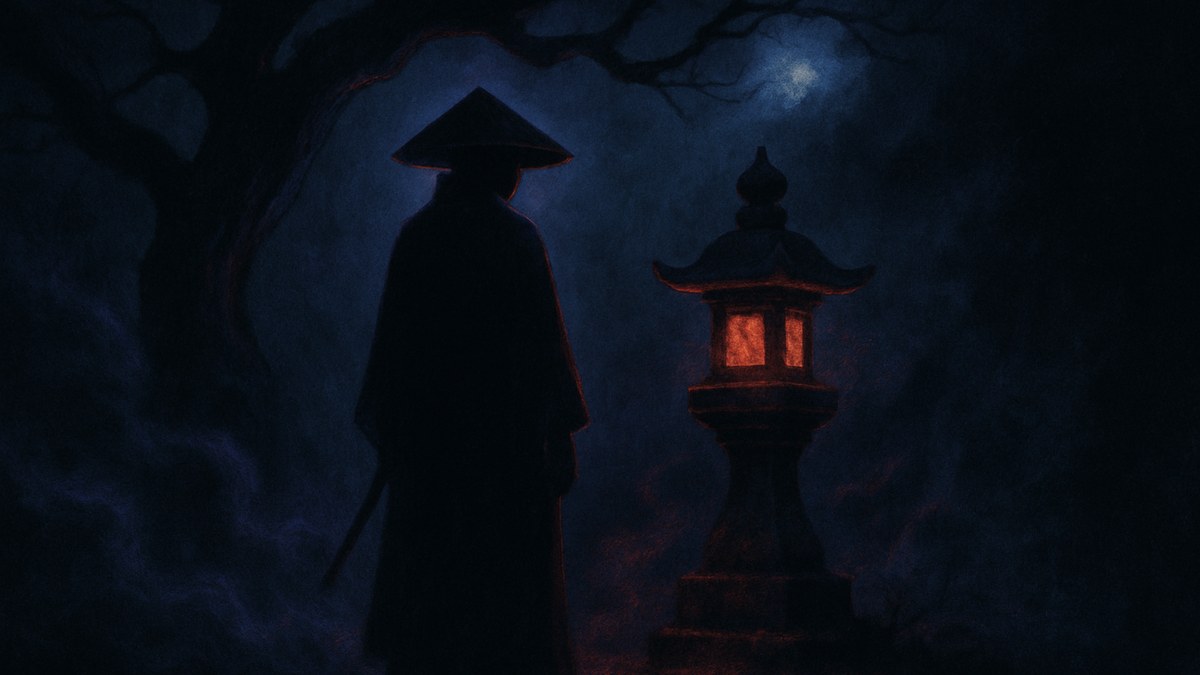
"Ushimitsudoki, when even the grass and trees sleep" — this phrase, familiar from ghost stories and period dramas, points to the quietest, eeriest stretch of the dead of night. Only a vaguely frightening image tends to reach us, yet behind it lie the old Japanese way of counting time and a history of dread of the dark.
This article explains what ushimitsudoki is — what time it means, where it comes from, why it became the hour of the uncanny, and how to face a sleepless night — purely as a matter of folklore and culture, in the most thorough form available.
What time ushimitsudoki is (the meaning)
Ushimitsudoki is a name that, in the old way of counting time, refers to the third of four parts into which the hour of the ox — roughly 1 to 3 a.m. — was divided, about 2:00 to 2:30 a.m. It falls in the darkest, stillest hour of the whole day, when the night has deepened most and people and nature alike have fallen asleep.
Telling time by the zodiac — the hour of the ox and its quarters
To understand how ushimitsudoki works, you have to know the old system of hours. Japan once divided the day into twelve equal parts and assigned each to a zodiac sign — Rat, Ox, Tiger, and so on. The roughly two hours around midnight were the "hour of the Rat," and the following stretch, about 1 to 3 a.m., was the "hour of the Ox."
Each two-hour "hour" was then split into four parts counted "one, two, three, four." Quartering the hour of the ox gives ox-one (about 1:00–1:30), ox-two (1:30–2:00), ox-three (2:00–2:30), and ox-four (2:30–3:00) — and the third of these is ushimitsudoki. It sits at the very bottom of the night, the deepest point of the silence.
"When even the grass and trees sleep" — the dark and the stillness
The phrase "ushimitsudoki, when even the grass and trees sleep" paints the scene of a midnight so hushed that even the grass and trees seem to have drifted off. In an age before electric light, the darkness of this hour was far denser and deeper than it is today. Precisely because it was the hour when every trace of human presence vanished, the imagination could sense in it the presence of something unknown. Ushimitsudoki is a distinctly Japanese name for an hour, crystallized out of that dread of the dark.
The demon gate and "yin" — why it became the hour of the uncanny and of curses
Behind the special dread of ushimitsudoki lies not only the hour but the idea of direction. The zodiac signs were assigned to compass points too, and the space between Ox and Tiger — the northeast — is the "kimon," the demon gate, shunned as the quarter through which demons pass. Ushimitsudoki was thought, in a sense, to touch the demon gate in time.
Moreover, in the Chinese-derived thought of yin-yang and the five elements, night is the time when "yin" energy fills the world, and midnight's ushimitsudoki was held to be the hour when that yin reaches its peak. With the "yang" energy at its weakest, this hour — said even to open onto the other world — was spoken of as an eerie stretch in the lineage of the "omagatoki," the time when spirits and apparitions readily appear.
Its link to ushi no koku mairi
What sealed the image of ushimitsudoki was the legend of the ushi no koku mairi. Nailing a straw doll made to stand for a hated person to a shrine's sacred tree at this most deserted hour — because the ritual was said to be performed then, ushimitsudoki grew all the stronger as the hour of curses and the uncanny. Yet these are only legends, and it has never been verified that anything actually happens at that time. On the origins of the ritual itself, see what ushi no koku mairi is.
It really is easier to be troubled on a sleepless night — a modern view
Even setting the supernatural aside, there is a sound reason the heart grows restless around 2 a.m. In the body's internal clock, core temperature falls to its lowest from the dead of night toward dawn, and once you wake it is harder to fall back asleep. Alone in hushed darkness, the unease and regret you could shrug off by day tend to circle round and round in the mind — not an apparition, but a workaday function of body and heart that anyone can feel. Perhaps the old fear of ushimitsudoki was just this peculiar midnight forlornness, put into words as a story of the dark.
Write the thoughts of a sleepless night down before the dark swallows them
Ushimitsudoki has been feared because, in deep dark and silence, the heart is easily seized by unease and regret. Waking wide-eyed in the dead of night while resentment and worry spin round and round is something everyone has known. Yet there is no need to bear those thoughts alone. Feelings that swell in the head become far lighter once you put them into words and let them out.
Saved journal text in Noroi Nikki is not public to other users. Rather than carrying it alone through a sleepless witching hour, write the thought into a journal and set it down from your chest, little by little.
For a legend tied to this hour, see also what ushi no koku mairi is.
FAQ
Frequently asked questions
Q.What time is ushimitsudoki?
In the old way of counting time, ushimitsudoki is the third of four parts into which the hour of the ox (roughly 1 to 3 a.m.) was divided — about 2:00 to 2:30 a.m. It is regarded as the darkest, most silent stretch of the whole day, and is known through the phrase 'ushimitsudoki, when even the grass and trees sleep.'
Q.Why is ushimitsudoki considered a frightening hour?
Because it is the dead of night when people and nature alike fall silent and the surroundings grow darkest and stillest, it has long been thought an eerie hour akin to the 'omagatoki,' the time when spirits and apparitions readily appear. Tied to ghost stories and the ushi no koku mairi legend, its image as a fearful hour spread. This is folklore only, and nothing has been shown actually to occur then.
Q.How does ushimitsudoki relate to ushi no koku mairi?
Ushi no koku mairi is the legend of a ritual of visiting a shrine during the hour of the ox — which includes ushimitsudoki — to bring a curse to fruition. Because this most deserted hour was said to be chosen, ushimitsudoki grew all the stronger in its image as the hour of curses and the uncanny.
About the author
Katsuki Mitsumori三森 捷暉
CEO, SURISUTA K.K. / Operator of Doya Marke AI
Runs Doya Marke AI, a suite of practical AI services spanning content, ads, sales and HR, and hosts the YouTube channel 'SaaS wa Shinimasshen.' Creator and developer of Noroi Nikki, an app for writing out and letting go of emotions.
This article explains folklore, language and culture. It is not medical, legal or religious advice. Traditions are introduced as culture, not as instructions to harm anyone. Claims without a source are marked as popular belief.
RELATED
Related reads
 Folklore of curses
What Is Omagatoki? Japan's Other Witching Hour at Dusk, Explained
What is omagatoki, and what time is it? A folklore-and-culture explanation of Japan's dusk "hour of meeting spirits" — the alternate writing "omagatoki, the hour of great calamity," its link to tasokare (twilight), and how it differs from ushimitsudoki. Lore only.
 Folklore of curses
Who Was Abe no Seimei? Japan's Most Famous Onmyoji, Explained
Who was Abe no Seimei? A history-and-folklore explanation of the real Heian-period onmyoji and the legends that grew after him — the shikigami tales, the meaning of the Seimei Kikyo pentagram, Seimei Shrine, and the Kuzunoha fox legend.
 Folklore of curses
What Is Kimon? Japan's Demon Gate Direction and Ura-Kimon, Explained
What is kimon, the Japanese "demon gate"? A folklore-and-culture explanation of why the northeast was shunned, its relation to ura-kimon in the southwest, the ox-and-tiger origin of the demon's horns and tiger-skin, and the kimon wards of Kyoto and Edo. Lore only.