Overworked and Feeling Empty? Set the Worn-Down Feeling Down in a Journal
The office is empty near the last train; the walk home is deserted. Worn out from endless overtime, an emptiness suddenly hits you. Here's how to own that overwork emptiness — writing it out and setting it down — instead of denying it.
By Katsuki Mitsumori

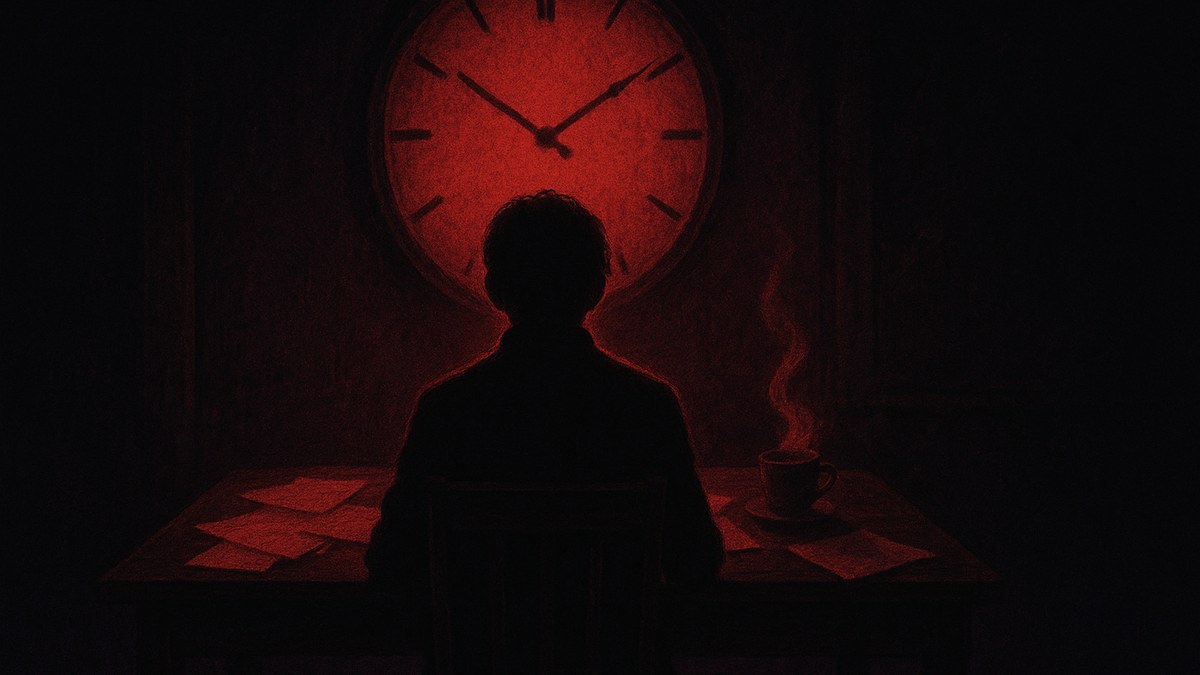
As the clock creeps toward the last train, you're the only one left on the floor. When you finally wrap up and step outside, the city is fast asleep, and only the cold night wind brushes your cheek. "What on earth was I doing all day?" Dragging your worn-out body home, an emptiness suddenly spreads through the center of your chest, like a hole opened up there.
You worked hard, and yet there's no sense of accomplishment anywhere. Your body is just heavy, your mind worn thin, and tomorrow the same day comes around again. Even if you told someone about this emptiness, it would likely get brushed off with "everyone's got it rough," so you can't put it into words. This article is about owning the emptiness of overwork — setting it down by writing it out, instead of denying it.
Emptiness is a sign of pushing too hard
The first thing worth knowing is that the emptiness that wells up after endless overtime doesn't come from a lack of drive or from weakness. When fatigue piles up, it slowly wears down your mental reserves, and the very ability to sense meaning and joy grows weaker, it's said.
The same work that felt like "I gave it my all" when you had room to spare can read as "what was the point?" when you're utterly drained. That isn't you turning cold — it's your mind slipping into an energy-saving mode with no capacity left even to feel. In other words, emptiness isn't proof you're slacking; it's proof you're pushing near your limit.
Write the worn-down feeling out
Emptiness hurts because it's a formless, hard-to-grasp sensation. Carried as a vague "I just feel empty," that haze lingers in your chest indefinitely.
So it helps to write out the feeling that got worn down that day before bed — even a few lines will do. "Tired." "Empty." "What am I even working this hard for?" There's no need to make it tidy. Getting it out in the words that came to mind releases the swelling pressure of the emptiness. Because you do not have to show it to anyone, you can get the unvarnished truth all the way out.
Before asking "what for," get it out first
Inside the emptiness, you're tempted to answer the big question — "what am I even working for?" But facing a heavy question like the meaning of your life on a night when body and mind are utterly spent only corners you further.
Before rushing an answer, getting the built-up feeling out and reclaiming some breathing room comes first. A head full of emptiness tilts every answer toward "it's all pointless anyway." Write the feeling out, rest a little, and once some reserve returns, it's not too late to consider "how I want to work from here." Not getting the order wrong is how you protect yourself.
Add one thing you managed, amid the exhaustion
On the emptiest days, you tend to feel "I got nothing done today." But in truth, working hard enough to be this exhausted is itself proof you handled that much.
So after writing out the worn-down feeling, it helps to add just one thing you managed that day. "Finished that document." "Got through the complaint call." However small, it's fine. Pick up, in words, the effort of yours that had vanished into the haze of exhaustion. That single line turns "a meaningless day" into "a tiring day, but one that truly moved forward."
Don't miss the signals from body and mind
If the emptiness and fatigue are temporary, they may lift with rest and sorting your feelings. But chronic long hours are said to affect mental and physical health, and getting through on endurance alone is dangerous.
If low mood, sleeplessness, or changes in appetite last more than two weeks, if days off bring no recovery, or nothing feels enjoyable, it may be more than passing tiredness. At times like that, don't try to keep working on willpower — please consider leaning on a professional, such as an occupational physician, a mental health clinic, or an internal or external support line. Asking to adjust your workload or secure rest is by no means selfish.
It's okay to let overwork out as a "curse"
Trying to think positive won't make the emptiness vanish on a night when you're worn to the bone. Rather than overwriting it with a forced "I'll try again tomorrow," it's far easier to write the emptiness down as it is and set it outside your head.
Noroi Nikki is an app for nights like that. There's no need to right yourself into positivity. Saved journal text is not public to other users. Emptiness grows denser the more you carry it, and thinner the more you write it. Write out today's worn-down feeling while it's still today, and set it down inside your journal — to leave a little room for tomorrow's you.
References
- Pennebaker, J. W. (1997). Writing about emotional experiences as a therapeutic process. Psychological Science, 8(3), 162–166. (A landmark study showing that expressive writing — putting emotions and experiences into words — is linked to reduced mental and physical stress.)
FAQ
Frequently asked questions
Q.Why do I feel empty after so much overtime?
When fatigue piles up, it wears down your mental reserves and makes it harder to feel meaning or joy, it's said. Especially when you keep going unrecognized, with no time of your own, the emptiness of 'what am I even working for' tends to well up. That emptiness usually isn't a sign you're slacking, but proof you're pushing near your limit.
Q.How can I ease the emptiness of overwork even a little?
Before bed, write out the feeling that got worn down that day — even a few lines. 'Tired.' 'Empty.' 'What for.' Getting it out in plain words releases the pressure of the emptiness swelling in your head. Then add one thing you managed that day, and the effort buried under the exhaustion comes back into view.
Q.Is it okay to just push through the emptiness and keep working?
A passing emptiness may lift with rest and sorting your feelings. But chronic long hours are said to affect mental and physical health, so getting through on endurance alone is risky. The emptiness may be a signal to review how you work. Before pushing on, consider raising your workload or securing rest.
Q.What if the emptiness and fatigue just won't lift?
If low mood, sleeplessness, or changes in appetite last more than two weeks, if days off bring no recovery, or nothing feels enjoyable, it may be more than ordinary tiredness. Don't force yourself to keep working on willpower alone; consider talking to an occupational physician or a mental health professional.
About the author
Katsuki Mitsumori三森 捷暉
CEO, SURISUTA K.K. / Operator of Doya Marke AI
Runs Doya Marke AI, a suite of practical AI services spanning content, ads, sales and HR, and hosts the YouTube channel 'SaaS wa Shinimasshen.' Creator and developer of Noroi Nikki, an app for writing out and letting go of emotions.
This article explains folklore, language and culture. It is not medical, legal or religious advice. Traditions are introduced as culture, not as instructions to harm anyone. Claims without a source are marked as popular belief.
ZUKAN
Meet the yokai of this feeling



RELATED
Related reads
 Emotional care
The Sunday Scaries: Easing the Dread Before Work by Writing It Out
Even a good Sunday can turn heavy by evening, when tomorrow's work starts pressing on your chest. Here's how to ease the Sunday scaries — that end-of-weekend dread — by writing your anxiety out.
 Emotional care
Jealous of a Coworker Getting Praised? Write the Dark Feeling Out and Own It
A coworker keeps getting praised and recognized. You want to be happy for them, but envy stirs deep down and it hurts. Here's how to own that workplace jealousy — writing it out instead of denying it — and let it go.
 Emotional care
Don't Want to Go to Work in the Morning? Write the Heaviness Out and Take One Step
From the moment you wake, you don't want to go to work. Your body feels like lead and you can't get out of bed. Here's how to ease that morning dread by writing the feeling out — and turn it into one step toward the door.