The Sunday Scaries: Easing the Dread Before Work by Writing It Out
Even a good Sunday can turn heavy by evening, when tomorrow's work starts pressing on your chest. Here's how to ease the Sunday scaries — that end-of-weekend dread — by writing your anxiety out.
By Katsuki Mitsumori
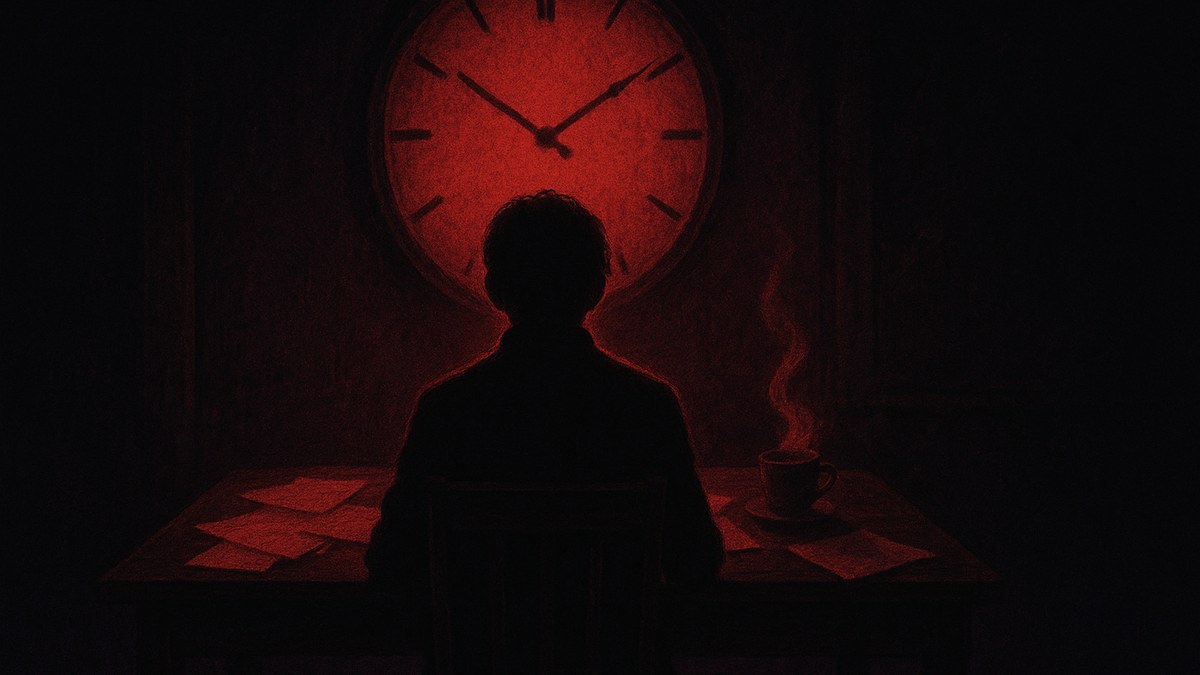
Sunday afternoon. The weekend isn't over yet, but as the light starts to slant toward evening, a quiet weight settles in your chest. A familiar tune plays at its usual hour, and the thought — "here we go again tomorrow" — slowly paints over everything that felt good about the day.
By night, that weight only grows. The meeting first thing Monday, the emails you have to answer, the person you'd rather not face. Nothing has happened yet, and already your mind is replaying tomorrow's worst moments on a loop. This Sunday-night dread, often called the "Sunday scaries," is not some private weakness of yours.
Why your mood sinks on Sunday night
The Sunday scaries are really two feelings overlapping. One is the sense of loss as free time runs out. The other is anticipatory anxiety about the work and relationships that start again tomorrow.
What makes this anxiety tricky is that it points at "things that haven't happened yet." The actual Monday often passes far more easily than you feared. Yet on Sunday night, your imagination inflates only the worst outcomes, casting Monday as something more frightening than it will really be.
On top of that, wanting "not to waste a precious day off" breeds its own restlessness. Blaming yourself for "being gloomy on a perfectly good Sunday" sinks your mood a second time — and that double weight is the real shape of Sunday-night misery.
Shrink the dread by writing out "why tomorrow feels scary"
Vague anxiety feels larger than it is as long as its true form stays hidden. So it helps to write down, one by one, the reasons tomorrow feels frightening, into a notebook or an app.
The knack is not to leave the dread as one big lump, but to break it into specific grains of events. Not "work is depressing," but "I hate being asked for a progress update at the 10 a.m. meeting," or "it's awkward running into A in the hallway." Pull the fear apart into its actual contents, one at a time.
Strangely enough, once you write them out, most worries turn out to be "things that may not even happen" or "things that will be over in a few minutes." The single black fog in your head becomes a handful of small errands — and that alone lifts the weight in your chest.
Plant a "small pleasure" for Monday morning
Another way to ease the Sunday scaries is to change how Monday itself looks to you. When there's even a little to look forward to, the day stops being one you merely "have to survive."
- The morning cup. Set aside a slightly nicer coffee or a favorite drink just for Monday morning.
- A commute reward. Save a song or a podcast, or a shop you stop at, for Mondays only.
- A midday plan. Deciding to eat something you love at lunch gives the morning something to lean on.
The point is to keep it small. Just one little light — "I can get up on Monday because this is waiting" — changes how Sunday night feels more than you'd expect.
Rethink how you spend your Sunday
What's deepening the dread might be how you spend Sunday itself. Staying up late throws off your rhythm, so Monday morning feels physically worse, which deepens the dread further. Where you can, aim to sleep at close to your usual time on Sunday.
Jotting down a light outline of the coming week on Sunday night also turns "scary because it's unknown" into "manageable because it's known." You don't have to solve anything. Just looking it over and tidying your head is enough.
Don't push through if the dread lingers
Many people feel the Sunday scaries, but it deserves attention when it spreads into your weekdays and low mood or sleeplessness lingers. If you truly can't get up in the morning, or nothing feels enjoyable, and that lasts more than two weeks, it may be more than passing dread.
At times like that, you don't have to blame yourself and keep grinding. Please consider leaning on a professional — an occupational physician, a mental health clinic, or an internal or external support line.
Put "tomorrow's anxiety" into words for yourself
The Sunday scaries tend to press down harder the more you strain to be upbeat. Rather than swatting the thought away with "I won't think about it," it's far easier to write the worry down as it is and set it outside your head.
Noroi Nikki is an app for those Sunday nights. There's no need to convert anything into positivity. Saved journal text is not public to other users. Park Sunday night's fog before Sunday is over — and meet Monday morning with a heart that's just a little lighter.
References
- Pennebaker, J. W. (1997). Writing about emotional experiences as a therapeutic process. Psychological Science, 8(3), 162–166. (A landmark study showing that expressive writing — putting emotions and experiences into words — is linked to reduced mental and physical stress.)
FAQ
Frequently asked questions
Q.Why do I get anxious on Sunday nights?
As the weekend nears its end, your attention shifts to the work and responsibilities waiting on Monday. The sadness of a good time ending overlaps with a still-shapeless worry about tomorrow, and your mood sinks. Often called the Sunday scaries, it's a natural reaction that a great many people share.
Q.Is there a simple way to ease the Sunday scaries?
Try writing down the specific reasons tomorrow feels scary, once, into a notebook or an app. Vague dread takes on a clear outline when you put it into words, and you often realize it isn't as big as it felt. Lining up one small thing to look forward to on Monday morning also helps you face the week.
Q.How do I stop thinking about work on Sunday night?
The more you decide 'not to think about it,' the more it tends to stick. Rather than forcing the thought away, it works better to write out everything on your mind and decide to leave it there. Once it's parked outside your head, your brain can stop repeating the same worry.
Q.What if the dread never lets up?
If low mood or sleeplessness lasts more than two weeks — spreading past Sunday into your weekdays — or you truly cannot get up in the morning, it may be more than passing dread. Don't keep pushing through alone; consider talking to an occupational physician or a mental health professional.
About the author
Katsuki Mitsumori三森 捷暉
CEO, SURISUTA K.K. / Operator of Doya Marke AI
Runs Doya Marke AI, a suite of practical AI services spanning content, ads, sales and HR, and hosts the YouTube channel 'SaaS wa Shinimasshen.' Creator and developer of Noroi Nikki, an app for writing out and letting go of emotions.
This article explains folklore, language and culture. It is not medical, legal or religious advice. Traditions are introduced as culture, not as instructions to harm anyone. Claims without a source are marked as popular belief.
ZUKAN
Meet the yokai of this feeling



RELATED
Related reads
 Emotional care
Don't Want to Go to Work in the Morning? Write the Heaviness Out and Take One Step
From the moment you wake, you don't want to go to work. Your body feels like lead and you can't get out of bed. Here's how to ease that morning dread by writing the feeling out — and turn it into one step toward the door.
 Emotional care
Overworked and Feeling Empty? Set the Worn-Down Feeling Down in a Journal
The office is empty near the last train; the walk home is deserted. Worn out from endless overtime, an emptiness suddenly hits you. Here's how to own that overwork emptiness — writing it out and setting it down — instead of denying it.
 Emotional care
Can't Stop Thinking About a Work Mistake? Write the Self-Blame Out and Move On
A mistake at work that's supposedly over keeps replaying at night, and you can't stop blaming yourself. Here's how to break the rumination loop of "why did I do that" by writing the feeling out.