What Is Jujutsu (Magic)? The Meaning of the Word and Its Types Explained
What is jujutsu (magic/sorcery)? A folklore-and-culture explanation of the word's meaning, types such as homeopathic and contagious magic, and its ties to Japan's onmyodo and prayer traditions. Not a how-to, and not something we encourage doing.
By Katsuki Mitsumori
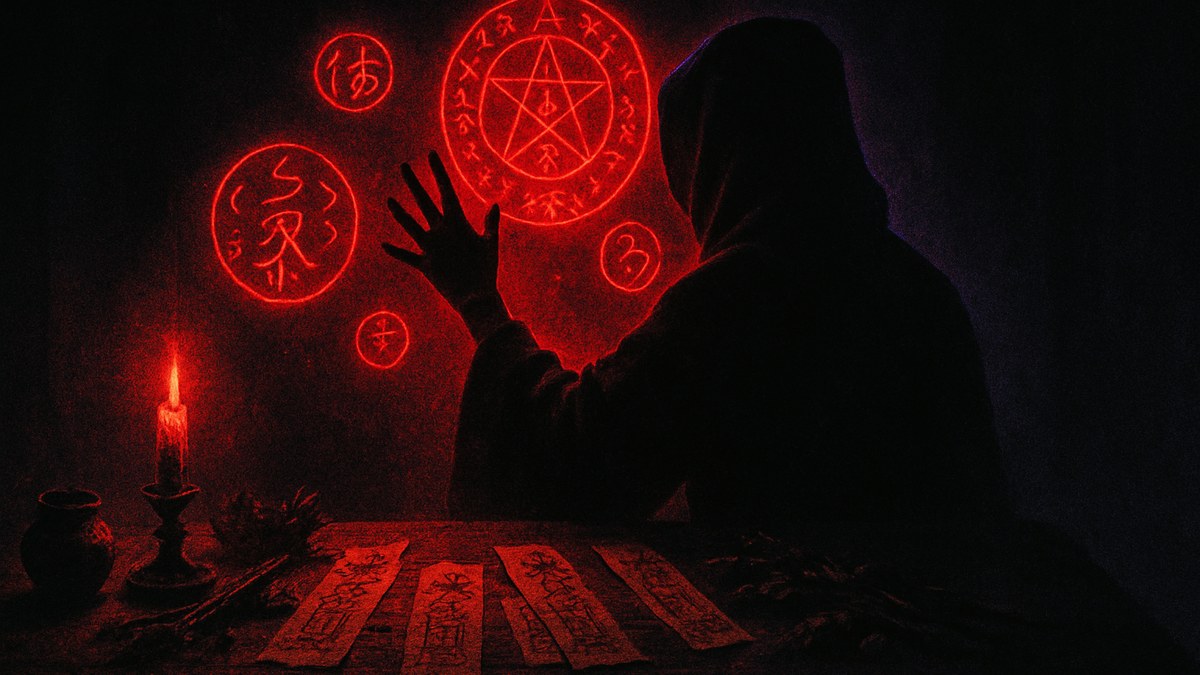
Hear the word "magic" (jujutsu, in Japanese) and a frightening art for cursing people may come to mind first. Yet the word originally points to something far broader — a deep concept expressing how humankind has grappled with supernatural forces.
This article explains what jujutsu is — the meaning of the word and its types — tracing back through its etymology, its good-and-evil classification, and its ties to religion and science, purely as a matter of folklore and culture. It does not encourage working any magic. At the end, we also touch on how to face feelings of resentment and the urge to curse.
What jujutsu means (the word)
Jujutsu is a general term for acts and techniques that work upon supernatural forces to obtain a desired result. It does not refer only to the harmful "curse." Healing illness, praying for a good harvest or for rain, warding off misfortune — it spans such wide-ranging aims and is found in every culture on earth. Tied deeply to the origins of religion and medicine, it has long been treated as a major subject in anthropology and folklore studies. Magic is also a deeply human phenomenon, bound up with strong passions like resentment and envy, and with the fierce desire to make something happen at any cost.
A translation of "magic": where the word comes from
In fact, the Japanese word jujutsu was shaped in modern times as a translation of the English "magic." The root of "magic" is said to trace back to magus, the ancient Persian word for a priest or sorcerer. Awe of the mysterious arts wielded by those eastern priests became the very word for "magic." What we call jujutsu, then, is less a uniquely Japanese concept than one translation among many — East and West each finding words for a pursuit common to all of humanity.
The main types of magic: homeopathic and contagious
Known for systematically organizing magic is the British anthropologist James Frazer. In his work "The Golden Bough," he grouped under the name sympathetic magic the belief that separated things influence each other through invisible ties, and divided it further into two. One is homeopathic magic, the idea that like affects like — scattering water to pray for rain, or working on a straw doll made to resemble a target, falls here. The other is contagious magic, the idea that things once in contact keep influencing each other even when apart — using a target's hair or nail clippings falls here. In real folk belief, the two are often combined.
White magic and black magic: a good-and-evil classification
Magic is also divided by whether its aim is good or ill. Magic worked to heal, protect, and bring fortune to people is called white magic; magic worked to harm people and bring calamity is called black magic. The curse that harms a person belongs to black magic — yet the two are often continuous in their tools and procedures, and the same art was thought able to turn to good or ill depending on the practitioner's intent. For black magic, see what black magic is.
How magic relates to religion and science
Frazer held that human thought developed in the order "magic → religion → science," seeing magic as a kind of pseudo-science that tried to bend nature to one's will through laws. This scheme has drawn much criticism, however, and scholars still debate whether magic or religion came first — "magic first," "religion first," "the two are separate." Broadly, where prayer petitions gods or buddhas, magic tends more strongly to try to produce a result directly through set procedures — but in practice, that line is blurry.
Magic in Japan: onmyodo and prayer
In Japan, magic developed in its own way. Well known is onmyodo, which flourished in the Heian period. The onmyoji handled calendars, divination, and the fortune of directions, warding off misfortune and, at times, working rites. There are also the kaji-kito prayers performed at temples, shugendo rooted in mountain asceticism, and the amulets and everyday charms used for protection — Japan's magical culture is richly varied. The harmful curse is only one small facet within this diverse world of magic. For the magic woven into daily life, see also what majinai is.
Try putting the "urge to curse" into words first
Tracing the history of magic reveals that, since ancient times, humans have wrestled with anxiety, anger, and resentment that their own strength could not resolve. Feelings fierce enough to make you want to curse someone lie on that same continuum.
But there is no need to aim that feeling at real technique or action. Saved journal text in Noroi Nikki is not public to other users. Write the resentment and anger that have nowhere to go into the journal first, and set them down from your chest, little by little. The more you let it out, the lighter the weight becomes.
For lore surrounding curses, see also what noroi-gaeshi is.
FAQ
Frequently asked questions
Q.What does jujutsu (magic) mean?
Jujutsu is a general term for acts and techniques that work upon supernatural forces to obtain a desired result. It is not only the harmful 'curse' but includes wide-ranging aims such as healing illness, praying for rain, and protecting oneself. Found in every culture on earth and tied deeply to the origins of religion and medicine, it is a major subject in anthropology.
Q.What types of magic are there?
In the anthropologist James Frazer's framework, the two main types are homeopathic magic, which holds that like affects like (as with a straw doll), and contagious magic, which holds that things once in contact keep influencing each other even when apart (as with using hair or nail clippings). In real folk belief, the two are often combined.
Q.How does magic differ from religion and prayer?
A strict line is hard to draw, and scholars still debate it. Broadly, where prayer petitions gods or buddhas, magic tends more strongly to try to produce a result directly through set procedures. In Japan, the two developed intertwined, in the rites of onmyodo and the prayers of temples and shrines.
About the author
Katsuki Mitsumori三森 捷暉
CEO, SURISUTA K.K. / Operator of Doya Marke AI
Runs Doya Marke AI, a suite of practical AI services spanning content, ads, sales and HR, and hosts the YouTube channel 'SaaS wa Shinimasshen.' Creator and developer of Noroi Nikki, an app for writing out and letting go of emotions.
This article explains folklore, language and culture. It is not medical, legal or religious advice. Traditions are introduced as culture, not as instructions to harm anyone. Claims without a source are marked as popular belief.
RELATED
Related reads
 Folklore of curses
What Is Juso? The Meaning, Roots, and History of the Japanese Curse
What is juso, the Japanese word for a formal curse? A folklore-and-history explanation of its meaning, roots, and reading, how it differs from noroi, magic, and chobuku, the enmi and kodoku crimes in the ritsuryo codes, and onmyodo curses at the Heian court. Not a how-to for cursing anyone.
 Folklore of curses
What Is an Onmyoji? The Meaning and History of Japan's Yin-Yang Masters
What is an onmyoji (yin-yang master)? A folklore-and-culture explanation of the meaning and history of these court diviners of the Onmyodo tradition — the calendars, astronomy, and divination they handled, and the legends of Abe no Seimei and his shikigami. History and lore only.
 Folklore of curses
What Is Ushi no Koku Mairi? The Meaning and Origins of Japan's Midnight Curse Ritual
What is ushi no koku mairi (the hour-of-the-ox shrine visit)? A folklore-and-culture explanation of its meaning and origins — the ritual of nailing a straw doll at the witching hour, and the legend of the "curse rebound." Not a how-to, and not something we encourage doing.