What Is an Onmyoji? The Meaning and History of Japan's Yin-Yang Masters
What is an onmyoji (yin-yang master)? A folklore-and-culture explanation of the meaning and history of these court diviners of the Onmyodo tradition — the calendars, astronomy, and divination they handled, and the legends of Abe no Seimei and his shikigami. History and lore only.
By Katsuki Mitsumori
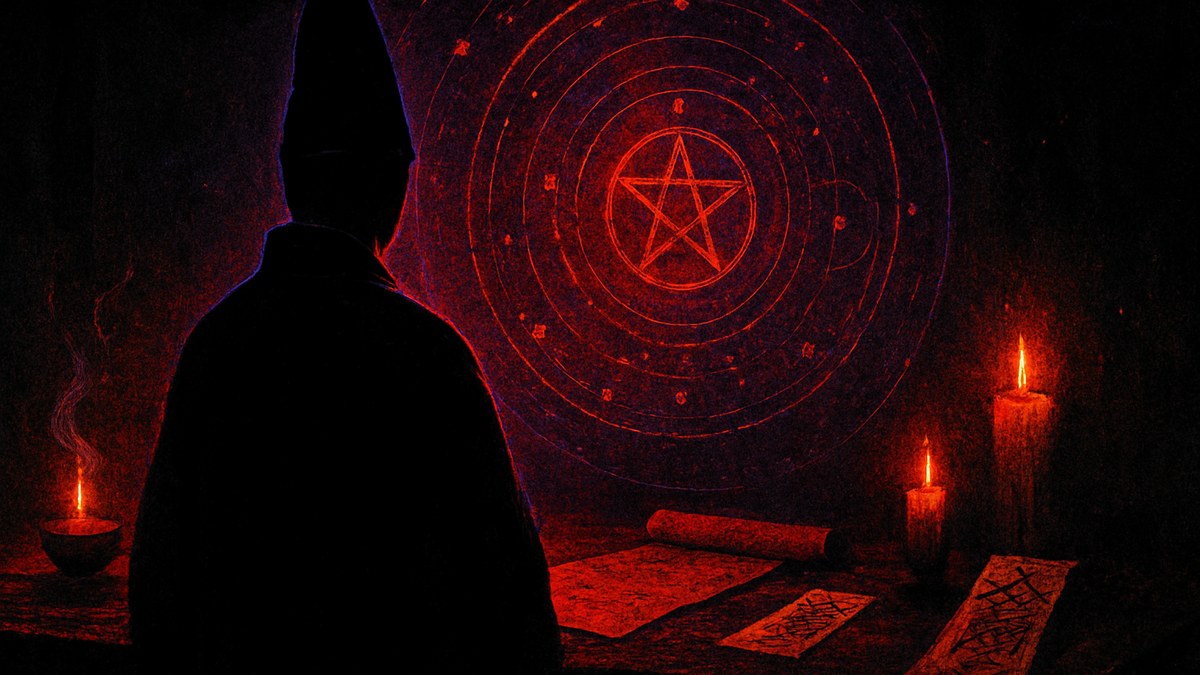
Many people have come across the word "onmyoji" in a film, novel, or manga. Thanks to stories centered on Abe no Seimei, they are often imagined as mystical figures who command curses and shikigami — yet the historical reality was a trained specialist in service of the ancient state. A sorcerer, but at the same time an astronomer and a calendar-making bureaucrat: this double nature is what gives the onmyoji its depth.
This article explains what an onmyoji is — from the meaning and etymology to the end of its history — purely as a matter of folklore and culture, aiming to be the single most thorough piece you can read on the subject. At the end, we also touch on how to face feelings of resentment and the urge to curse.
What an onmyoji is (the meaning)
An onmyoji was an official and specialist attached to the Bureau of Onmyo (Onmyoryo), an office of ancient Japan's ritsuryo state, who handled calendar-making, astronomical observation, divination, and judgments of fortune based on Onmyodo.
The key point to grasp is that an onmyoji was not originally a "psychic" but a civil servant. Building on the Chinese theory of yin-yang and the five elements, they read the fortune of times and directions by calculation and supported the important decisions of the court and nobility — the leading intellectuals of an age in which science and divination were not yet separated. Only in later ages did the magical, spiritual image typified by Abe no Seimei come to the fore.
Etymology and roots — yin-yang and the five elements
"Yin-yang" is an ancient Chinese idea that grasps all things through two opposing energies, yin and yang, and combines them with the "five elements" — wood, fire, earth, metal, and water — to explain how the world is put together. This theory reached Japan in the Asuka and Nara periods and, joined with practical arts like astronomy, calendars, and divination, developed into the distinctly Japanese "Onmyodo." The specialists who handled it were the onmyoji — in a sense, translators of foreign knowledge into the language of Japanese politics and belief.
What they did at the Bureau of Onmyo
The onmyoji's workplace, the Onmyoryo, was an office placed under the Ministry of Central Affairs (Nakatsukasa-sho) in the ritsuryo system. Alongside the onmyoji it held doctors of astronomy who observed the heavens, doctors of the calendar who compiled the calendar, and doctors of the clepsydra who managed the hours, each with a divided specialty.
Their work was something like a combination of today's astronomer, calendar scholar, and diviner. They observed eclipses and stellar anomalies and reported their fortune, compiled the yearly calendar, divined the fortune of directions for a move or a journey (katatagae), and performed rites to ward off calamity. People's lives were tightly bound by taboos of calendar and direction, and the onmyoji who held those judgments were indispensable to the court.
Abe no Seimei, the Kamo family, and the shikigami legends
The history of Onmyodo cannot be told without two family lines: the Kamo, who mastered the way of the calendar, and the Abe, who inherited the way of astronomy. Abe no Seimei in particular — said to have studied under Kamo no Tadayuki and his son Yasunori — became legendary through countless anecdotes and stands as the symbol of the onmyoji.
The Seimei of the stories commands unseen spirit-demons called shikigami to divine the future and repel calamity. A well-known legend says that because his wife feared the shikigami's appearance, Seimei kept them hidden under the Ichijo Modoribashi bridge. Yet this image of the shikigami-master is best seen as the original roles of calendar and divination swollen by imagination. On the shikigami itself, see what a shikigami is.
The spread to the people, and the end in the Meiji era
Flourishing in the Heian court, the onmyoji spread from the medieval era into the provinces and among common people. In the early modern age the Tsuchimikado family, claiming descent from Abe no Seimei, became the head house governing onmyoji nationwide, issuing calendars and regulating diviners. At the same time, many unofficial folk onmyoji arose, answering the anxieties of ordinary people with charms and prayers.
But with the Meiji era, amid modernization Onmyodo was dismissed as superstition, and in 1870 the Onmyoryo was abolished. There the onmyoji as a state institution ended a history of more than a thousand years.
Common misconceptions and the onmyoji in modern culture
The most common misconception about the onmyoji is the image of a "black magician who curses people." Historically, an onmyoji's main work was calendar-making, astronomical observation, divination of directions and dates, and rites to avert calamity — harming others through magic was never their official duty. The flashy sorcerous duels of stories are to be enjoyed as fiction. Even so, the onmyoji is still loved in modern novels, films, and games because people are still drawn to that figure who tries to master "unseen anxiety and calamity" through knowledge and ritual.
Let negative feelings out in words, not in curses
Onmyoji stories are still loved because people have always wished to do something about unseen anxiety and calamity. Yet you need no magic to calm the resentment and unease that build up inside. Even a feeling fierce enough to make you want to curse someone becomes far lighter once you put it into words and get it out of yourself first. Just as the onmyoji externalized anxiety into the form of a "calendar" or a "rite" to master it, we too can feel out our emotions and set some distance from them by writing them down.
Saved journal text in Noroi Nikki is not public to other users. Set the thoughts swirling in your chest down into a journal, little by little.
For the special hour deeply tied to Onmyodo, see also what ushi no koku mairi is.
FAQ
Frequently asked questions
Q.What does onmyoji mean?
An onmyoji (yin-yang master) was an official and specialist attached to the Bureau of Onmyo (Onmyoryo) of ancient Japan's ritsuryo state, who handled calendar-making, astronomical observation, divination, and judgments of good and bad fortune based on Onmyodo. Built on the Chinese theory of yin-yang and the five elements, they read the fortune of times and directions and supported the decisions of the court and nobility. Later ages emphasized a more magical, spiritual image of them.
Q.Who is the most famous onmyoji?
The most famous is Abe no Seimei of the mid-Heian period. Surrounded by countless anecdotes, he became legendary and stands as the very symbol of the onmyoji. From the medieval era, the Abe (Tsuchimikado) and Kamo families carried on Onmyodo as a hereditary profession.
Q.Did onmyoji actually cast curses?
Historically, an onmyoji's main work was making calendars, observing the heavens, divining directions and auspicious dates, and performing rites to avert calamity. The curses and shikigami of the stories are largely those roles enlarged by imagination, and are best understood as legend and fiction.
About the author
Katsuki Mitsumori三森 捷暉
CEO, SURISUTA K.K. / Operator of Doya Marke AI
Runs Doya Marke AI, a suite of practical AI services spanning content, ads, sales and HR, and hosts the YouTube channel 'SaaS wa Shinimasshen.' Creator and developer of Noroi Nikki, an app for writing out and letting go of emotions.
This article explains folklore, language and culture. It is not medical, legal or religious advice. Traditions are introduced as culture, not as instructions to harm anyone. Claims without a source are marked as popular belief.
RELATED
Related reads
 Folklore of curses
What Is Juso? The Meaning, Roots, and History of the Japanese Curse
What is juso, the Japanese word for a formal curse? A folklore-and-history explanation of its meaning, roots, and reading, how it differs from noroi, magic, and chobuku, the enmi and kodoku crimes in the ritsuryo codes, and onmyodo curses at the Heian court. Not a how-to for cursing anyone.
 Folklore of curses
What Is a Shikigami? The Meaning and Origins of the Onmyoji's Familiar Spirit
What is a shikigami? A folklore-and-culture explanation of the meaning and origins of the spirit familiars said to be commanded by onmyoji — their link to paper effigies (katashiro) and the legends of Abe no Seimei. Lore and culture only.
 Folklore of curses
What Is Jujutsu (Magic)? The Meaning of the Word and Its Types Explained
What is jujutsu (magic/sorcery)? A folklore-and-culture explanation of the word's meaning, types such as homeopathic and contagious magic, and its ties to Japan's onmyodo and prayer traditions. Not a how-to, and not something we encourage doing.