What Is a Shikigami? The Meaning and Origins of the Onmyoji's Familiar Spirit
What is a shikigami? A folklore-and-culture explanation of the meaning and origins of the spirit familiars said to be commanded by onmyoji — their link to paper effigies (katashiro) and the legends of Abe no Seimei. Lore and culture only.
By Katsuki Mitsumori
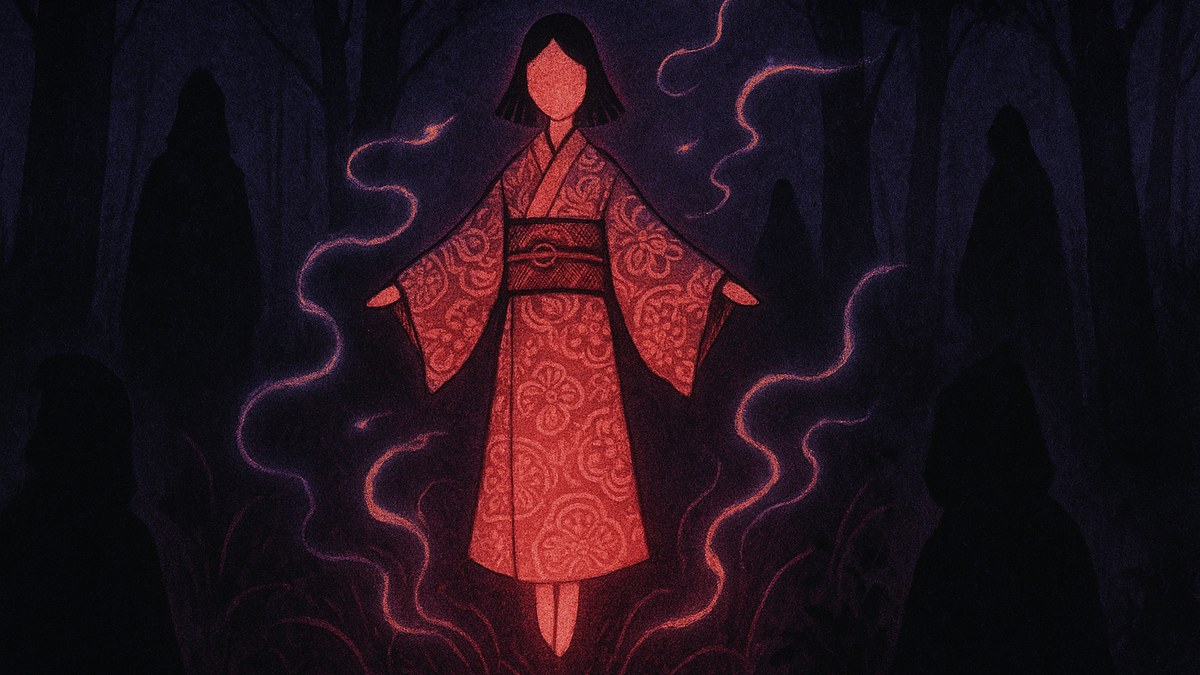
The word "shikigami" has become widely known through stories, games, and manga about onmyoji. A strange familiar that moves at its master's command — that is the image that comes to mind, yet behind it lies a long history of Japan's Onmyodo and folk belief.
This article explains what a shikigami is — from its meaning and etymology through its forms, the lore of how it was commanded, and its reception in modern culture — purely as a matter of folklore and culture, and as thoroughly as possible. At the end, we also touch on how to face feelings of resentment and the urge to curse.
What a shikigami is (the meaning)
A shikigami is an unseen spiritual being or minor spirit said to be commanded by an onmyoji through ritual craft. Following its master's orders, it was said to gather information, ward off calamity, and at times even harm people. In many tellings it was made to dwell in a paper effigy cut into human shape — a katashiro — and act as a kind of tool reflecting the caster's will. It is a being within legend and culture, not one whose existence has ever been verified.
The etymology of "shiki" — the divination board and its spirits
The "shiki" in shikigami is no mere phonetic borrowing. A leading theory traces it to the shokuban (chokuban), a divination instrument the onmyoji used. The board combined a round "heaven plate" representing the sky with a square "earth plate" representing the ground; turning it to read fortune was called shiki divination. The spirits summoned through the craft — the "shiki" — of operating that board are, on this view, the shikigami.
Another reading takes "shiki" in the sense of "to use, to employ," so that the word points to the very act of commanding spirits. Either way, against the background of Daoism and yin-yang and five-elements thought imported from China, the core of the name is the idea of mastering an unseen force through "shiki" — rule and ritual.
The forms of the shikigami — seen, unseen, and the effigy
The shikigami has no fixed shape. In the lore it is most often drawn as an unseen spiritual presence, yet it is also said to appear at times as a demon, a divine youth (goho-doji), or a bird or beast.
Indispensable to any account of the shikigami is the katashiro, a figure of paper or straw cut into human shape. It helps to think of the katashiro as the vessel — a stand-in that houses a spirit — and the shikigami as the force said to dwell in it. The onmyoji is said to have chanted the shiki, lodged the shikigami in the effigy, and moved it at will. This notion of the effigy is loosely connected to later cursing dolls and to the paper-figure and folded-paper culture of today.
Abe no Seimei and the Twelve Heavenly Generals
When it comes to shikigami, the anecdotes of the mid-Heian onmyoji Abe no Seimei are famous. Seimei is said to have freely commanded shikigami called the Twelve Heavenly Generals, and because their forms were so fearsome, to have kept them hidden beneath the Ichijo Modoribashi bridge.
These "Twelve Generals" are thought to derive ultimately from the twelve guardian deities used in the shiki divination of Onmyodo. The gods arranged on the divination board were deified, in the stories, into the shikigami that attend Seimei — which shows how closely the shikigami is bound to the art of divination. Such lore was greatly enlarged in later tales and performing arts, and the shikigami still stirs our imagination as a symbol of the onmyoji's mysterious power.
Commanding a shikigami — the lore of its use
Tale collections such as the Konjaku Monogatarishu depict Seimei using shikigami on several occasions: crushing a frog in the garden with one to prove his power, or having a shikigami open and close the gate of an empty house. The shikigami is told of as a being that handles everything from everyday chores to sorcerous deeds.
Yet the shikigami was also seen as a double-edged sword. If it could not be mastered it might turn on the caster and invite calamity, so great skill was said to be required. It should be stressed that this lore of "how to make and use a shikigami" was told only within stories and folk legend, and its effects have never been verified. This article, likewise, offers no concrete method for harming anyone.
The shikigami in modern culture
Even after the Onmyoryo was abolished in the Meiji era and the onmyoji left the stage of history, the shikigami lived on in story. In our own time especially, through novels, anime, and games, the shikigami has returned to the spotlight. Rendered as a character — a familiar or a partner — it is now one of the motifs that represent Japan's home-grown fantasy culture. Perhaps the shikigami endures because it mirrors an unchanging human wish: to keep an unseen power close, on one's own side.
Let negative feelings out in words, not in curses
Shikigami stories still fascinate us perhaps because people have always wished to borrow an unseen force to move a reality that will not go their way. Yet you need no such force to calm the resentment and unease that build up inside. Even a feeling fierce enough to make you want to curse someone becomes far lighter once you put it into words and get it out of yourself first. Just as the onmyoji entrusted a feeling to an effigy and cut it away outside himself, the act of writing has the power to set an emotion outside you and look at it anew.
Saved journal text in Noroi Nikki is not public to other users. Set the thoughts swirling in your chest down into a journal, little by little.
For the making of magic itself, see also what juju (Japanese sorcery) is.
FAQ
Frequently asked questions
Q.What does shikigami mean?
A shikigami is an unseen spiritual being or minor spirit said to be commanded by an onmyoji through ritual craft. It was described as gathering information, warding off calamity, and sometimes harming people at its master's command, and was said to be housed in a paper effigy cut into human shape (katashiro). It is a being of legend and culture, not something whose existence has been verified.
Q.Who used shikigami?
The most famous is the Heian-period onmyoji Abe no Seimei. Anecdotes tell that he freely commanded shikigami called the Twelve Heavenly Generals and, because their forms were so fearsome, kept them hidden beneath the Ichijo Modoribashi bridge. As a symbol of the onmyoji's power, shikigami appear again and again in stories.
Q.How does a shikigami differ from a katashiro (effigy)?
It helps to think of the katashiro as the vessel — a stand-in for a person made of paper or straw — and the shikigami as the spiritual force said to dwell in it. The two are told of in close connection, but the distinction belongs entirely to the framework of folk legend.
About the author
Katsuki Mitsumori三森 捷暉
CEO, SURISUTA K.K. / Operator of Doya Marke AI
Runs Doya Marke AI, a suite of practical AI services spanning content, ads, sales and HR, and hosts the YouTube channel 'SaaS wa Shinimasshen.' Creator and developer of Noroi Nikki, an app for writing out and letting go of emotions.
This article explains folklore, language and culture. It is not medical, legal or religious advice. Traditions are introduced as culture, not as instructions to harm anyone. Claims without a source are marked as popular belief.
RELATED
Related reads
 Folklore of curses
What Is an Onmyoji? The Meaning and History of Japan's Yin-Yang Masters
What is an onmyoji (yin-yang master)? A folklore-and-culture explanation of the meaning and history of these court diviners of the Onmyodo tradition — the calendars, astronomy, and divination they handled, and the legends of Abe no Seimei and his shikigami. History and lore only.
 Folklore of curses
Who Was Abe no Seimei? Japan's Most Famous Onmyoji, Explained
Who was Abe no Seimei? A history-and-folklore explanation of the real Heian-period onmyoji and the legends that grew after him — the shikigami tales, the meaning of the Seimei Kikyo pentagram, Seimei Shrine, and the Kuzunoha fox legend.
 Folklore of curses
Types of Curses in Japan: A Folklore Guide to Japanese Curses
What are the types of curses in Japanese folklore? A clear guide from folklore and legend — the sympathetic and contagious principles behind all magic, curses using tools like straw dolls, curses of words and kotodama, curses of spirits such as ikiryo and onryo, and kodoku and possession-lineage lore. Not a how-to for cursing anyone.