I Hate Myself and It Hurts. Write the Blaming Words Out of Your Head
When you hate yourself and it hurts, the words that blame you never stop in your head. Here is a self-care way to write those words onto paper, set them outside you, and keep distance from self-loathing.
By Katsuki Mitsumori

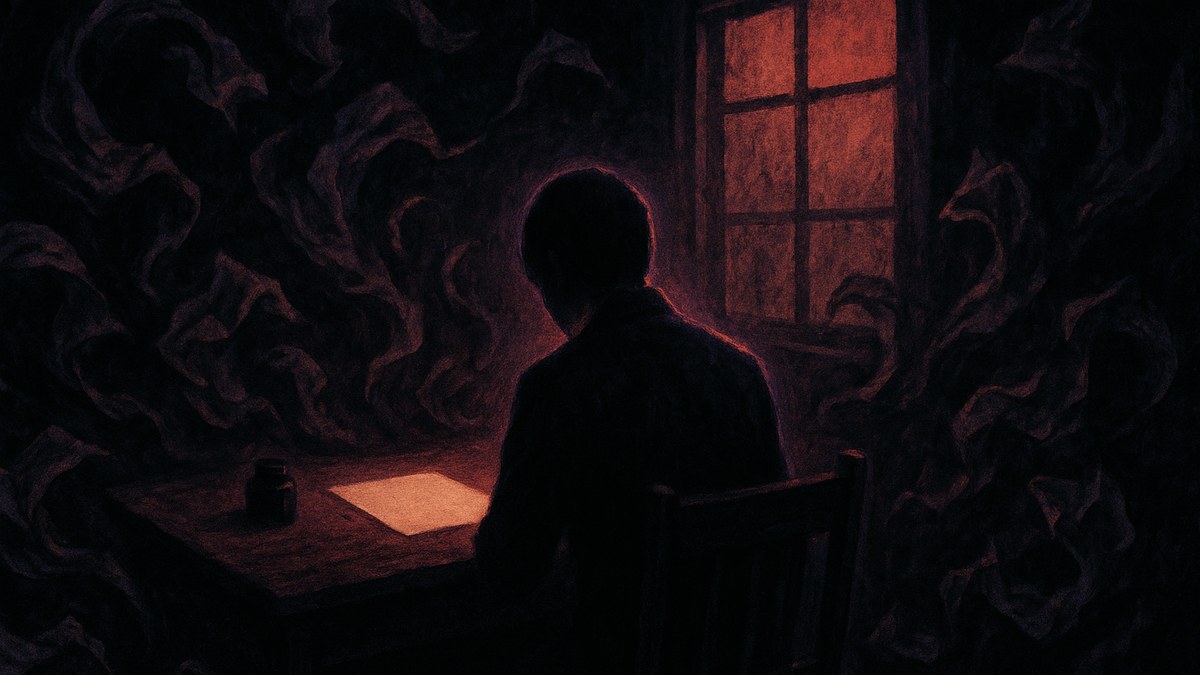
At night, once you're under the covers, the day's failings float up one after another. That phrasing was wrong, you couldn't say anything in that moment, you made the same mistake again — and with each memory, a voice grows louder inside: "I really am a horrible person." You want to sleep, but the self in your head keeps blaming the self.
Hating yourself and hurting is hard to see from outside and hard to confide to anyone. "Maybe I'm just being self-indulgent," you think, blaming yourself further, and carry the pain alone. This article is about writing out the blaming words that won't stop in your head, setting them outside you, and keeping a little distance from self-loathing.
Hating Yourself Is a Sign Your Heart Is Worn Out
The first thing to know is that self-loathing doesn't arise because your character is bad. Hating yourself is a state of mind that appears in many people when fatigue, low confidence, and things not going well stack up.
When your heart is healthy, you can let a failure slide with "well, some days are like that." But when you're tired and have no slack, the same failure gets swapped out for a giant conclusion: "I'm a useless human being." In other words, on days when self-loathing runs strong, it's often a sign that your heart is worn out, not that you're truly useless.
That's exactly why the first thing to do isn't to blame yourself further, but to offer kindness to your weakened self: "I must be quite tired." Before blaming, first notice. That is the starting point for keeping distance from self-loathing.
Write the Blaming Words Out, Just as They Are
Blaming yourself only inside your head lets the words swell without limit. Voices of "I'm useless," "of course, someone like me," repeat again and again as if echoing. What's considered effective for stopping this echo is writing the blaming words out.
The method is simply to copy the words you aim at yourself in your head onto paper or an app, exactly as they are. Don't tidy them up; write the insults that surface just as they come. "I fail at everything," "everyone hates me," "I have no worth being alive" — the words you normally can't voice are the very ones worth setting outside you.
The act of writing painful experiences and feelings into words has long been studied in psychology and is known to improve mood and ease stress. A blaming voice that felt like your very self while inside your head can, once written and placed before you, be viewed with a little separation: "this isn't the whole of me, but one voice my worn-out heart is making me say."
Ask: "Would I Say This to a Friend?"
Once you've written the blaming words out, ask yourself just one thing: "Would I say these same words to a dear friend?"
If a friend were down over the same mistake, you surely wouldn't say "that's why you're useless." You'd probably say "some days are like that," or "you really tried hard." Most of the time, we aim at ourselves alone a harshness we would never turn on anyone else.
Looking at the words you wrote and noticing that harshness loosens the grip, little by little. A gap opens in the way you see yourself: "was this really something to be blamed this much for?" You don't have to start liking yourself right away. Just letting your blaming hand rest for a moment is enough.
When You Can't Hold It All, Don't Tough It Out Alone
Writing as self-care is a way to keep distance from everyday self-loathing. But when the following persist, please don't keep piling on the endurance.
- The urge to blame yourself lasting more than two weeks
- Being unable to sleep, unable to eat, unable to focus on anything
- Feeling you want to disappear or cease to be
Something that needs treatment can hide behind such states. Consulting a mental health or psychiatric clinic is not weakness; it's an act to protect yourself. If writing still leaves you unable to hold it all, don't hesitate to lean on a professional.
First, Jot Down the Self You Still Dislike
There's no need to force yourself to become someone you like. If today you hate yourself and it hurts, start simply by jotting the feeling down. There's no need to wrap it up positively, or to reflect on your faults.
Noroi Nikki can serve as a receptacle for blaming words like these. The harsh words you aim at yourself in your head can be written just as they are, without posting the journal text to other users. Saved journal text is not public to other users, and you choose whether to share a curse card.
On the nights the blaming voice is loud, try writing it all out here. For every word you set outside you, your head grows a little quieter. It's fine to still dislike yourself; first, let your tired self rest.
References
- Pennebaker, J. W. (1997). Writing about emotional experiences as a therapeutic process. Psychological Science. (Research showing that writing out painful experiences and feelings supports mental and physical health.)
FAQ
Frequently asked questions
Q.I hate myself and it hurts. Does that mean I'm a bad person?
It doesn't. Self-loathing is a state of mind that arises in many people when fatigue, low confidence, and past experiences stack up. It doesn't happen because you're uniquely flawed; it often appears as a sign that your heart is worn out. Before blaming yourself, first offer some kindness to the tired self in front of you.
Q.What's the first thing to do to get out of self-hatred?
Writing the words that blame you in your head onto paper or an app, just as they are, is considered helpful. Putting phrases like "I'm useless" or "of course, someone like me" outside you makes it easier to see that they aren't the whole of you, but one voice your worn-out heart is making you say.
Q.What if the urge to blame myself won't stop?
Rather than trying to stop it, pouring it all onto paper first can be more calming. After writing the blaming words out, ask yourself, "would I say these same words to a dear friend?" Noticing that you aim a harshness at yourself you'd never aim at a friend loosens the grip, little by little.
Q.Self-hatred is interfering with my daily life. Should I see a doctor?
If the urge to blame yourself lasts more than two weeks, you can't sleep or eat, or you feel you want to disappear, don't keep toughing it out; consider consulting a mental health or psychiatric clinic. Writing is effective self-care, but when you can't hold it all with that alone, leaning on a professional is a choice that protects you.
About the author
Katsuki Mitsumori三森 捷暉
CEO, SURISUTA K.K. / Operator of Doya Marke AI
Runs Doya Marke AI, a suite of practical AI services spanning content, ads, sales and HR, and hosts the YouTube channel 'SaaS wa Shinimasshen.' Creator and developer of Noroi Nikki, an app for writing out and letting go of emotions.
This article explains folklore, language and culture. It is not medical, legal or religious advice. Traditions are introduced as culture, not as instructions to harm anyone. Claims without a source are marked as popular belief.
ZUKAN
Meet the yokai of this feeling



RELATED
Related reads
 Emotional care
Negative Self-Talk Won't Stop. Write the Attack in Your Head Into View
When negative self-talk won't stop, your head runs an automatic attack on you. Here is how to write those thoughts onto paper, make them visible, and observe them objectively.
 Emotional care
Can't Keep a Journal Habit? How to Keep Writing Even If You Always Quit
You buy a fresh notebook, write for three days, then stop. That isn't weak willpower; you simply started with a setup that's hard to sustain. Here are the real reasons a journal habit fails, and how to keep writing even when you're busy or tired.
 Emotional care
What's Behind That Vague Anxiety With No Reason? Write It Into View
Nothing is clearly wrong, yet something in your chest is always uneasy. Here is how to write that vague, reasonless anxiety into view. Give the nameless unease an outline and how to handle it starts to appear.