Negative Self-Talk Won't Stop. Write the Attack in Your Head Into View
When negative self-talk won't stop, your head runs an automatic attack on you. Here is how to write those thoughts onto paper, make them visible, and observe them objectively.
By Katsuki Mitsumori
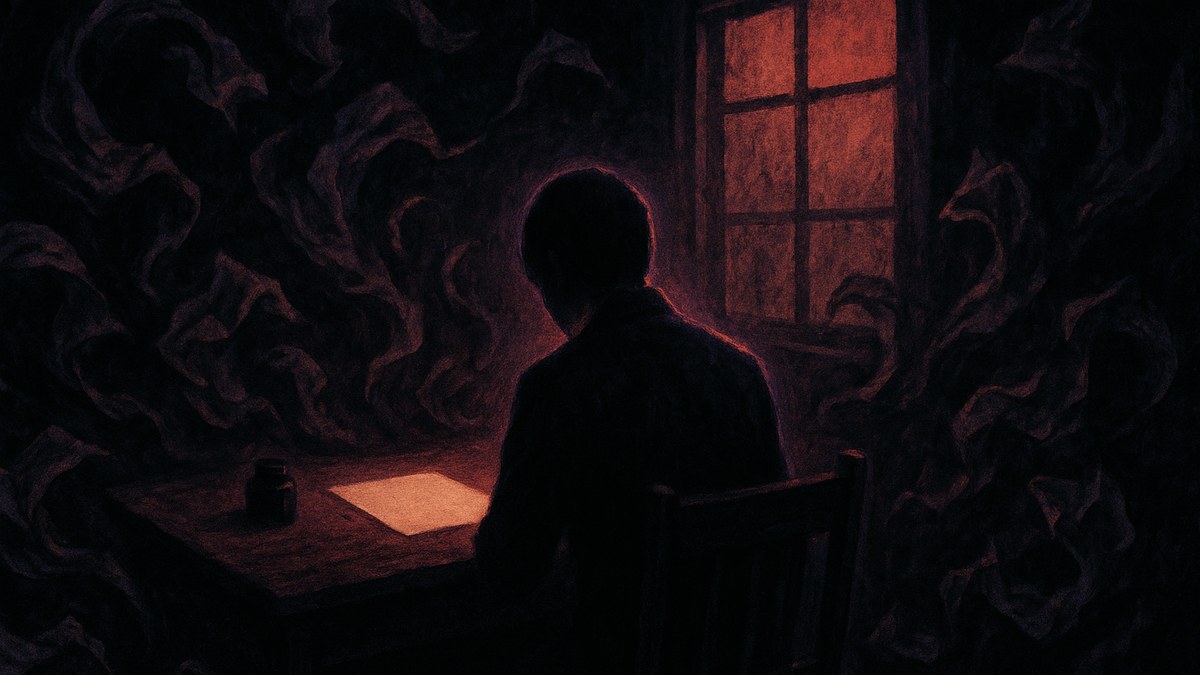
The instant you make a small mistake, a voice fires off in your head: "See, I knew it, I'm useless." Before anyone says a word to you, you're already out ahead, blaming yourself. Once that switch flips, past failures get dragged up one after another like a chain, and the critical words won't stop.
When negative self-talk won't stop, you come to believe the voice is "the real you." But its true nature is a mental habit repeated over years — something like an audio track that auto-plays. This article is about writing out the automatic attack your head runs on you, making it visible, and observing it objectively.
Self-Criticism Is a Habit Called "Automatic Thought"
Self-criticism that won't stop no matter how you try doesn't arise because your will is weak. In psychology, such critical words are called automatic thoughts. They're a mental habit that surfaces reflexively when certain conditions line up, even without you intending it.
The trouble with automatic thoughts is that they surface so quickly and naturally that you feel them as "fact" rather than "thought." When "I'm useless" appears, with no time to test it, you receive it as though it were simply the truth. Thoughts repeated for years are the most automated, and stopping them by force is hard.
That's exactly why what's effective isn't "trying to stop them," but "writing them into view." You can't grab a voice flowing through your head, but fix it in writing before your eyes and, for the first time, you can observe it calmly.
Put the Attack in Your Head Into Words, As Is
First, write out the critical words you aim at yourself in your head, exactly as they are. Don't process them; copy the words just as they surface. "I failed again," "someone like me can't do it anyway," "everyone's secretly fed up with me" — jot down the voice you hear as if giving live commentary.
The act of writing painful experiences and feelings into words has long been studied in psychology and is known to improve mood and ease stress. A voice that felt fused with you while flowing through your head becomes, once written and set outside you, something you can see as "not me, but one thought flowing through me." A gap opens between the voice and you, and that gap is the room not to swallow it whole.
Add "Fact or Thought?" to Observe It Objectively
Beside the critical words you wrote, add just one question: "Is this a fact, or a thought?"
If you wrote "everyone's fed up with me," write next to it, "Is this a fact? Did someone actually say it?" In most cases you'll notice it isn't a verified fact but an image your heart produced. "I failed" may be a fact, but "so I'm a useless human being" is merely an interpretation pasted onto the fact.
Adding "in what situations does this voice tend to appear?" further reveals that self-criticism repeats in set patterns. A tired night, right after comparing yourself to someone, just after something didn't go well — once you know the trigger, the next time the same voice comes you can step back and receive it: "ah, this pattern again." Instead of being swallowed by the voice, you move to the side that observes it from outside.
You Don't Have to Stop the Voice, Just Keep Distance
The important thing is not to force the self-critical voice to zero. A years-old habit doesn't vanish at once. The aim isn't to erase the voice, but to stop being ruled by it even when you hear it.
Keep practicing writing, and even when a critical voice surfaces you'll notice sooner than before: "ah, the automatic thought fired again." The moment you notice, you're no longer fused with the voice; you're on the side viewing it from outside. This distance is the key to becoming free of self-criticism.
Note that if self-criticism continues past two weeks even with writing, and you can't sleep, can't focus, or feel you want to disappear, don't tough it out; consider consulting a mental health or psychiatric clinic. Writing and professional care can go together.
Keep a Place to Observe From
To observe self-criticism objectively, you need a place where you can write the voice out with peace of mind. There's no need to wrap it up positively or to reflect on faults. Simply jotting down the live commentary in your head is enough.
Noroi Nikki can serve as a receptacle for a voice like this that won't stop. The critical words flowing through your heart can be written just as they are, without posting the journal text to other users. Saved journal text is not public to other users, and you choose whether to share a curse card.
On nights the voice won't stop, try narrating it here. As you write and look at it, "this wasn't a fact, just a thought" — and the distance opens, little by little.
References
- Pennebaker, J. W. (1997). Writing about emotional experiences as a therapeutic process. Psychological Science. (Research showing that writing out painful experiences and feelings supports mental and physical health.)
FAQ
Frequently asked questions
Q.Does negative self-talk not stopping mean my willpower is weak?
It isn't a willpower issue. Self-criticism is called an "automatic thought": a mental habit that surfaces reflexively when conditions line up, even without you intending it. Thoughts repeated for years are so automated that stopping them by force is hard. Rather than trying to stop them, writing them into view first makes them more manageable.
Q.Is there a way to stop the negative voice in my head?
Rather than forcing it to stop, writing the voice onto paper and setting it outside you is considered more effective. Once you put "I'm useless" into words, you start to see it isn't a fact but merely "one thought." A gap opens between the voice and you, so you can observe it without swallowing it whole.
Q.How should I write to observe self-critical thoughts objectively?
After writing the critical words down, add "is this a fact or a thought?" and "in what situations does it tend to appear?" You'll start to see that self-criticism repeats in set patterns. Once the pattern is visible, when the voice comes you can step back and receive it with "ah, this one again."
Q.What if the self-criticism continues even after writing?
Writing is practice in keeping distance from thoughts; it doesn't drop to zero right away. Still, if self-criticism lasts more than two weeks and you can't sleep, can't focus, or feel you want to disappear, don't tough it out; consider consulting a mental health or psychiatric clinic. Writing and professional care can go together.
About the author
Katsuki Mitsumori三森 捷暉
CEO, SURISUTA K.K. / Operator of Doya Marke AI
Runs Doya Marke AI, a suite of practical AI services spanning content, ads, sales and HR, and hosts the YouTube channel 'SaaS wa Shinimasshen.' Creator and developer of Noroi Nikki, an app for writing out and letting go of emotions.
This article explains folklore, language and culture. It is not medical, legal or religious advice. Traditions are introduced as culture, not as instructions to harm anyone. Claims without a source are marked as popular belief.
ZUKAN
Meet the yokai of this feeling



RELATED
Related reads
 Emotional care
I Hate Myself and It Hurts. Write the Blaming Words Out of Your Head
When you hate yourself and it hurts, the words that blame you never stop in your head. Here is a self-care way to write those words onto paper, set them outside you, and keep distance from self-loathing.
 Emotional care
What's Behind That Vague Anxiety With No Reason? Write It Into View
Nothing is clearly wrong, yet something in your chest is always uneasy. Here is how to write that vague, reasonless anxiety into view. Give the nameless unease an outline and how to handle it starts to appear.
 Emotional care
Can't Keep a Journal Habit? How to Keep Writing Even If You Always Quit
You buy a fresh notebook, write for three days, then stop. That isn't weak willpower; you simply started with a setup that's hard to sustain. Here are the real reasons a journal habit fails, and how to keep writing even when you're busy or tired.