Guilt After Yelling at Your Kids — Easing a Parent's Self-Blame by Writing
You lost your temper again, and now, watching your child sleep, you're drowning in self-blame. Here is a way to write out a parent's guilt so you can stop punishing yourself and face tomorrow with a little more room to breathe.
By Katsuki Mitsumori
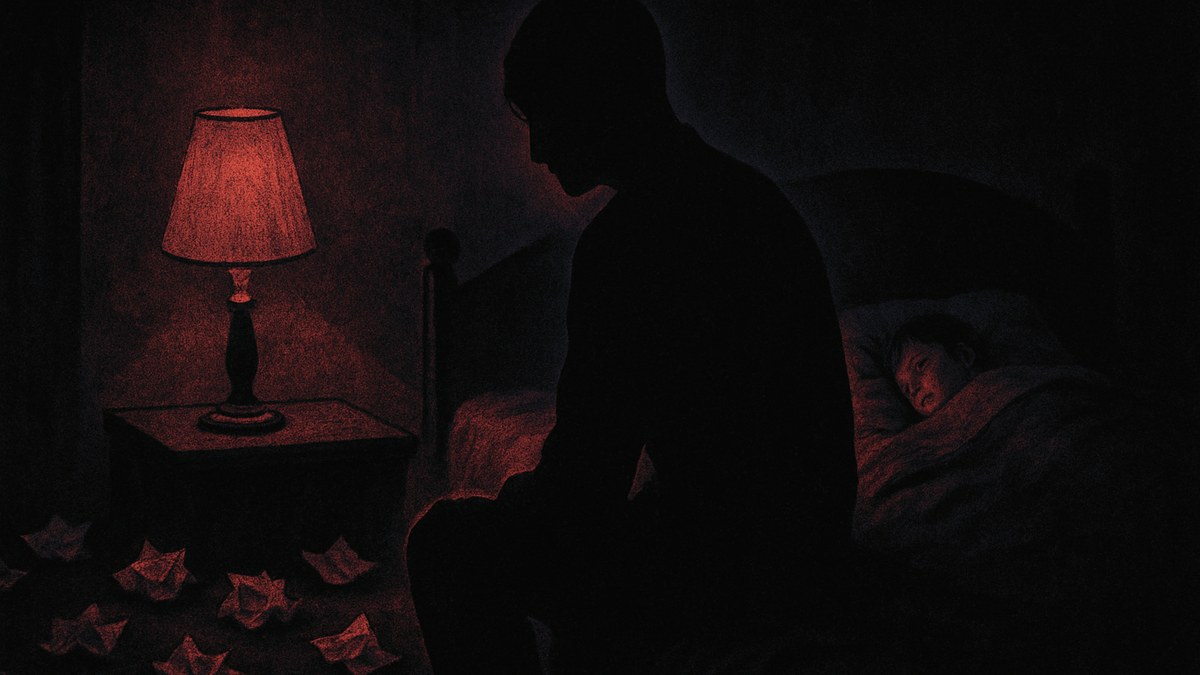
The room has gone quiet after you finally got them to sleep. The moment you catch sight of that innocent sleeping face, the memory of how sharply you shouted earlier comes rushing back, and your chest tightens. "I didn't have to get that angry." There are nights when self-blame brings tears to your eyes.
The guilt that follows an outburst is something many parents taste over and over. But carrying that regret alone and punishing yourself does nothing except pile on exhaustion, and it tends to set you up to repeat the same thing tomorrow. This article walks through a way to write out a parent's guilt so you can ease it without tearing yourself apart.
Regret after yelling is proof of how much you love them
The first thing to know is that feeling strong regret after getting angry is because you care deeply about your child. Guilt simply doesn't rise up over someone you don't care about.
Facing your kids all day, carrying housework and a job too, running out of margin — and then a loud voice slips out. That isn't the mark of a cold parent; it's a sign you've been pushing yourself close to your limit. The harder you corner yourself with "I have to be a parent who never yells," the more your remaining margin gets shaved away.
Write the guilt down, splitting "facts" from "self-hatred"
Reflecting only in your head at bedtime keeps "I did it again" and "I'm a bad parent" spinning until you can't sleep. This is where writing out what happened today, just as it was, helps.
Paper or a note on your phone, either is fine. Don't try to make it tidy — write, briefly, what happened and how you felt. "I called them to dinner three times, no one came, and I was tired, so I snapped." Laying the fact and the feeling side by side makes the vague self-hatred of "I'm a bad parent" appear separately from the concrete fact of "I was exhausted today."
Just seeing them apart means you no longer have to reject yourself wholesale, and it's said to make it easier to settle down and drift off.
Record the "triggers" so you catch the outburst early
The moment anger explodes, exhaustion and a lack of room have usually been building beforehand. Keep the writing habit for a while and a pattern of when you're most likely to snap starts to surface.
- On mornings after too little sleep, small things set off a raised voice.
- The tighter your own schedule, the more you rush and scold your kids.
- When you're hungry, your margin runs thin.
Catching these triggers in advance creates room to brace: "today might be a risky one." You gain a small beat — a single deep breath, or stepping away for a moment — before the explosion.
You don't have to force sweetness to make up for it
Some parents, out of guilt over yelling, swing into extreme leniency afterward. But being falsely gentle to compensate only wears the parent out further.
What matters isn't never getting angry. It's being able to come back and reconnect once you've calmed down. Even a single "I'm sorry I raised my voice earlier" reaches a child plenty. Writing out and settling your own feelings first makes it easier to return to honest involvement rather than guilt-driven making-up.
When the exhaustion lasts, don't carry it alone
If the irritability and self-hatred go on far too long, layered with low mood and sleeplessness, parenting fatigue may be tipping into a strain on mind and body, it is said. When that happens, don't shoulder it alone — reaching out to a local parenting-support line or your regular clinic is a valid option. Leaning on others is never a failure as a parent.
Put a parent's honest feelings into words
"I yell at my kids too much" is hard to confide to other parents. Afraid of being brushed off with "everyone's like that," or of being blamed, many people swallow the truth instead.
Saved journal text is not public to other users. Noroi Nikki was built as a place where you don't have to reframe things positively or write an apology — you can put negative feelings down as they are. The you who got angry and the you who regrets it are both truly you. Start by writing, and letting a little weight off your shoulders.
References
- Pennebaker, J. W. (1997). Writing about emotional experiences as a therapeutic process. Psychological Science, 8(3), 162–166. A landmark study showing that putting emotionally charged experiences into written words is linked to reduced psychological strain.
FAQ
Frequently asked questions
Q.I can't forgive myself for yelling at my kids. Am I a terrible parent?
Feeling deep regret after losing your temper is itself a sign that you care about your child. A truly indifferent parent wouldn't feel guilt at all. The fact that you can reflect on how you got angry today means you're a parent who can show up and try again tomorrow. Start by not punishing yourself so hard.
Q.The guilt after yelling won't leave me at bedtime. What can I do?
Replaying it only in your head keeps the regret spinning and steals your sleep. Try writing out what happened today and how you felt at the time, just as it was. Setting the feeling outside you separates the facts from the self-blame, and it's said to make it a little easier to settle down and sleep.
Q.Is there anything I can do to stop yelling at my kids so much?
An outburst usually builds on exhaustion and a lack of margin that piled up beforehand. Jot down your own state each day and a pattern emerges — when you're most likely to snap. Noticing the trigger early leaves room for a single deep breath before the explosion.
Q.Out of guilt, I end up spoiling my kids too much afterward. Is that bad?
Overcompensating with extreme leniency can wear a parent out even more. What matters isn't never getting angry, but coming back calmly to reconnect after you do. Writing out and settling your own feelings first helps you return to honest, natural involvement rather than guilt-driven making-up.
About the author
Katsuki Mitsumori三森 捷暉
CEO, SURISUTA K.K. / Operator of Doya Marke AI
Runs Doya Marke AI, a suite of practical AI services spanning content, ads, sales and HR, and hosts the YouTube channel 'SaaS wa Shinimasshen.' Creator and developer of Noroi Nikki, an app for writing out and letting go of emotions.
This article explains folklore, language and culture. It is not medical, legal or religious advice. Traditions are introduced as culture, not as instructions to harm anyone. Claims without a source are marked as popular belief.
ZUKAN
Meet the yokai of this feeling



RELATED
Related reads
 Emotional care
Overwhelmed by Guilt — Set Down What You Carry by Writing
It feels like it's all your fault, and the guilt is about to crush you. For anyone frozen by excessive self-blame, here is how to write out what you carry and set it down bit by bit — plus where to turn when the pain drags on.
 Emotional care
Cutting Off a Toxic Friend but Feeling Guilty — Sorting It Out in a Journal
You want to cut someone off, yet the guilt won't leave — it feels like abandoning them. Here is how to write out the doubt and the honest feelings, sort them apart, and choose the distance that protects you.
 Emotional care
Morning Anxiety That Keeps You in Bed: A Writing Habit to Lighten the Day
Anxiety floods in the moment you wake, your body is heavy, and you can't get out of bed. Here's how a habit of writing for a few minutes on waking can reset morning anxiety and lighten the day — with why mornings feel hard, and signs it's worth seeing someone.