What Is a Jibakurei? Meaning, Traits, and How It Differs From a Wandering Spirit
What is a jibakurei (earthbound spirit)? A folklore-and-culture deep dive into its meaning, the lore of a spirit "bound to the land," how it differs from wandering and background spirits, the modern haunted-spot narrative, and why people feel a will can linger in a place. Not a claim that spirits are real.
By Katsuki Mitsumori
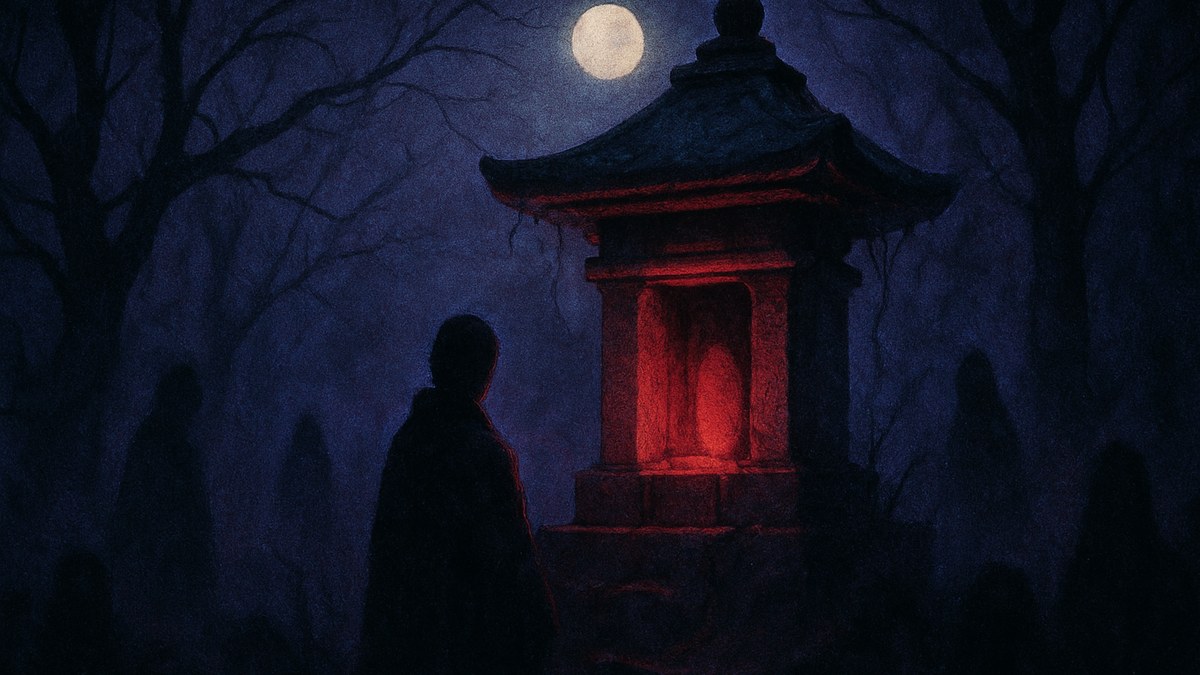
Many people have heard the word "jibakurei" in a ghost-story show or a scary tale — a spirit lingering at an accident site or an old house, unable to leave the spot. This article explains what a jibakurei is — its meaning and traits, the origin of the word, and how it differs from a wandering spirit — purely as a matter of folklore and culture. It makes no claim that spirits are real.
What a jibakurei means
A jibakurei (earthbound spirit) is a term for a spirit said to be unable to leave the place where it died, or a piece of land it left strong feelings behind in, and to remain in that area. The word itself is built from "spirit bound to the earth," and it is tied to a particular house, room, or accident site. It has spread as a stock pattern of ghost stories — "something happens in that place" — and most so-called haunted spots are framed as places "where a jibakurei dwells." It is a form of ghost-lore telling, not a verified fact.
Traits attributed to a jibakurei
In folk belief, a jibakurei is often said to be one that has not realized it has died, or cannot accept its own death. When a person departs bearing strong regret, unfinished business, or attachment, that feeling is said to keep it bound to the land. Sites of disaster, accident, crime, or a self-inflicted death are easily linked to jibakurei lore, precisely because a story of "an unfulfilled death" is easy to layer onto them. None of this is a grounded classification; it is a pattern of telling that grew within ghost-story culture.
The folk background of being "bound to the land"
The idea that feelings can linger in a place appears in local legends long before the word jibakurei existed. When a person departs the world holding strong regret, that feeling is said to soak into the place — such tellings give story-form to the way the living sense that "there is something about that spot." By speaking of attachment to land in the shape of a spirit, cultures have given a story to loss and fear that otherwise resist explanation. Japan has long had a culture of fearing those who met an untimely death and enshrining them carefully to soothe them, and jibakurei lore can be seen as an extension of that same current.
The difference from wandering and background spirits
In ghost-lore folk belief, the jibakurei is often contrasted with the "wandering spirit" (fuyurei). Where the jibakurei cannot move from one place, the wandering spirit is said to drift, unbound by location. It is also sometimes confused with the "background spirit" (haigorei), said to follow a particular person — but that is tied to a person rather than a place. These are not classifications built on clear definitions or evidence, only distinctions born within ghost-story culture. More interesting than the labels is the question beneath them: why do people feel that a place can hold a lingering will?
Re-reading "bound to a place" through psychology
The lore of the jibakurei can also be re-read as a working of the mind. People avoid places where something painful happened — or, conversely, find they cannot leave them. That a particular place binds itself to strong memory and emotion is a natural psychology that happens to anyone. The sense that "something lingers in that place" can be read, in fact, as memory that stays within one's own heart, projected onto the outer landscape. The story of the jibakurei may be reflecting that very mechanism of the mind, borrowing the shape of a spirit.
Resentment tied to a place — let it out in words
The lore of the jibakurei quietly shows how strongly people are bound to places and memories. A spot where something painful happened, or an unforgettable person, may linger in the heart for a long time — this happens to anyone. But there is no need to keep carrying that feeling alone.
Noroi Nikki is a private app for gently writing out, and letting go of, those feelings you can pour out nowhere else. Saved journal text is not public to other users. Put the resentment still bound inside you into words, little by little, and set it down from your chest.
For related lore, see also what an onryo is and what a tatari (curse) is.
FAQ
Frequently asked questions
Q.What does jibakurei mean?
A jibakurei (earthbound spirit) is a term for a spirit said to be unable to leave the place where it died or a piece of land it was deeply attached to in life, lingering in that area. It appears mainly in modern ghost-story lore and is tied to particular houses or accident sites. It is folklore and culture, not something whose existence has been verified.
Q.How is a jibakurei different from a wandering spirit?
In the lore, a jibakurei is bound to one place and cannot move from it, while a wandering spirit (fuyurei) drifts about, not tied to any location. Both are distinctions made within ghost-story folk belief, without any firm definition or evidence behind them.
Q.How old is the word jibakurei?
It is not a term found as-is in ancient legend; it is thought to have spread through the relatively modern boom in ghost stories and occult culture. The idea that a spirit lingers on land or in a place is old and widespread, but the fixed word jibakurei is considered a modern coinage.
About the author
Katsuki Mitsumori三森 捷暉
CEO, SURISUTA K.K. / Operator of Doya Marke AI
Runs Doya Marke AI, a suite of practical AI services spanning content, ads, sales and HR, and hosts the YouTube channel 'SaaS wa Shinimasshen.' Creator and developer of Noroi Nikki, an app for writing out and letting go of emotions.
This article explains folklore, language and culture. It is not medical, legal or religious advice. Traditions are introduced as culture, not as instructions to harm anyone. Claims without a source are marked as popular belief.
RELATED
Related reads
 Folklore of curses
What Does the Straw Doll Curse Mean? The Folklore Behind Japan's Wara Ningyo
What does the straw doll curse (wara ningyo) mean? A folklore-and-culture explanation of the five-inch-nail legend, its link to the midnight shrine ritual, and the idea of the "effigy." Not a how-to, and not something we encourage doing.
 Folklore of curses
What Is Kotodama? Japan's Belief in the Spirit of Words, Explained
What is kotodama? A folklore-and-culture explanation of the Japanese belief that spoken words carry spiritual power — the Man'yoshu phrase "the land where kotodama brings good fortune," norito prayers, imi-kotoba taboo words, and the link to curses. Lore only.
 Folklore of curses
What Are Tsukumogami? Japan's Spirits of Old Objects, Explained
What are tsukumogami? A folklore-and-culture explanation of the Japanese belief that tools and objects gain a spirit after long years — the Tsukumogami Emaki scroll, the link to hyakki yagyo, and the memorial rites for needles and dolls. Lore only.