Lonely at Night: How to Sit With the Feeling and Light It Up in Writing
The moment you turn off the light, a cold loneliness rushes in. Here's how to sit with that feeling without blaming yourself, and a writing practice to ease the loneliness of nights alone.
By Katsuki Mitsumori
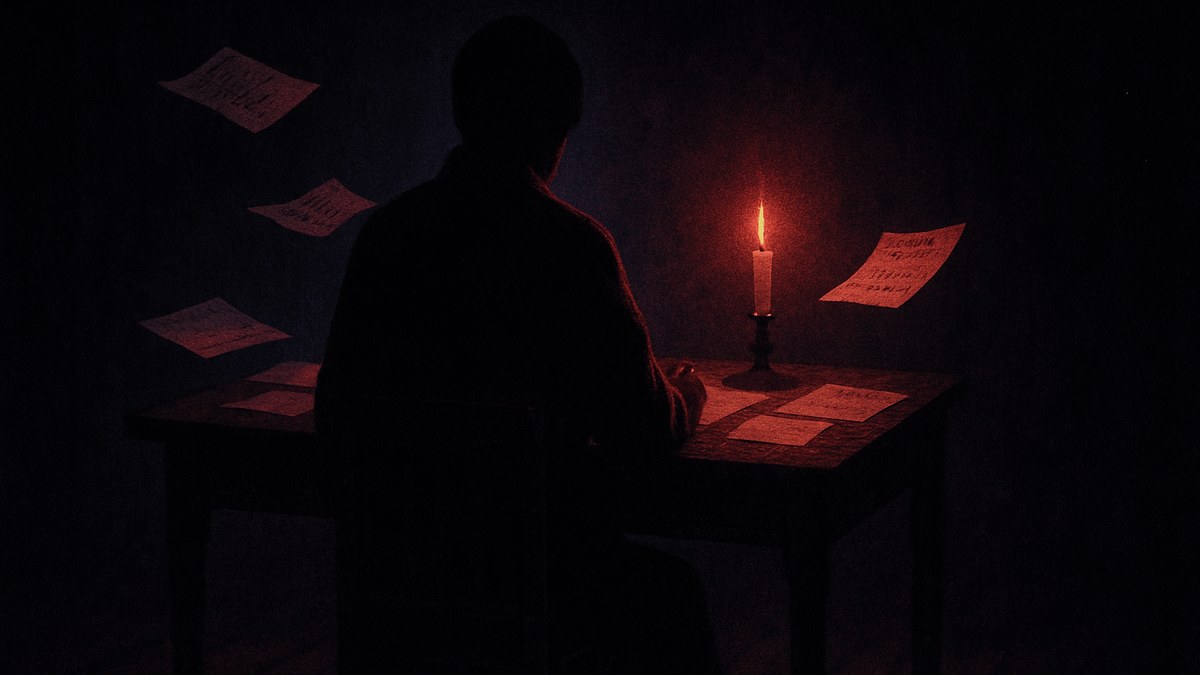
You managed to laugh your way through the day, yet the moment you switch off the light and lie down, a cold draft passes through your chest. The TV is off, the notifications have stopped, and in the quiet room only one sensation grows sharp: "I'm alone." Haven't you spent night after night like this?
Loneliness is neither weakness nor selfishness. A heart built to live connected to others is simply reflecting that need honestly in the stillness of the night. In this article we'll gently unpack why nights alone feel lonely, and share how to sit with that feeling without blaming yourself and light it up, a little, through writing.
Why loneliness grows stronger at night
Through the day there is always something to direct your attention toward — work, chores, conversations, one thing after another. Busyness fills the gaps in your heart, leaving little room to feel lonely.
But at night, once the tasks are done and the stimulation fades, that gap opens wide. Quiet and darkness are conditions in which the feelings inside surface easily. The loneliness you pushed aside during the day comes out into the open, as if it has finally found somewhere to go.
So the loneliness of night doesn't well up because something is uniquely missing in you. It's the result of a quieted heart being honest. Simply knowing "nights are just like this" can keep you from needlessly blaming yourself.
Before distracting yourself with your phone, sit with it once
On a lonely night, the first thing many people reach for is their phone. You open social media, play a video, search for the presence of another person. Distraction itself isn't a bad thing. Yet it's not rare to feel, amid a lively feed, that you alone are left behind — and for the loneliness to deepen instead.
Before distracting yourself, try making a few minutes to sit with the loneliness itself. Admitting "right now, I'm lonely" is not a defeat or a weakness. Simply naming the feeling you're having is said to help the heart settle a little.
Writing to light up the loneliness of night
Before sleep, try writing out the feelings of that night as they are. "I didn't have a real conversation with anyone today." "I was actually lonely." "This room alone is too quiet." There's no need to tidy it up. Just set down the words that come to mind.
As you write, the vague loneliness gains an outline. Once "what was lonely" and "what I actually wanted" become words, a little distance opens up around the emotion, and it's harder to be swallowed by it. Even without telling anyone, simply acknowledging your own feeling can ease the unease of the night.
You might also add a small good thing from the day, or a single line for tomorrow. Write it not to cancel out the loneliness, but to set a small light beside it. There's no need to force yourself to be positive. Loneliness and a light can share the same page.
Connection can come little by little
Another path to easing loneliness is keeping ties with people, however thin. It doesn't have to be daily — a one-line message or a loose online exchange is enough. Not "someday, someone," but stepping just a little closer to others tomorrow, on the strength of feelings you've sorted through in writing — that small step is plenty.
And if you can't connect with anyone tonight, don't blame yourself. Nighttime loneliness often lightens a little when morning comes. For now, let your goal simply be to sit with this feeling and sleep.
When loneliness continues every night
If low mood or intense loneliness lasts a long time and you can't sleep, can't enjoy anything, or it disrupts daily life, it's generally considered a sign to talk to a professional such as a doctor, a mental health specialist, or a local support line without toughing it out. Loneliness is a natural feeling that visits everyone, but when it stays heavy and long, it can be a sign that you don't have to carry it alone. The methods here are everyday self-care and not a substitute for medical judgment.
Venting as a "curse" is allowed too
Trying to force down the loneliness of a night alone with "everyone lives alone anyway" leaves the feeling, once again, with nowhere to go. You don't have to be tough.
Noroi Nikki is an app for those lonely nights. Saved journal text is not public to other users. On a sleepless night, a night full of quiet unease, set that feeling gently onto the page as a small light before you close your eyes.
References
- James W. Pennebaker, Opening Up: The Healing Power of Expressing Emotions (Guilford Press, 1997). A foundational body of research on the effects of writing out one's emotions, known as expressive writing.
FAQ
Frequently asked questions
Q.Why do I suddenly feel lonely at night?
During the day, work and errands keep you distracted, but at night the stimulation drops and the feelings inside you surface more easily. Darkness and quiet are conditions that make anxiety and loneliness easier to notice, so feeling lonelier on a night alone is thought to be a natural response.
Q.Is it bad to scroll my phone to distract myself from loneliness?
A phone distracts you for a while, but seeing everyone's lively lives on social media can deepen the loneliness instead, and it tends to affect sleep. Distraction itself isn't wrong, but writing down and acknowledging the lonely feeling once makes you less driven to fill it endlessly.
Q.Does writing out lonely feelings really help?
Putting the loneliness you feel into words and getting it outside you gives the vague emotion an outline and makes it a little easier to get some distance. Even without telling anyone, simply acknowledging your own feeling can ease the unease of the night.
Q.What if the loneliness continues every night?
If low mood or intense loneliness lasts a long time and you can't sleep or can't enjoy anything, it's generally considered a sign to talk to a professional such as a doctor, mental health specialist, or a local support line without toughing it out. The methods here are everyday self-care and not a substitute for medical judgment.
About the author
Katsuki Mitsumori三森 捷暉
CEO, SURISUTA K.K. / Operator of Doya Marke AI
Runs Doya Marke AI, a suite of practical AI services spanning content, ads, sales and HR, and hosts the YouTube channel 'SaaS wa Shinimasshen.' Creator and developer of Noroi Nikki, an app for writing out and letting go of emotions.
This article explains folklore, language and culture. It is not medical, legal or religious advice. Traditions are introduced as culture, not as instructions to harm anyone. Claims without a source are marked as popular belief.
ZUKAN
Meet the yokai of this feeling



RELATED
Related reads
 Emotional care
No One to Talk To About Your Problems? Make a Place to Write Your Refuge
Carrying a problem you can't confide to anyone wears you down more than you'd expect. Here's how to put those feelings into words without writing for an audience.
 Emotional care
Raised Being Compared to Your Siblings? Write the Feelings You Buried
'Your brother could do it.' 'Be more like your sister.' The pain of being compared to siblings doesn't fade in adulthood. Here's how to honor that wound instead of denying it — writing it for yourself, and letting it go, little by little.
 Emotional care
What Are the Benefits of Emotion Journaling? How Writing Lightens the Heart
Why does emotion journaling lighten the heart? Here's a clear, non-absolute look at the benefits writing is said to bring — easing rumination, labeling feelings — alongside the psychological mechanisms discussed in research.