Waking at Night Feeling Anxious: Gentle Bedside Writing Care
You wake in the middle of the night, and in the dark your worries swell until you can't sleep. Here's a gentle self-care practice — writing a few lines at your bedside — to hold the anxiety of night waking and ease you back toward sleep.
By Katsuki Mitsumori
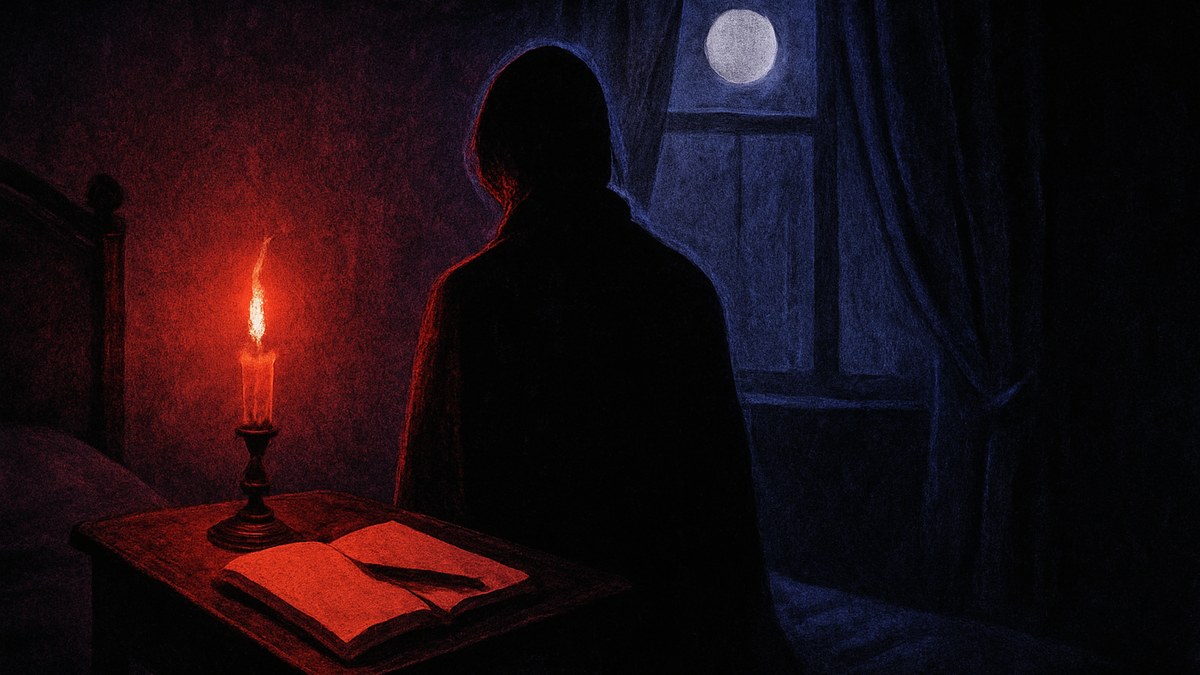
You wake with a start, check the clock, and it's still three in the morning. You close your eyes to sleep again, but in the dark a worry surfaces, then another, and they keep swelling. Something small you wouldn't even notice in daylight somehow feels, right now, like an irreversible catastrophe. The more you rush yourself to sleep, the wider awake you become, and in the silence only the anxiety grows. Have you ever spent a night like that?
What makes night anxiety so tricky is that you're made to face your worries with your head half-asleep, your judgment at its lowest. This article is for anyone who wakes at night feeling anxious: it offers a gentle practice of writing a few lines at your bedside to hold the anxiety and ease you back toward sleep.
Why night anxiety feels so large
Waking anxious in the night happens, in most cases, because the small hours are "when body temperature and alertness dip to their lowest and mood sinks most easily." Everything around you is dark and quiet, with nothing else to turn to. So a small worry that you'd have shrugged off in daylight swells far beyond its real size.
And in the dark, the same worry circles with no answer. "How will that turn out?" "What if tomorrow goes wrong?" Your dimmed judgment repeats, endlessly, things that thinking can't resolve. In this state, no amount of thinking arrives at reassurance. Night anxiety being heavier than daytime isn't only about being a worrier — it's largely the effect of the hour itself. Just knowing that eases things a little.
Keep a "place to write" by your pillow
What helps against night anxiety is to keep paper and a pen, or your phone, ready by the pillow, and write just a few lines when you wake. Take what keeps swelling in your head, put it into words once, and set it outside you. That alone makes it easier to draw a boundary around the circling anxiety.
The trick is not to dwell. "Anxious about tomorrow morning." "That thing is bothering me." Write a few lines of what surfaced, and close it there. There's no need to make it neat. Bright light tends to wake you, so it's better to dim the screen or write by a weak light that shows only your hand. The act of writing creates a sense that "I've gotten this out and handed it over, for now."
Separate "what you can do now" from "what can wait for morning"
Look at the worries you wrote and you'll notice that most are things you can do nothing about right now, in the night. Tomorrow's plans, the message on your mind — none can move until morning. The most you can do at night is note, "I'll check this in the morning."
So mark each surfaced worry as "can do now" or "can wait for morning." When you see that almost all are the latter, it becomes easier to give your head permission that there's no need to agonize this very moment. You don't have to erase the worry itself. Being able to think "I've handed this over to my morning self" is enough.
When night waking keeps continuing
What's here is everyday self-care. If you wake repeatedly in the night, can't sleep afterward, or carry daytime drowsiness and fatigue — and this drags on and disrupts daily life — it's generally considered a sign to consult a professional such as a doctor or a sleep clinic without toughing it out. Repeated night waking can be a sign from your body or mind. Reaching out is never an overreaction.
You may hand it over in "curse" words too
Reframe the night's anxiety positively, switch your mood with gratitude — those routines are hard at three in the morning with your head half-asleep. Rather than forcing a positive spin, handing over what welled up just as it is quiets the mind faster.
Noroi Nikki is an app for those nights. We built it as a place where you can let out the anxiety that swelled in the night, and the curse-words, in exactly the form they take — no need to dress them up. Saved journal text is not public to other users. Put the anxiety that grew in the dark into words at your bedside and set it outside you first. That is a gentle step back toward sleep.
References
- James W. Pennebaker, Opening Up: The Healing Power of Expressing Emotions (Guilford Press, 1997). A foundational body of research on the effects of writing out difficult experiences and emotions, known as expressive writing.
FAQ
Frequently asked questions
Q.Why does anxiety flood in the moment I wake in the night?
The small hours are when body temperature and alertness dip to their lowest and mood sinks most easily. With everything dark and quiet and nothing else to turn to, small worries swell far beyond their real size. Night anxiety feeling heavier than daytime isn't only about being a worrier — it's largely the effect of the hour itself.
Q.What can I do on the spot when I wake at night feeling anxious?
Keep paper and a pen, or your phone, by the pillow, and write out just a few lines of the worry in your head. 'Anxious about tomorrow morning,' 'that thing is bothering me' — simply getting it outside is enough. Putting into words what keeps swelling in your head, and setting it down, can make it easier to drift back to sleep.
Q.Won't writing in the night just wake me up more?
Bright light tends to wake you, so it's better to dim the screen or write by a weak light that shows only your hand. The trick is not to dwell — write a few lines of what surfaced and close it. Don't try to make it neat; use it only to mark that you've gotten the worry out.
Q.Should I see a doctor if I wake in the night like this every night?
If you wake repeatedly in the night, can't sleep afterward, or carry daytime drowsiness and fatigue, and this drags on and disrupts daily life, it's generally considered a sign to consult a professional such as a doctor or a sleep clinic. The methods here are everyday self-care and are not a substitute for diagnosing or treating insomnia.
About the author
Katsuki Mitsumori三森 捷暉
CEO, SURISUTA K.K. / Operator of Doya Marke AI
Runs Doya Marke AI, a suite of practical AI services spanning content, ads, sales and HR, and hosts the YouTube channel 'SaaS wa Shinimasshen.' Creator and developer of Noroi Nikki, an app for writing out and letting go of emotions.
This article explains folklore, language and culture. It is not medical, legal or religious advice. Traditions are introduced as culture, not as instructions to harm anyone. Claims without a source are marked as popular belief.
ZUKAN
Meet the yokai of this feeling



RELATED
Related reads
 Emotional care
Absorbing Other People's Emotions: Writing Out What You Carry to Let It Go
Someone's bad mood nearby is enough to weigh you down. For those who absorb other people's emotions, here's how to write out and separate their feelings from yours, and let go of what you've been carrying.
 Emotional care
When Your Parents Don't Understand You: Write Your True Feelings and Protect Yourself
You work up the courage to open up, but it doesn't reach your parents. The pain of not being understood isn't small. Here's how to own that pain — writing your true feelings out to sort them — plus how to let go of expectation.
 Emotional care
The Stress You Don't Notice Piling Up: Writing to Run a Check on Your Mind
You think you're fine, yet somehow you're worn out before you know it. Here's how to catch stress that builds without your noticing by writing to run a check on your inner state.