The Stress You Don't Notice Piling Up: Writing to Run a Check on Your Mind
You think you're fine, yet somehow you're worn out before you know it. Here's how to catch stress that builds without your noticing by writing to run a check on your inner state.
By Katsuki Mitsumori
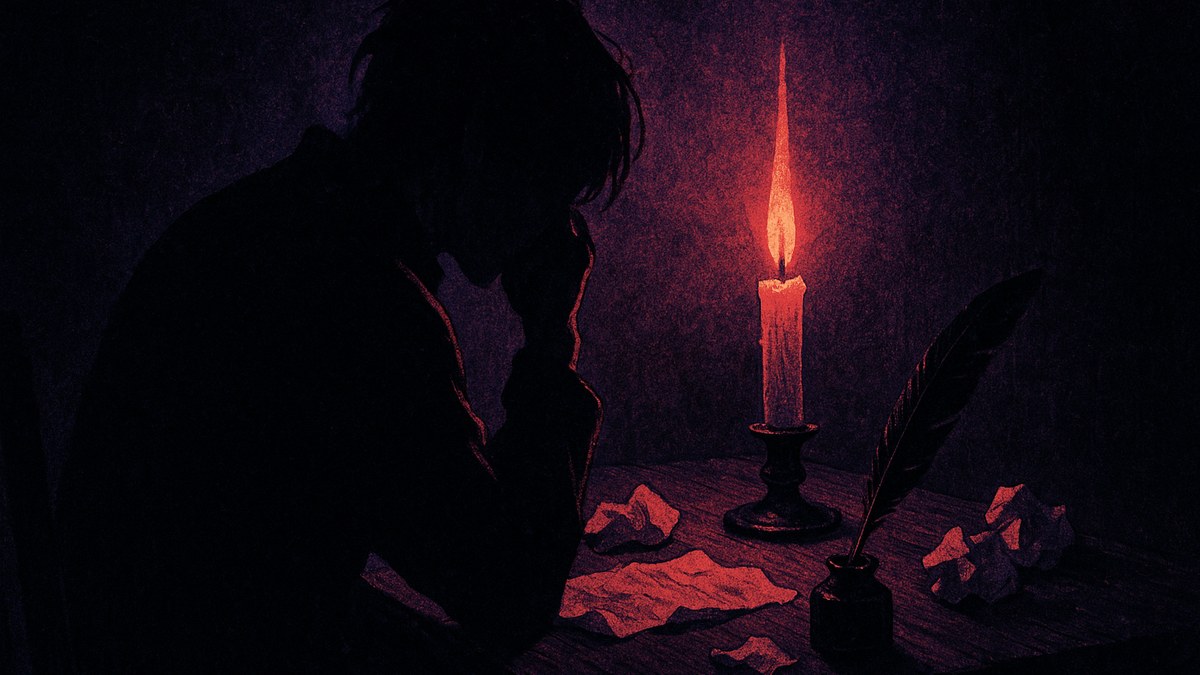
You didn't think you were particularly down, and you were going about things as usual. And yet you catch your reflection and your expression is tight, or a day off arrives and you have no drive to do anything. By the time you realize "I've been kind of tired lately," you were already worn quite thin. Have you had that experience?
The tricky kind is not the stress you're aware of, but the stress you're not. Suffering you can feel can at least be tended to, but a burden you haven't noticed keeps quietly stacking up, untreated. In this article we'll look at how stress builds without your noticing, and how to write to run a check on your own mind.
Why stress piles up "without your noticing"
Stress doesn't always come with clear awareness. It's especially hard to notice in situations like these.
One is when busyness pushes your feelings to the back burner. Driven by what's in front of you, you move on to the next task before you've finished feeling the frustration or worry that arose. Unprocessed feelings don't simply vanish — they linger somewhere in your mind.
Another is when you've grown used to enduring. As you stack up "this much is fine," the very sense of how much you're overextending goes numb. Often, the harder a worker you are, the harder it is to notice you're under load at all.
And so your body and mood grow heavy with no cause you can name. That isn't weakness — it's an honest reaction to all the feelings you've put off, and it makes sense.
The small signs of unnoticed stress
Even without awareness, mental fatigue can show up as small changes. For instance: trouble falling asleep, not waking up refreshed, getting irritated over trivial things, things you used to enjoy feeling faded, or tension gathering around your shoulders or stomach.
That said, it shows up differently for everyone, and these are only rough guides. What matters isn't fitting a label to yourself, but noticing what's different from your usual self. Writing things down is what helps you get that clue.
The habit of writing to "check" your mind
The best way to catch stress you don't notice is to write out your state regularly and look at it. Like a medical check-up, you give your mind an occasion to be examined too.
The method is simple. At the end of the day, write a short note about what you felt. "Was there a moment today that left me uneasy?" "Did I force a smile anywhere?" "Did I take something on that I actually didn't want to?" The trick is to record the facts and feelings as they are, without judging them.
Keep it up, and a burden you'd overlooked in yourself starts to appear in words. "I'm always off after this weekly meeting." "I'm tired every time I see that person." A record built up over time reveals patterns you can't catch inside your head alone. Once you see the pattern, you can act before it builds up.
Facing the burdens you find in the check
You don't have to force-solve every burden you notice through writing. Just admitting "this is what's tiring me right now" tends to lighten the mind a little. Cut what can be cut, and for what's unavoidable, accept that "of course this is tiring." Simply knowing your own state becomes a shield against carrying too much.
Signs it may be time to reach out
The methods here are everyday self-care. If low mood or discomfort lasts a long time and you can't sleep, can't enjoy anything, or it disrupts your work and life, it's generally considered a sign to talk to a professional such as a doctor or mental health specialist without toughing it out. Because you'd been bottling it up unnoticed, you tend to assume you're still fine. If those around you start to worry, that too is one signal to consider seeing someone.
Let it out as a "curse" before it builds
The frustrations and haze you find in your check don't need to be rewritten into neat words. Forcing a positive spin only sends you back into the habit of putting feelings off.
Noroi Nikki is an app for letting those small burdens out before they pile up. Saved journal text is not public to other users. Before it builds up without your noticing, write today's share out today and set it down.
References
- James W. Pennebaker, Opening Up: The Healing Power of Expressing Emotions (Guilford Press, 1997). A foundational body of research on the effects of writing out what you feel, known as expressive writing.
FAQ
Frequently asked questions
Q.Why am I worn out when I don't feel stressed?
Stress doesn't always come with awareness. When busyness pushes your feelings to the back burner, or you get used to enduring, it becomes hard to notice you're under load at all. As a result, fatigue can show up in your body or mood with no cause you can point to.
Q.What are the signs of stress I don't notice?
Common ones include trouble falling asleep, getting irritated over small things, no longer enjoying what you used to love, or tension in your shoulders or stomach. But it shows up differently for everyone, and these are only rough guides. Noticing what's different from your usual self is the real clue.
Q.How can I catch stress that has built up?
A habit of writing a short note about what you felt at the end of the day helps. Without judging it good or bad, simply recording the facts and feelings as they are can put into words a burden you'd overlooked in yourself.
Q.Should I talk to someone if the fatigue continues?
If low mood or discomfort lasts a long time and you can't sleep, can't enjoy anything, or it disrupts your work and life, it's generally considered a sign to talk to a professional such as a doctor or mental health specialist. The methods here are everyday self-care and are not a substitute for medical judgment.
About the author
Katsuki Mitsumori三森 捷暉
CEO, SURISUTA K.K. / Operator of Doya Marke AI
Runs Doya Marke AI, a suite of practical AI services spanning content, ads, sales and HR, and hosts the YouTube channel 'SaaS wa Shinimasshen.' Creator and developer of Noroi Nikki, an app for writing out and letting go of emotions.
This article explains folklore, language and culture. It is not medical, legal or religious advice. Traditions are introduced as culture, not as instructions to harm anyone. Claims without a source are marked as popular belief.
ZUKAN
Meet the yokai of this feeling



RELATED
Related reads
 Emotional care
How to Relieve Stress — Simple, Free Things You Can Do Alone Right Now
When the tension won't let up, you want relief in the moment. Here are practical ways to relieve stress — moving your body, using your voice, changing your setting, and writing it out — all free, all doable on your own, tonight. Plus what to try when nothing seems to work.
 Emotional care
Stress Brain Fog and a Heavy Head: How to Lighten the Haze by Writing It Out
Your head feels heavy from the morning and your thoughts move as if through fog. Here's how to ease that stress-induced heaviness and mental haze by putting what's in your head into words.
 Emotional care
How to Relieve Work Stress in Healthy Ways — Before You Reach Your Limit
Bottling up work stress wears down both your mind and body. Here are practical, healthy ways to relieve work stress — movement, sleep, and writing it out — plus how to let difficult feelings go safely.