Is It Okay to Write Negative Thoughts in a Journal? Care That Doesn't Bottle Up
Do you hesitate, thinking "writing complaints or resentment will only drag me down further"? Putting negative feelings into a journal is, in fact, sound emotional care. Here's why it's okay, and how to write it without a bad aftertaste.
By Katsuki Mitsumori
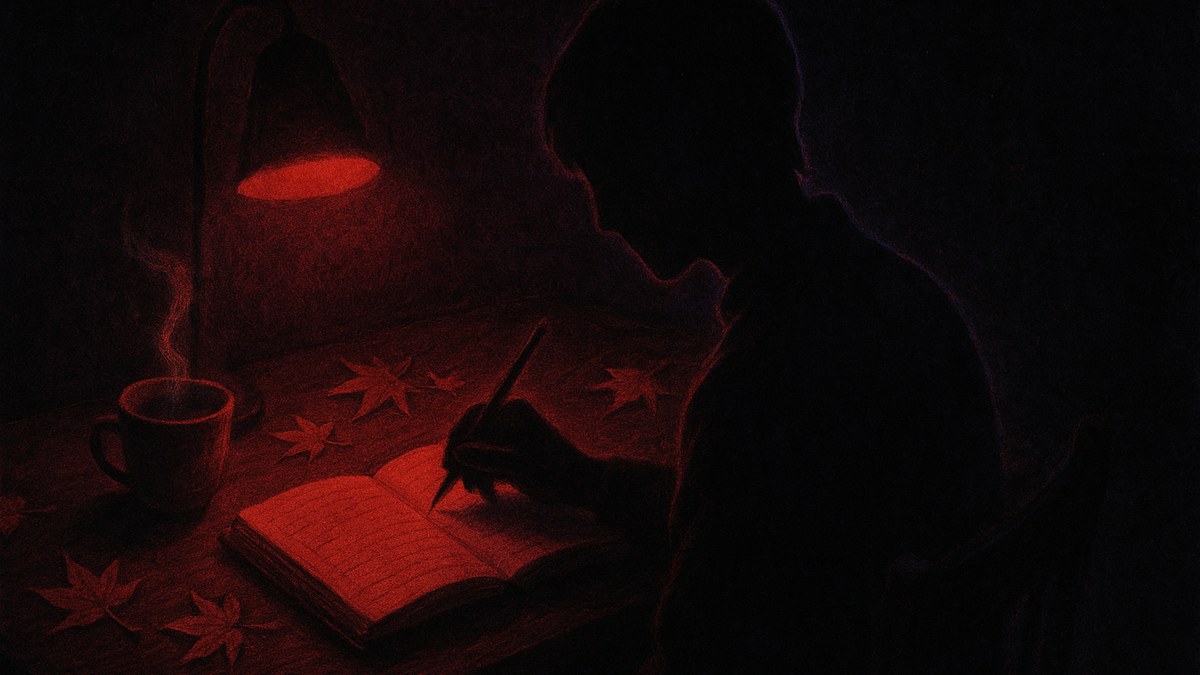
You go to write in your journal, and somewhere inside a brake kicks in. "If I write nasty things about this person, I'll look like a bad person." "If I just line up complaints, rereading it later will feel awful." So you end up writing only harmless events and leaving it at that. But what you really wanted to let out was the murkier feeling pushed down behind them.
Here's the conclusion up front: you are allowed to write negative things in a journal. In fact, putting swallowed negative feelings into words and getting them out is deeply sound emotional care. This article covers why it's okay to write the negative, and how to do it without a bad aftertaste.
Why We Hesitate to Write the Negative
From childhood we're taught, "don't speak ill of others," "be grateful." Those lessons matter. But turn them too far inward and it starts to feel as if having negative feelings is itself wrong.
As a result, when something makes you angry you cap it with "I mustn't get angry," and when you're sad you swallow it with "others have it worse." You try to be a good person even in front of your own journal. Yet feelings you've already felt aren't good or bad. Negative emotions don't vanish because you try to erase them; they lose their exit and pool at the bottom of your heart.
Writing the Negative Is Actually the Sounder Choice
The act of putting painful experiences and feelings into words has long been studied in psychology. Getting swallowed emotion out in language is known to help sort mood and ease stress. In other words, writing the negative is a kinder choice for your mind than enduring and hoarding it.
The key here is distinguishing "rumination" from "writing it out." Turning the same resentment over and over in your head does sink your mood. But once you commit it to words and set it outside you, the volume it occupies in your mind drops, and you can view it a little more objectively. Looping it internally and setting it down on the page produce opposite results.
How to Write the Negative Without a Bad Aftertaste
A few small habits make the aftertaste lighter when you write the negative.
First, don't try to end on a positive note. Forcing a wrap-up like "but I was partly at fault too" shoves your real feelings half back down. While writing, you can badmouth the other person, be entirely self-centered, use rough words. Postpone the judgment and prioritize getting it all out first.
Second, step back a little after writing. When you finish, exhale deeply and gently close the screen or notebook. Don't reread it right away; end the day there. Simply not chasing what you let out makes it harder to be pulled back into rumination.
And above all, choose a place where you can write for yourself. You do not need to prepare a message for someone else. If you save your words in an app, check who can see the saved text and what sharing may make public before you write.
Not Bottling Up Is the Best Care of All
Negative feelings don't arise because you're a bad person. They're proof your heart is reacting honestly. Rather than forcing them out of existence, letting them out properly in a safe place is far kinder to your mind. Not hoarding them is the best daily care there is.
Noroi Nikki was built for exactly this. There's no need to become positive or to forgive anyone. Write out the murky feeling you swallowed today, just as it is, and let it go. Saved journal text is not public to other users. You choose whether to share a curse card. That said, when low mood or sleeplessness lasts a long time, don't rely on writing alone; lean on professional support too. Writing is one of the tools that hold you up.
References
- Pennebaker, J. W., & Beall, S. K. (1986). Confronting a traumatic event: Toward an understanding of inhibition and disease. Journal of Abnormal Psychology. (Research indicating that writing out one's feelings about a painful event can benefit mental and physical health compared with holding those feelings back.)
FAQ
Frequently asked questions
Q.Is it okay to write negative things in a journal?
Yes. In fact, putting swallowed negative feelings into words and getting them out is considered sound emotional care. You don't need to reframe things positively or force a hopeful ending. What matters is having a place where you can write your honest feelings exactly as they are.
Q.Won't venting resentment just make me feel worse?
Turning the same resentment over and over in your head does tend to sink your mood. But writing it out once and setting it outside you can reduce how much it occupies your mind and help you sort your feelings. Rumination and writing are similar but not the same. Stepping back a little after writing helps the aftertaste settle.
Q.Should I delete what I wrote?
Either is fine. Keeping it and rereading later can reveal patterns in your emotions. Others prefer to write it out and let it go without looking back. There's no right answer; choose whichever eases you. Choose a place where you can write for yourself. If you use an app, check who can see saved text and what its sharing features make public.
Q.Is it safe to keep writing negative things?
Writing out daily feelings to let them go is fine. But if low mood or sleeplessness lasts more than two weeks, or daily life is affected, don't rely on writing alone; consider consulting a mental health clinic or a support line. Writing is self-care, not a substitute for professional support.
About the author
Katsuki Mitsumori三森 捷暉
CEO, SURISUTA K.K. / Operator of Doya Marke AI
Runs Doya Marke AI, a suite of practical AI services spanning content, ads, sales and HR, and hosts the YouTube channel 'SaaS wa Shinimasshen.' Creator and developer of Noroi Nikki, an app for writing out and letting go of emotions.
This article explains folklore, language and culture. It is not medical, legal or religious advice. Traditions are introduced as culture, not as instructions to harm anyone. Claims without a source are marked as popular belief.
ZUKAN
Meet the yokai of this feeling



RELATED
Related reads
 Emotional care
Can't Keep a Journal Habit? How to Keep Writing Even If You Always Quit
You buy a fresh notebook, write for three days, then stop. That isn't weak willpower; you simply started with a setup that's hard to sustain. Here are the real reasons a journal habit fails, and how to keep writing even when you're busy or tired.
 Emotional care
Unrequited Love Is Painful and You Want to Let Go. Write It Out and Sort It
Wanting to give up on a one-sided love you can't give up on quietly wears you down. Here is how to write the out-of-reach feelings onto paper, sort them, and slowly let go.
 Emotional care
What's Behind That Vague Anxiety With No Reason? Write It Into View
Nothing is clearly wrong, yet something in your chest is always uneasy. Here is how to write that vague, reasonless anxiety into view. Give the nameless unease an outline and how to handle it starts to appear.