Left on Read and Spiraling: Writing to Distract Yourself While You Wait for a Reply
The message is read, but no reply comes, and you invent reasons until the unease won't stop. Here's how to ease the anxiety of waiting for a reply and distract yourself by writing before you interrogate your partner.
By Katsuki Mitsumori
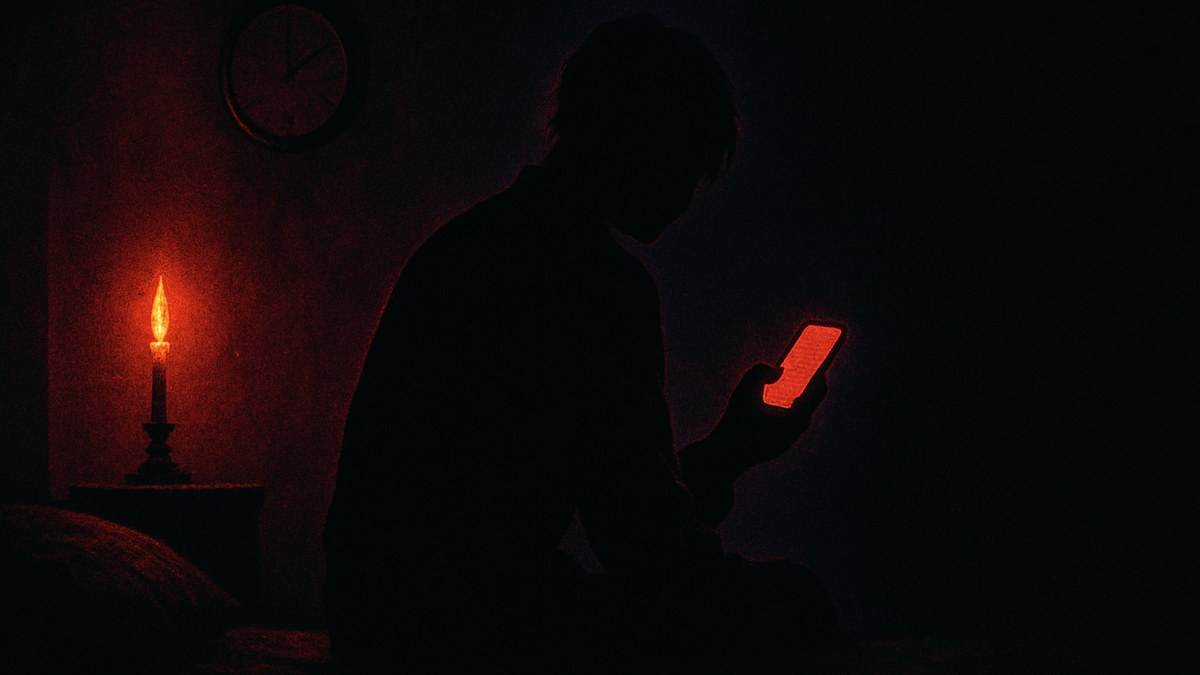
Your message shows only the "read" mark. And yet no reply comes. "You saw it — so why won't you answer?" You check the clock, set down the phone, and pick it up again a few minutes later. In that loop, a story of your own making stacks up higher and higher inside you.
Maybe you made them angry. Maybe they're bored of you. Maybe they're with someone right now. Because you don't know why no reply comes, only the imagination runs wild. In this article we'll unpack why being left on read hurts this much, and share how to distract yourself by writing while you wait for a reply.
Being left on read is a reaction to imagination
Being read but not answered stings especially because it easily gives rise to the reading, "they had the time to look, and I got put off." When a message is unread you can still tell yourself "they must be busy," but "read" leaves only the fact that they looked, and tells you nothing of the reason.
The human mind hates a blank. When the reason is unknown, it tries to fill that blank, and with the materials at hand it assembles the scariest story it can. "Maybe they hate me." "Maybe they want to break up." But that is imagination you built, not fact.
So much of the unease of waiting is not a reaction to what happened, but a reaction to the imagination your mind produces in the not-knowing time. Once you notice this, what you're dealing with shifts from "the partner who won't reply" to "your own runaway imagination."
Get the imagination out of your head, once
Imagination grows the longer you leave it inside your head. That's exactly why it helps to write the imagining out onto paper or into a journal, and get it outside, once.
"Three hours since the read receipt, no reply." "They probably stopped caring about me." "Maybe yesterday's message was too much." Write the imaginings that come, one after another. As you write, you gradually see that they are not fact, but a pile of hypotheses you assembled. The fact is a single line: "It's been read, and there's no reply yet." Everything else is a blank your mind filled in.
Before the follow-up message, write first
When no reply comes, you're tempted to send follow-ups: "Are you mad?" "Did something happen?" But a barrage from anxiety burdens the other person, and can push the reply further away.
So type the message you want to send into your journal first. Not to them — into a space you use for yourself. Often, at the moment you write it, much of what you wanted to convey is already satisfied. Then reread it the next morning, and send only the contact you still find necessary, in calm words.
The time spent waiting for a reply is your time too. Rather than spend it surveilling their reply, write to distract yourself, and while you're busy with something else, the notification chimes. That makes the waiting far gentler.
When the imagining won't stop and you can't function
If thoughts of a specific person or event won't leave your head and you can't sleep or it disrupts daily life for a long time, it's generally considered a sign to talk to a professional such as a doctor or mental health specialist without toughing it out. If the anxiety of waiting flares strongly every time and carves deeply into your daily life, don't carry it alone. The methods here are everyday self-care and not a substitute for medical judgment.
Venting as a "curse" is allowed too
Reworking it into "I get left on read because it's my fault" leaves the unease, once again, with nowhere to go. There's no need to fake being fine with "I'll just not let it bother me."
Noroi Nikki is an app for those waiting nights. Saved journal text is not public to other users. When you want to interrogate your partner, bring the words here first. Turn a night of only waiting for a notification into a little of your own time.
References
- Nolen-Hoeksema, S., Wisco, B. E., & Lyubomirsky, S. (2008). Rethinking rumination. Perspectives on Psychological Science, 3(5), 400-424. A review paper organizing the thinking pattern of repeatedly rehearsing the same thoughts and its psychological effects.
FAQ
Frequently asked questions
Q.Why does being left on read make me spiral so badly?
When a message is read but not answered, it easily invites the reading, 'they had the time to look, and I got put off.' Because you don't know the reason, your mind tries to fill the blank by inflating the worst-case story. Reacting to imagination rather than fact is what's really behind the unease.
Q.How do I distract myself while waiting for a reply?
You can write out the imaginings that surface — 'maybe they hate me,' 'did I make them mad?' — straight onto paper or into a journal. Getting the imagination out once makes it easier to stop reaching for your phone again and again. Until the facts are settled, you can create waiting time without being tossed around by guesses.
Q.When no reply comes, I end up sending follow-up messages. What should I do?
The more anxious you are, the more you try to get reassurance through a barrage of check-ins. But the more you send, the more it burdens the other person, and it can even push the reply further away. When you want to send, first write the message into your journal. Often that alone settles you, and you can choose only the contact that's truly needed.
Q.What if I can't function because a reply is all I can think about?
If thoughts of a specific person or event won't leave your head and you can't sleep or it disrupts daily life for a long time, it's generally considered a sign to talk to a professional such as a doctor or mental health specialist. The methods here are everyday self-care and not a substitute for medical judgment.
About the author
Katsuki Mitsumori三森 捷暉
CEO, SURISUTA K.K. / Operator of Doya Marke AI
Runs Doya Marke AI, a suite of practical AI services spanning content, ads, sales and HR, and hosts the YouTube channel 'SaaS wa Shinimasshen.' Creator and developer of Noroi Nikki, an app for writing out and letting go of emotions.
This article explains folklore, language and culture. It is not medical, legal or religious advice. Traditions are introduced as culture, not as instructions to harm anyone. Claims without a source are marked as popular belief.
ZUKAN
Meet the yokai of this feeling



RELATED
Related reads
 Emotional care
Anxious Attachment in Relationships: Calm the Fear You Can't Say Out Loud by Writing It Down
A late reply is all it takes to spiral, and when you finally voice it you're told you're "too much." Here's why relationship anxiety grows so heavy, and how to calm it by writing it in a journal before you send it to your partner.
 Emotional care
Suspecting Your Partner Is Cheating? Write the Racing Thoughts to Settle Them
Their phone, their late nights — the suspicion won't leave your head. Checking brings no relief, and you hate yourself for doubting. Here's how to honor the rumination of cheating suspicion instead of denying it — writing it in a space you do not share with the person involved, taking distance, and settling a little.
 Emotional care
Can't Get Over a Breakup: Writing Out the Longing to Let It Go, Little by Little
You've broken up, but your heart hasn't caught up, and only the memories keep coming back. Here's how to gently hold the longing after a breakup and, instead of forcing yourself to forget, let it go little by little through writing.