When Tears Come for No Reason. Writing Out a Nameless Sadness
Nothing sad has happened, yet tears well up out of nowhere. Here's a gentle look at what tears with no clear cause might mean, and how writing out a nameless sadness can help you hold it.
By Katsuki Mitsumori

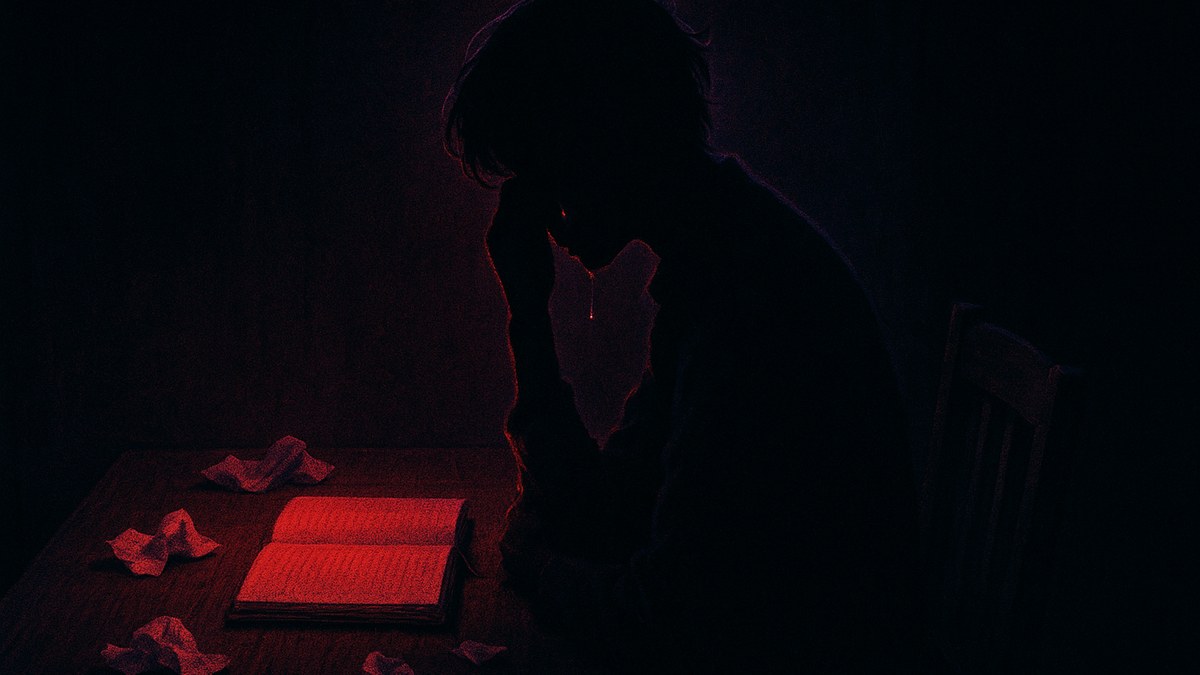
You're gazing out the train window on your commute when, for no reason, your eyes blur with tears. Nothing sad has happened. Work is turning over as usual, home life too. And yet, in an ordinary moment, your eyes grow hot and you quickly look down. You can't even explain to yourself why you nearly cried just then.
Plenty of people are thrown by these "nameless tears." Because there's no reason in sight, you start to worry: is something wrong with me? But tears without a reason don't mean your heart is weak or broken. This article gently unpacks the state of mind behind crying for no reason, and shows how to receive that sadness by writing it out.
The Reason Isn't Missing; It's Just Out of Sight
When tears come and no reason comes to mind, most people conclude there is "no cause." In truth, it isn't that a cause is absent, but that it has been piling up somewhere you can't see.
In the course of daily life, we swallow countless small feelings. The retort we held back, the complaint we couldn't voice even while worn out, the honest words we suppressed out of consideration for someone. Each one is small, but left unprocessed, they sink to the bottom of the heart and the water level slowly rises. Then some slight trigger, a view outside the window, a stray piece of music, and it spills over. That is what tears with "no reason" usually are.
In other words, the tears didn't come "for nothing." They may be a sign that your heart is telling you it can no longer hold it all.
You Don't Have to Blame Yourself for Crying
When unexplained tears come, it's easy to scold yourself: "How pathetic," "and I'm an adult." But tears are a natural safety valve that lets held-in feeling out of the body. The more you blame yourself, the more your heart tenses, and the more easily the tears come.
So begin by not rejecting the version of you that cried. Receive it as if resting a hand gently on your own shoulder: "I must have been stretched that tight," "I really have been trying so hard." Crying can itself be part of how the heart moves toward recovery.
Give the Nameless Sadness a Name in Words
What helps most in settling unexplained tears is writing them out. Tears release feeling, but tears alone won't sort out what you were reacting to. So, once you've calmed down, put whatever surfaces onto paper or a screen, just as it is.
"Was there something I'd been enduring lately?" "Who did I really want to say what to?" As you write, the sadness that had no name slowly takes shape. Noticing the truth beneath it, "I was actually exhausted," "I wanted to be understood," lets your heart lighten. Writing out painful experiences and emotions has long been studied in psychology and is known to help you organize your mood.
Saved journal text is not public to other users. With an audience, we unconsciously hold back both tears and honesty. Noroi Nikki was built to be that place. There's no need to make it tidy. Feelings that won't quite become words are fine as scattered fragments; just let them out. You decide whether to share a curse card made from it.
When the Distress Lingers, Don't Carry It Alone
Unexplained tears can come to anyone now and then. But when tears persist, you can't sleep at night, and nothing feels enjoyable, your heart may be nearing its limit of fatigue.
At times like that, alongside the self-care of writing and letting go, it's important to also lean, without pushing yourself, on a professional or a support line. Emotional strain, like a cold, tends to recover more easily the sooner you rest and tend to it. Tears are not weakness; they are proof of how hard you've been trying. Please, be gentle with yourself.
References
- James W. Pennebaker, Opening Up by Writing It Down (research showing that expressive writing about difficult experiences and emotions supports mental and physical health).
FAQ
Frequently asked questions
Q.Why do I cry when nothing sad has happened?
Even without an event you can point to, small daily strains and fatigue can quietly pile up until they overflow as tears. Crying is a natural way for the body to release feeling, so it isn't strange for tears to come with no cause in mind. Rather than blaming yourself, receive it as a sign that your heart had been stretched taut.
Q.I can't stop the tears that come out of nowhere. What can I do?
Don't force them to stop; it's fine to cry a little. Once you settle, write down how your body feels and whatever surfaces in your mind, just as it is. Putting it into words can slowly give shape to a feeling that had no name. Slow breathing to ease the body also helps soften the rush of tears.
Q.Are tears with no reason a sign of mental illness?
Occasional unexplained tears can happen to anyone when fatigue builds up. However, if tears persist, you can't sleep, or nothing feels enjoyable, an underlying strain on your mental health may be involved. Rather than deciding on your own, if the distress continues, consider reaching out to a medical professional or a support line.
Q.After the tears pass, how do I sort out my feelings?
Even if crying brings relief, without knowing what you were reacting to, the tears may return. Once you're calm, write out what you've been holding back lately and the feelings you couldn't voice. The more honestly you write in a space for your own writing, the easier it becomes to notice the truth beneath the tears.
About the author
Katsuki Mitsumori三森 捷暉
CEO, SURISUTA K.K. / Operator of Doya Marke AI
Runs Doya Marke AI, a suite of practical AI services spanning content, ads, sales and HR, and hosts the YouTube channel 'SaaS wa Shinimasshen.' Creator and developer of Noroi Nikki, an app for writing out and letting go of emotions.
This article explains folklore, language and culture. It is not medical, legal or religious advice. Traditions are introduced as culture, not as instructions to harm anyone. Claims without a source are marked as popular belief.
ZUKAN
Meet the yokai of this feeling



RELATED
Related reads
 Emotional care
Why Do I Cry When I'm Angry? Making Sense of the Tears
You're furious, yet the tears won't stop, and it leaves you confused. Here's a gentle look at why anger brings on tears, and how writing out the feeling underneath can help you settle.
 Emotional care
Nowhere to Let the Sadness Out. A Journal Where You Can Cry Alone
You're aching with sadness, yet you can't confide in anyone and end up carrying it alone. Here's a gentle look at what to do with sadness that has nowhere to go, and how to use a journal as a place to cry on your own.
 Emotional care
When You Can't Calm Down After Something Made You Furious
You keep replaying the thing that annoyed you and can't calm down when angry. Here are in-the-moment steps to settle the irritation and a simple way to write it out so it doesn't follow you into the night.