Relationship Anxiety Is Wearing You Out: Write the Worry Down and Let It Go
Was that remark a sign they dislike you? Was the curt reply because they're angry? For anyone worn out by relationship anxiety that won't let their mind rest, here's how to write the worry down, separate assumption from fact, and let it go.
By Katsuki Mitsumori

The reply to the message you sent is shorter and more clipped than usual. "Did I say something that bothered them?" you wonder, rereading that one line again and again. You replay the conversation, recall their expression in that moment, and "maybe they really do dislike me" swells into an imagining you have no way to confirm. Have you ever been through that?
What makes relationship anxiety so tricky is that, since you can't ask the person directly, it keeps circling in your head with no answer. The more you mind it, the more worn out you get, yet you can't simply stop minding it. This article is for anyone drained by relationship anxiety: it walks you through writing the worry down, splitting assumption from fact, and letting it go a little at a time.
Relationship anxiety grows from imagining ahead
Relationship anxiety weighs on you, in most cases, because your mind runs ahead and paints the worst reading of someone's reaction. A short reply, no read receipt, eyes that didn't meet yours — events that could have many reasons get one reflexive reading slapped on them: "they dislike me," "they're angry."
On top of that, repeating that reading over and over — rumination — makes the anxiety drag on. No answer comes unless you check with the person, yet the imagining keeps swelling. The trouble is, nothing gets settled inside your head alone. Still, being sensitive to others' reactions is a natural function of the mind trying to get along — it doesn't mean you're timid or that overthinking is a flaw in your character.
Write it down and split "fact" from "assumption"
Relationship anxiety is hard because the event that actually happened and your head's reading of it have fused into one. This is where writing to separate them helps.
Paper or a phone note is fine. First, write out only the facts of what you're stuck on. "The reply was the single word 'okay'" — that far is fact. Next, write the reading that rose in response on a separate line. "They must be angry." "They surely dislike me." Laid out this way, you'll see that the facts are tiny, and most of the rest was your own imagining.
You were being swept around by an unverifiable imagining as if it carried the same weight as an established fact. Just noticing that lets some tension drain from your shoulders. In most cases you can't know what the other person truly thinks. Holding something unknowable as unknowable is painful, so at least sort it — "this is fact, this is my reading" — and set the imagining aside for now.
The honest words you couldn't say are welcome here too
Relationship anxiety often mixes in not only "maybe they dislike me" but the honest feelings you couldn't say to the person. You really didn't like the way they put it; it feels like you're always the one being considerate — yet, not wanting to break the relationship, you swallowed those words, and they pile up along with the anxiety.
You don't have to force those feelings away. In a space for your own writing, you may write them out exactly as they are, without dressing them up. Even one line — "honestly, that pissed me off" — lightens the swallowed feeling a little. There's no need to hurl the words at the person. Rather than stockpiling them in your head and chest, getting them out and looking at them sharpens the outline of how you actually feel.
Choosing to take distance
As you write and sort, you may notice, "when I'm with this person, I'm always worn thin." When relationship anxiety goes on and on, it can be a sign not just of your problem but that the relationship itself doesn't fit you.
You don't have to force every relationship to continue. Lowering how often you're in touch, taking a little distance — small choices like these are perfectly good self-protection too. Writing also helps by laying the material for such decisions outside your head where you can look at it.
When the strain keeps going
What's here is everyday self-care. If relationship anxiety brings intense tension that lasts a long time and you can't sleep, lose your appetite, or it disrupts work and life, it's generally considered a sign to talk to a professional such as a doctor or mental health specialist without toughing it out. Reaching out is never an overreaction. If self-care feels like more than you can hold, borrow a professional's help early.
Venting as a "curse" is allowed too
Be considerate, look for the good in them — some days those routines just don't fit. Being told "they're all good people" when you're exhausted from overthinking can make it harder.
Noroi Nikki is an app for those days. We built it as a place where you can let out the anxiety and frustration piled up in your relationships, in exactly the words you have — no need to dress them up. Saved journal text is not public to other users. Put the thing you can't stop minding into words tonight and set it outside yourself for now.
References
- James W. Pennebaker, Opening Up: The Healing Power of Expressing Emotions (Guilford Press, 1997). A foundational body of research on the effects of writing out difficult experiences and emotions, known as expressive writing.
FAQ
Frequently asked questions
Q.Why does relationship anxiety leave me so exhausted?
From a small expression or the speed of a reply, the mind runs ahead and paints the worst reading — 'they must dislike me' — then repeats it again and again. Because you can't actually confirm it, no answer comes, and the imagining just swells while your head never rests. Being sensitive to others' reactions is also the mind trying to get along with people around you.
Q.How can I ease relationship anxiety right now?
Write the event you're stuck on, and the reading it triggered — 'maybe they hate me' — separately onto paper or your phone. Just splitting fact from assumption puts some distance between you and an imagining you can't verify. Don't force it into something positive; just aim to get it outside you first, and it's easier to begin.
Q.Can I fix the habit of overthinking what others feel?
Rather than trying to stop overthinking entirely, it's more realistic to build the habit of writing the imagining down and sorting it — 'is this a fact, or my own reading?' As you repeat writing and stepping back, you notice the reflex of imagining the worst more easily, and tend to get swept up by it less than before.
Q.What should I do if relationship anxiety keeps me up night after night?
If intense anxiety lasts a long time and you can't sleep, lose your appetite, or find it disrupting work and life, it's generally considered a sign to talk to a professional such as a doctor or mental health specialist. The methods here are everyday self-care and are not a substitute for medical judgment or treatment. The key is not to carry it all alone.
About the author
Katsuki Mitsumori三森 捷暉
CEO, SURISUTA K.K. / Operator of Doya Marke AI
Runs Doya Marke AI, a suite of practical AI services spanning content, ads, sales and HR, and hosts the YouTube channel 'SaaS wa Shinimasshen.' Creator and developer of Noroi Nikki, an app for writing out and letting go of emotions.
This article explains folklore, language and culture. It is not medical, legal or religious advice. Traditions are introduced as culture, not as instructions to harm anyone. Claims without a source are marked as popular belief.
ZUKAN
Meet the yokai of this feeling



RELATED
Related reads
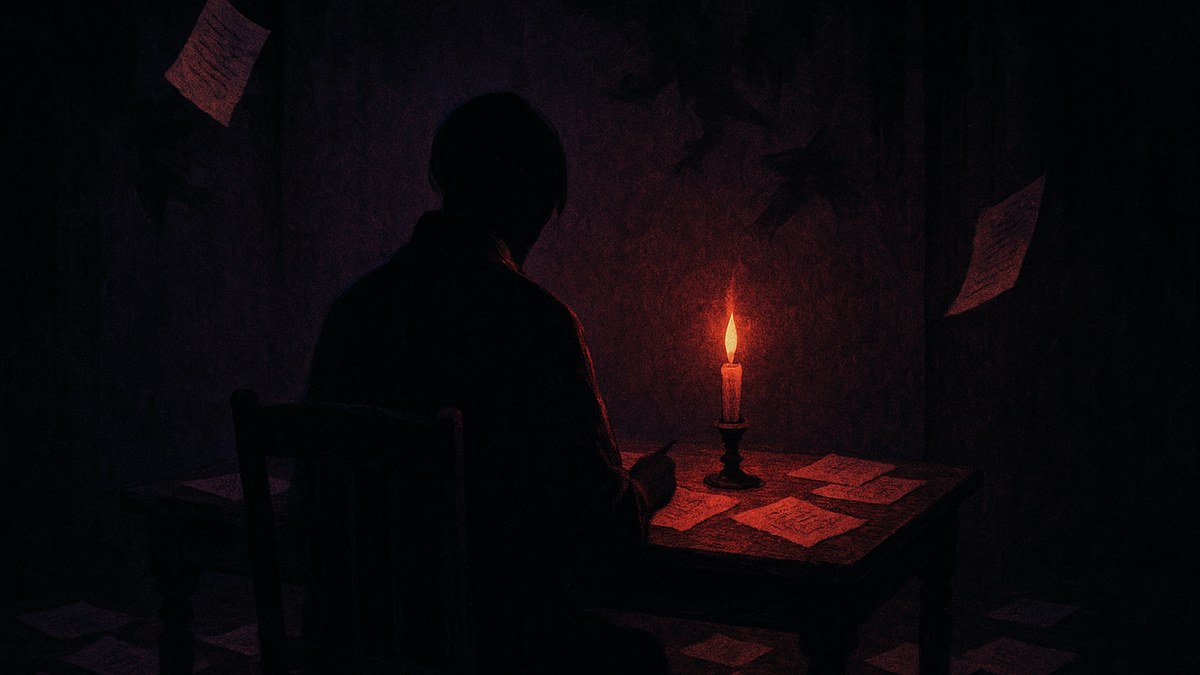 Emotional care
Can't Get Over a Breakup: Writing Out the Longing to Let It Go, Little by Little
You've broken up, but your heart hasn't caught up, and only the memories keep coming back. Here's how to gently hold the longing after a breakup and, instead of forcing yourself to forget, let it go little by little through writing.
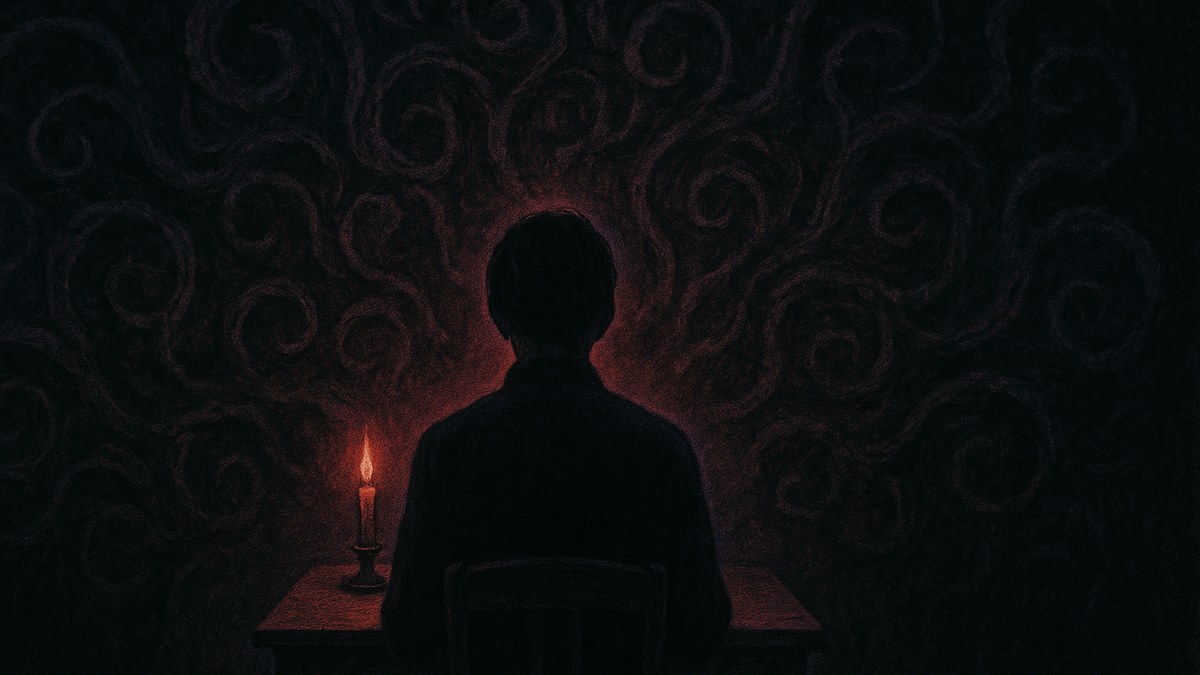 Emotional care
Suspecting Your Partner Is Cheating? Write the Racing Thoughts to Settle Them
Their phone, their late nights — the suspicion won't leave your head. Checking brings no relief, and you hate yourself for doubting. Here's how to honor the rumination of cheating suspicion instead of denying it — writing it in a space you do not share with the person involved, taking distance, and settling a little.
 Emotional care
Exhausted From People-Pleasing: Venting the Honest Feelings You Swallowed in a Journal
You accommodate everyone, always put others first, and come home drained. Here's how to unpack that people-pleasing fatigue and vent the honest feelings you've swallowed in a journal to get yourself back.