When You Can't Control Your Emotions — Write First, Then Step Back
You snapped and said too much, or the tears just won't stop. Everyone gets swallowed by emotion sometimes. Here's how to write and create distance instead of bottling feelings up when you can't control your emotions, and the psychology behind why it works.
By Katsuki Mitsumori
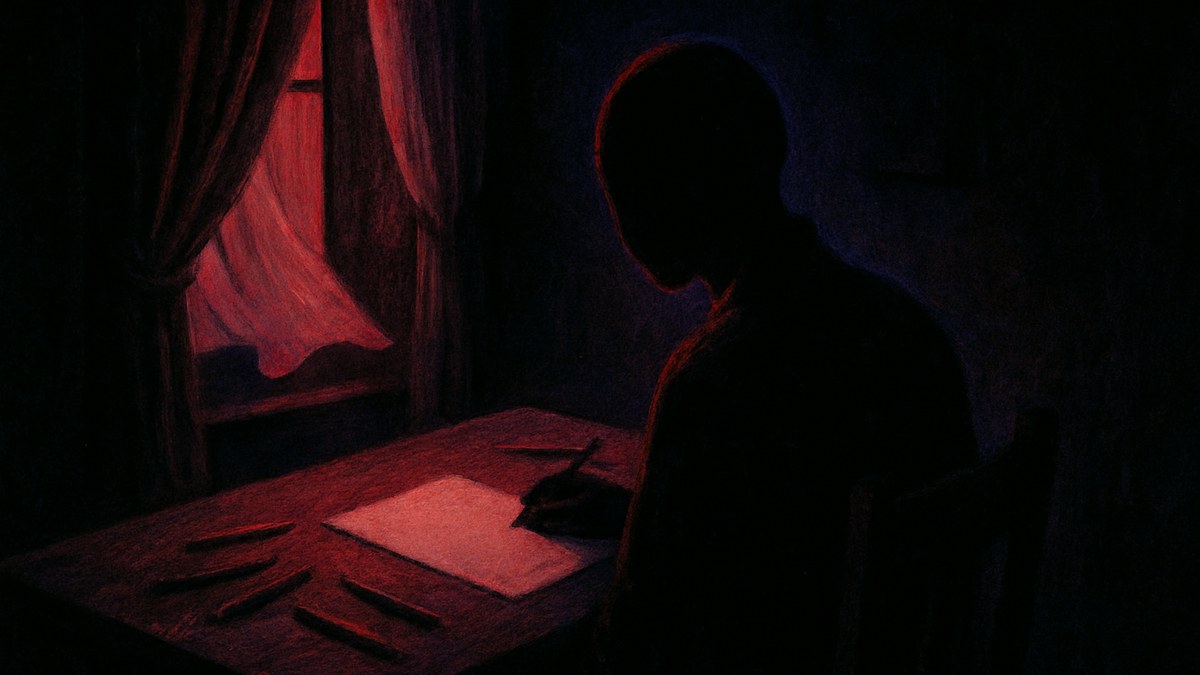
Someone's remark set you off, and you fired back with things you didn't even mean. Afterward you sink into self-reproach, wondering why you got so worked up. Or the tears well up on their own and you simply can't stop them. Your head knows better, yet emotion bolts ahead of it — surely everyone has been there.
Are you blaming yourself, thinking, "Someone who can't control their emotions is just immature"? But being easily swallowed the moment a strong feeling rises isn't a sign that you're weak. This article covers how to write and create distance instead of bottling feelings up when emotion threatens to sweep you away, and the psychology behind why it works.
Rather than control emotion, "step back" from it
The first thing worth knowing: emotion itself can't be switched on and off by willpower. The instant a strong stimulus hits, feeling starts moving before the reasoning part of the brain, so "not letting" a feeling rise is inherently difficult.
That's exactly why the aim isn't to erase emotion but to open distance between you and the feeling that has risen. In the middle of an emotional whirlpool, your view narrows and you act on impulse. But the moment you step back and observe, "Right now, I'm very angry," room to choose your action appears. The handiest tool for this stepping back is writing.
Why does "writing" calm you?
Take what made you angry or sad and put it straight into words on the page. Just that, and many people feel a worked-up mood settle a little.
This isn't your imagination. Naming an emotion and putting it into words has been shown in psychology to dampen the brain's affective response. A vague lump of "unease" turns into something handleable with an outline the moment you word it as "his tone stung me." As long as you keep spinning it in your head, emotion tends to amplify. Only by putting it outside and looking at it can you finally gain distance.
Three steps for writing when feeling floods in
1. Write it raw, unprocessed. "Drop dead" or "I can't take this" is fine. You do not have to show it to anyone, so spill it unvarnished, in the muddiest words. Not trying to tidy it up is what lets the real feeling out.
2. Write "what you feel," not "why." Trying to analyze the cause drops you back into the thought loop. First, prioritize naming the feeling itself — "frustrated," "scared," "sad."
3. Take a breath, then reread. When you finish, exhale slowly and look at the words you wrote. After a little time, another angle can surface: "Maybe that wasn't anger so much as wanting to be understood."
Noroi Nikki as an option
Saved journal text in Noroi Nikki is not public to other users. It never forces you to convert feelings into positive words; it's a place where you can write the day's negative feelings as "curses," exactly as they are.
Precisely because you know you do not have to show it to anyone, the unvarnished, most honest words come out. Rather than straining to control emotion, set the risen feeling outside you for a moment and take just a little distance. Repeating that builds your capacity to live alongside your emotional waves. And if the turbulence lingers or disrupts daily life, don't rely on writing alone — talking to a professional or a support line matters too.
References
- Lieberman, M. D., et al. (2007). Putting feelings into words: Affect labeling disrupts amygdala activity in response to affective stimuli. Psychological Science, 18(5), 421-428. Research showing that labeling emotions with words dampens the brain's affective response.
FAQ
Frequently asked questions
Q.Does not being able to control my emotions mean I'm weak?
It's a natural brain response, not weakness. The moment a strong feeling rises, emotion fires before the reasoning part of the brain, so anyone can get swallowed. The point isn't to erase the feeling but to have a way to step back once it has surfaced.
Q.What's the difference between bottling feelings up and writing them out?
Bottling up puts a lid on a feeling — it may look gone, but it tends to pile up inside. Writing it out puts the feeling outside you where you can look at it. Placing it on paper or a screen opens a gap between you and the emotion, making it easier to face with a little more calm.
Q.I don't know how to write it. Is it okay if I write badly?
It doesn't need to be polished at all. Fragments like 'so angry' or 'I can't take this' are plenty. In fact, not trying to tidy it up lets the real feeling come out. Ignore typos and order — just spill the words already in your head.
Q.What if writing doesn't calm me down?
It's natural not to settle in one go. Adding a slow breath, or coming back to reread it later, can help things ease bit by bit. If the distress lingers or disrupts daily life, don't rely on writing alone — talking to a professional or a support line matters too.
About the author
Katsuki Mitsumori三森 捷暉
CEO, SURISUTA K.K. / Operator of Doya Marke AI
Runs Doya Marke AI, a suite of practical AI services spanning content, ads, sales and HR, and hosts the YouTube channel 'SaaS wa Shinimasshen.' Creator and developer of Noroi Nikki, an app for writing out and letting go of emotions.
This article explains folklore, language and culture. It is not medical, legal or religious advice. Traditions are introduced as culture, not as instructions to harm anyone. Claims without a source are marked as popular belief.
ZUKAN
Meet the yokai of this feeling



RELATED
Related reads
 Emotional care
Want to Become Mentally Stronger? Build the Habit of Writing to Steady Your Heart
You sink over small things and can't shake off people's words. Do you wish you could become mentally stronger? Rather than forcing yourself to toughen up, here's how the habit of writing steadies your heart, and why that accumulation builds real resilience.
 Emotional care
I Hate How Short-Tempered I Am. Rethinking It Through a Writing Habit
You want to stop being short-tempered and quick to snap. Before you decide temper is just your nature, try making your anger patterns visible through a record, and change without blaming yourself.
 Emotional care
How to Do an Emotional Detox: Writing Out What You've Bottled Up
You swallow what you want to say and let the murkiness build up as the days pass. Here's how to do an emotional detox — writing bottled-up feelings out and letting them drain — from why feelings accumulate to a simple routine you can start tonight, alone.