Regret Over Things Left Unsaid — Write Them Down Even Now
The words you couldn't say back then still catch in your chest. Here is how to write out regret over things left unsaid to someone you can no longer reach, and give your feelings a sense of closure even when the past can't be redone.
By Katsuki Mitsumori
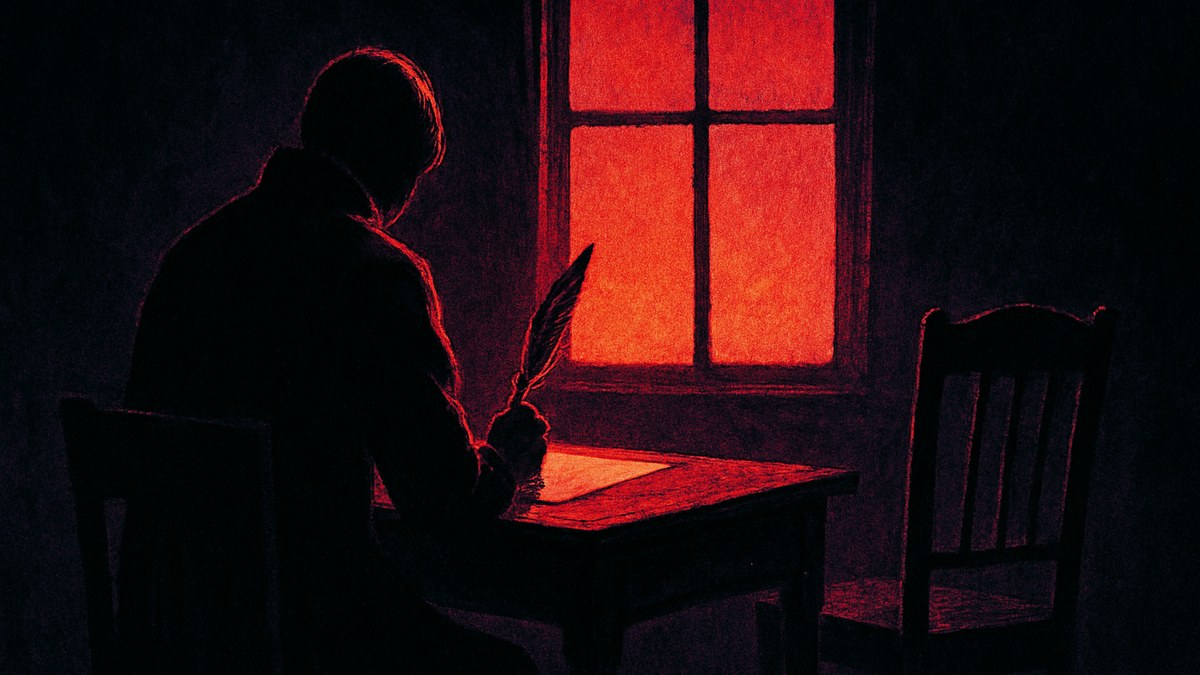
In an ordinary moment, that scene comes back to you. I should have said "thank you." I should have told them "I'm sorry." A person you can't meet again, a moment you can't return to. The one thing you never said still lingers deep in your chest like a small thorn.
Regret over words left unsaid doesn't fade easily with time. If anything, the thought of "if only I'd said it then" can grow stronger as the months pass. This article walks through how writing out the feeling you couldn't deliver can give it a sense of closure, so you can slowly learn to walk alongside the regret.
The regret lingers because those words mattered
The first thing to know is that still regretting what you couldn't say is because those words truly mattered to you. Regret over the unsaid doesn't linger for someone you don't care about.
Gratitude, an apology, love — the reason you couldn't voice it isn't that you were cold. Shyness, mistimed moments, never imagining you'd lose the chance to meet again. Those circumstances stacked up, and the words simply lost their way. You don't need to condemn yourself as "a heartless person who couldn't speak up."
Write the unsaid words "addressed to them"
Words left unsaid, with nowhere to go, keep smoldering inside. This is where it helps to write them out as if in a letter addressed to that person.
You don't need to actually send it. Put the undelivered thought straight into text: "What I really wanted to say back then was this." "I was grateful the whole time." "I wanted to take back that one remark." Setting the unvoiced thought outside you quiets the thing that had been smoldering within.
The past can't be redone, but feelings can find closure
Writing it doesn't mean the words reach the other person. It still matters because the very process of writing sorts out your heart. Rather than regretting on a loop in your head, putting it into words and setting it outside changes the undelivered feeling into a size you can handle, it is said.
Don't turn "I should have said it" into a weapon against yourself
Caught in regret, you slip into endlessly blaming your past self: "it's my fault I couldn't say it back then." But the you of that time was surely choosing the best you could manage in the moment.
There were reasons you couldn't speak — you were afraid, you had no margin, you never dreamed it would come to this. You don't have to be the judge who sentences your past self. You write not to punish yourself, but to set down what you've been carrying. Jot down both the fact that "I couldn't say it" and the feeling that "I cared all the same."
Keep walking, slowly, alongside the regret
Regret over the unsaid may never fully disappear. Even so, as you keep letting it out on the page, the regret shifts from something that fills your whole heart into something you can quietly tuck into a corner.
You don't have to force yourself to forget or to face forward. When it suddenly comes back and hurts, write it each time. Even while carrying regret, a person can keep walking, little by little.
Write down the words you couldn't say
Regret over the unsaid tends to get brushed off when you tell others — "there's nothing to be done now" — and you end up swallowing the truth instead. That's exactly why writing down the words that can't arrive, just as they are, where you can write for yourself helps.
Noroi Nikki was built as a place where you don't have to wrap things up positively or convince anyone — you can write out the feelings still lodged in your heart. The words you wanted to say, and the regret over them, are a precious part of you. Start by writing, and giving your heart a sense of closure.
References
- Pennebaker, J. W. (1997). Writing about emotional experiences as a therapeutic process. Psychological Science, 8(3), 162–166. A landmark study showing that putting emotionally charged experiences into written words is linked to reduced psychological strain.
FAQ
Frequently asked questions
Q.Is there any point regretting words I never said to someone I can't reach anymore?
There is a point. That the regret still lingers is proof those words mattered to you. Even if they can no longer reach the other person, putting the feeling into words and setting it outside you gives your own heart a sense of closure. The past can't change, but where you keep the feeling is something you can choose from now.
Q.The regret suddenly resurfaces and it hurts. What can I do?
Words left unsaid, with nowhere to go, keep smoldering inside. Try writing them out as if in a letter addressed to that person. Turning the unvoiced thought into text and setting it outside can quiet the smolder a little and soften the pain that ambushes you.
Q.Even if I write it, it won't reach them. Does it still mean anything?
The purpose of writing isn't only to deliver it. The very process of putting unsaid feelings into words sorts out your heart. Rather than holding the regret in, writing it out is said to genuinely lighten the weight you carry.
Q.I'm stuck in regret and can't move forward. What should I do?
You don't have to force yourself to face forward. Start by simply jotting down the words you couldn't say and how you feel about it now. As you let the feelings out without denying them, you gradually become able to keep walking even while the regret travels alongside you.
About the author
Katsuki Mitsumori三森 捷暉
CEO, SURISUTA K.K. / Operator of Doya Marke AI
Runs Doya Marke AI, a suite of practical AI services spanning content, ads, sales and HR, and hosts the YouTube channel 'SaaS wa Shinimasshen.' Creator and developer of Noroi Nikki, an app for writing out and letting go of emotions.
This article explains folklore, language and culture. It is not medical, legal or religious advice. Traditions are introduced as culture, not as instructions to harm anyone. Claims without a source are marked as popular belief.
ZUKAN
Meet the yokai of this feeling



RELATED
Related reads
 Emotional care
Can't Move Past Pet Loss Guilt — Grieve by Writing Your Feelings Down
The "I could have done more" regret over the companion you lost won't fade. Here is how to grieve the sorrow and self-blame of pet loss little by little through writing, and sort out your feelings — with a note on where to turn when grief drags on.
 Emotional care
Regret Keeping You Up at Night? Write Down the Past You Can't Redo and Set It Aside
The moment you lie down, that failure or that one thing you said comes back, and regret keeps you awake. Here's how to write the past you can't redo onto the page and set it down, on nights you keep replaying it.
 Emotional care
Worn Out by Condescending People? Answer Back in Your Head and Let It Go
They compete with you every time you meet and quietly talk down to you. When condescending people wear you out, here is how to let it slide without taking the bait, and how to safely release the frustration you swallowed.