Bedtime Regret That Keeps You Awake: Write Out the Self-Criticism and Let It Go
The moment you lie down, today's mistakes and the words you wish you hadn't said start replaying, and self-blame keeps you awake. Here's how a few minutes of writing can break the bedtime regret loop so you don't carry it into tomorrow.
By Katsuki Mitsumori
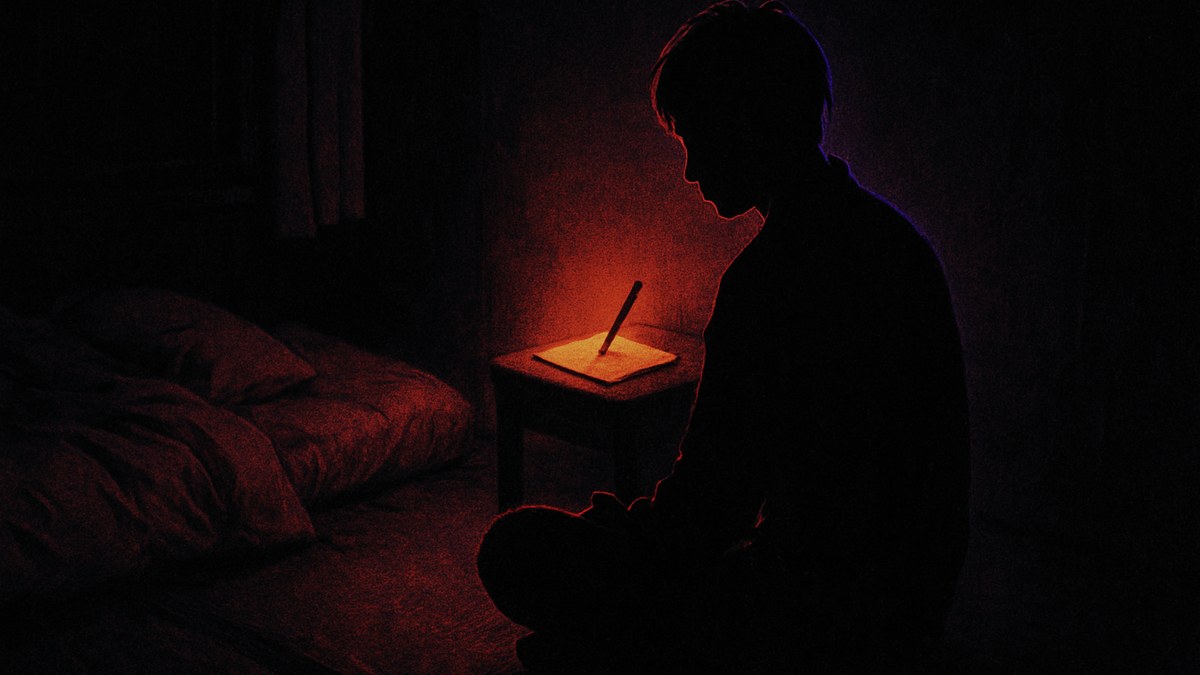
The moment you switch off the light and lie down, the scenes of the day start replaying on their own. The way you spoke up in that meeting may have been too sharp; that reply may have sounded cold; you should have handled that moment differently. You rewind finished events again and again, and end up asking, "Why am I always like this?" The clock keeps moving, but your head is left behind in today, and sleep won't come. Have you ever spent a night like that?
What makes bedtime regret so tricky is that it stops being a forward-looking review of "what to do next" and turns into self-hatred that simply replays the same regrets. This article is for anyone kept awake by reviewing their day: it walks you through writing out the self-blame and letting it go, so you don't carry it into tomorrow.
Why reflection won't stop at night
Bedtime reflection sets in, in most cases, because night is "the hour when outside stimulation drops and attention turns easily to the small events you let slide during the day." In bed there's nothing else to do, and finished mistakes and words you wish you hadn't said replay over and over in your head.
This state of the same thought circling is called rumination. What's tricky about it is that the more you think, the less it clears — the regret gets layered thicker and heavier. And at night your judgment is dimmer, so even events you'd have shrugged off in daylight as "not worth this much worry" land as something serious. Being kept awake isn't because you're especially weak — it's a workings of the mind that shows up in quiet hours.
Move the reflection from your head onto paper
What helps most in stopping rumination is to write the things bothering you down on paper or your phone, instead of turning them over in your head. "That came out harsh." "I wasn't prepared enough." List the regrets that surface, without minding the order or the sentence form, just as they are.
The point of writing is that it becomes easier to break out of the endless replay. While the regret stays in your head, it circles with no beginning and no end. But once you put it into words and set it outside you, the circling gets a boundary — "so these are the things that got to me today." There's no need to make it neat. Harsh words, messy handwriting — all fine, as long as you aim only to get them out.
Separate "reflection" from "self-hatred"
Look at what you wrote and you'll notice two kinds mixed together. One is constructive reflection you can act on next time; the other is self-hatred that simply keeps attacking your character.
"Next time I'll reread the email before sending" is the former, worth keeping as a note. "I'm always hopeless," "I fail at everything" is the latter, and no improvement comes from it. Writing them apart reveals a rough guide for which words to keep and which to let go. Keep the former as a small step toward tomorrow, and set the latter down as a record of "this is how I felt today." You don't need to force it into something positive, and you don't need to erase the harsh words. Just noticing that they're an attack on your character loosens the grip a little.
When sleepless nights still continue
What's here is everyday self-care. If low mood lasts a long time, you lose interest in what you used to enjoy, or you can't sleep or lose your appetite — and these pile up and disrupt daily life — it's generally considered a sign to consult a professional such as a doctor or mental health specialist without toughing it out. Blaming yourself every night can be a sign from your mind. Reaching out is never an overreaction.
The "curse" words are fine as they are
Reflect constructively, close the day with gratitude — some nights those routines just don't fit when you're busy blaming yourself. Forcing a positive spin can become one more thing to blame yourself for not managing.
Noroi Nikki is an app for those nights. We built it as a place where you can let out today's regret and the curse-words you aim at yourself in exactly the form they take — no need to dress them up. Saved journal text is not public to other users. Put the circling self-blame into words and set it outside you first. That is the first step to sleeping without carrying today into tomorrow.
References
- James W. Pennebaker, Opening Up: The Healing Power of Expressing Emotions (Guilford Press, 1997). A foundational body of research on the effects of writing out difficult experiences and emotions, known as expressive writing.
FAQ
Frequently asked questions
Q.Why do I keep reviewing my whole day right before sleep?
Night is a time when outside stimulation drops and your attention turns easily to the small events you let slide during the day. In bed there's nothing else to do, so finished mistakes and words you wish you hadn't said replay over and over and feel heavier than they really were. Not being able to stop isn't a matter of willpower — it's a workings of the mind that shows up in quiet hours.
Q.How can I stop the self-blame at bedtime?
Instead of turning the review over in your head, write the things bothering you down once, on paper or your phone. Getting the regrets out just as they surfaced — 'that came out harsh,' 'I wasn't prepared enough' — makes it easier to break out of the endless replay. Don't tidy it up; the harsh, self-blaming words are fine as they are.
Q.What's the difference between reflection and self-hatred?
Reflection is a constructive look back at what to do next, while self-hatred is closer to attacking your whole character with 'I'm hopeless.' Writing it out separates the specific actions you can improve from the words that only hurt you. The former is worth keeping as a note; the latter is a cue to set down and let go.
Q.Should I talk to someone if blaming myself keeps me awake every night?
If low mood lasts a long time, you lose interest in things you used to enjoy, or you can't sleep or lose your appetite, and these pile up and disrupt daily life, it's generally considered a sign to consult a professional such as a doctor or mental health specialist. The methods here are everyday self-care and are not a substitute for medical judgment or treatment.
About the author
Katsuki Mitsumori三森 捷暉
CEO, SURISUTA K.K. / Operator of Doya Marke AI
Runs Doya Marke AI, a suite of practical AI services spanning content, ads, sales and HR, and hosts the YouTube channel 'SaaS wa Shinimasshen.' Creator and developer of Noroi Nikki, an app for writing out and letting go of emotions.
This article explains folklore, language and culture. It is not medical, legal or religious advice. Traditions are introduced as culture, not as instructions to harm anyone. Claims without a source are marked as popular belief.
ZUKAN
Meet the yokai of this feeling



RELATED
Related reads
 Emotional care
Unspoken Frustration With Your Partner: Easing the Feelings You've Bottled Up by Writing Them Down
Afraid of a fight, you keep swallowing your frustration with your partner. Here's how to ease those bottled-up feelings in a journal before they explode one day, and how to shape the way you bring them up.
 Emotional care
A Three-Minute Bedtime Journaling Habit: Let Go of the Day and Sleep
You get into bed but your mind is wide awake. A three-minute bedtime journaling habit helps on nights like these. Here's how to write out the feelings and worries you've stored up, empty your head, and sleep — plus how to keep the habit going.
 Emotional care
Morning Anxiety That Keeps You in Bed: A Writing Habit to Lighten the Day
Anxiety floods in the moment you wake, your body is heavy, and you can't get out of bed. Here's how a habit of writing for a few minutes on waking can reset morning anxiety and lighten the day — with why mornings feel hard, and signs it's worth seeing someone.